The Israeli military establishment is not looking for a temporary reprieve or a fragile diplomatic paper trail. Despite the loud calls for a ceasefire echoing from the incoming Trump administration and the current corridors of power in Washington, Israel has signaled a gritty determination to finish its campaign in Southern Lebanon on its own terms. The objective is no longer just the displacement of Hezbollah fighters from the border. It is the systematic dismantling of a decades-old Iranian proxy infrastructure that has held the Galilee hostage.
Military planners in Tel Aviv are operating on a timeline that prioritizes security over diplomacy. While political figures discuss the nuances of a potential deal, the Israel Defense Forces (IDF) are actively expanding their footprint. This disconnect between the diplomatic chatter and the kinetic reality on the ground suggests that Israel views the current political transition in the United States as a window of opportunity rather than a constraint. They are betting that facts on the ground will speak louder than any memorandum of understanding signed in a luxury hotel.
The Strategy of Permanent Neutralization
Israel’s refusal to halt operations is rooted in a fundamental shift in its defense doctrine. For years, the policy was "mowing the grass"—periodic strikes to limit Hezbollah’s growth. That era is dead. The new mandate is the total neutralization of Hezbollah’s ability to launch a ground invasion similar to the October 7 attacks.
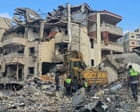
This shift explains why the IDF is currently blowing up entire villages in Southern Lebanon. These aren't just residential areas; they are hardened military nodes. Beneath the tiled floors of civilian homes, the IDF has uncovered a labyrinth of tunnels, command centers, and weapon caches designed for a massive cross-border raid. If Israel retreats now because of international pressure, it leaves the foundation of that threat intact.
The Buffer Zone Reality
The Israeli government is effectively creating a "dead zone" several kilometers deep along the Blue Line. By destroying the infrastructure in these border towns, they are making it physically impossible for Hezbollah to return to its previous positions in the immediate future. This isn't just about killing militants. It is about geography.
If a ceasefire were signed today, Hezbollah would simply walk back into their prepared bunkers. By continuing the operation, Israel is ensuring there are no bunkers to return to. This creates a buffer through destruction, a brutal but effective method of ensuring that the residents of Northern Israel can return home without fearing a Radwan Force raid in the middle of the night.
The Trump Factor and the Diplomatic Mirage
The narrative that Donald Trump’s return to the White House would bring an immediate end to the fighting ignores the complex dance between the two nations. While Trump has expressed a desire for "peace" and an end to "endless wars," his previous term was defined by a maximum pressure campaign against Iran and the recognition of Israeli sovereignty over disputed territories.
Israeli leadership understands that Trump prefers "winners." By presenting him with a neutralized Hezbollah and a secured northern border, Prime Minister Benjamin Netanyahu offers a fait accompli that aligns with the "Peace through Strength" mantra. The pressure from the U.S. might look like a hurdle, but for Israel, it serves as a deadline. They are sprinting to the finish line before the formal inauguration, hoping to hand the new administration a stabilized front rather than an ongoing crisis.
Why International Oversight Fails
History is a cruel teacher in Lebanon. The United Nations Security Council Resolution 1701, which ended the 2006 war, was supposed to keep Hezbollah away from the border. It failed spectacularly. The UNIFIL forces became observers of their own irrelevance while Hezbollah built a multi-billion dollar fortress under their noses.
Israel’s current intransigence is a direct result of this failure. They no longer trust international bodies to enforce security. Any new ceasefire agreement that relies on the Lebanese Armed Forces or UNIFIL to disarm Hezbollah is viewed in Jerusalem as a suicide pact. The demand now is for "freedom of action"—the right for the IDF to strike if they see Hezbollah re-arming, regardless of any treaty.
The Economic and Social Cost of Hesitation
War is expensive, but for Israel, the cost of a "bad peace" is higher. Roughly 60,000 Israelis remain displaced from their homes in the north. The economic drain of maintaining these evacuees in hotels and temporary housing is staggering. More importantly, the social fabric of the Galilee is fraying.
If the government forces these people back home under the shadow of an intact Hezbollah, the political fallout would be catastrophic. Netanyahu knows his political survival depends on a clear victory. A ceasefire that allows Hezbollah to declare a "Divine Victory" while still holding the high ground would be seen as a betrayal.
The Iranian Link
We cannot view the Lebanon front in isolation. This is the western flank of a larger war against the Islamic Republic of Iran. Every missile launcher destroyed in the Bekaa Valley and every tunnel collapsed in Marjayoun is a blow to Tehran’s regional influence.
Israel is betting that by crippling Hezbollah, they are decapitating Iran’s most effective forward-deployed asset. This isn't just about a few border villages. It is about recalibrating the balance of power in the Levant for the next twenty years. If they stop now, the "Axis of Resistance" lives to fight another day. If they continue, they might just break the chain.
The High Stakes of the Ground Push
The ground operation is moving into a more dangerous phase. As the IDF pushes deeper into the second line of Lebanese villages, they face more sophisticated defenses and the risk of being bogged down in a war of attrition. This is the gamble.
- Logistics: Maintaining supply lines in the rugged terrain of Southern Lebanon is a nightmare.
- Casualties: Hezbollah remains a formidable guerrilla force on its home turf.
- Public Opinion: While domestic support for the war remains high, the sight of a mounting death toll could shift the tide.
Despite these risks, the military command remains bullish. They believe they have the momentum. The targeted assassinations of Hezbollah’s top tier, including Hassan Nasrallah, have left the group in a state of organizational vertigo. Israel’s strategy is to keep hitting while the enemy is disoriented, refusing to give them the breathing room that a ceasefire would provide.
Beyond the Ceasefire Talk
What the media often portrays as "defiance" is, from the Israeli perspective, a tactical necessity. They have seen how ceasefires allow Hamas to regroup in Gaza. They have seen how "de-escalation" leads to re-armament.
The reality of 2026 is that the old rules of Middle Eastern conflict have been discarded. The "status quo ante" is no longer the goal. The goal is a total restructuring of the security environment. This requires more than just signatures on a page; it requires the physical removal of the threat.
As long as Hezbollah maintains its arsenal and its Iranian backing, any ceasefire is merely a countdown to the next war. Israel’s current operations are a violent, expensive, and controversial attempt to stop that clock once and for all. The pressure from Washington will continue, and the headlines will scream about missed opportunities for peace, but the tanks in Southern Lebanon will keep rolling until the Israeli cabinet decides the risk of stopping is finally lower than the risk of continuing.
The focus must remain on the specific military benchmarks that have yet to be reached. Until the Litani River becomes a meaningful barrier rather than a geographic suggestion, the IDF will stay the course. This is not about stubbornness; it is about the cold, hard logic of survival in a region that does not forgive weakness.