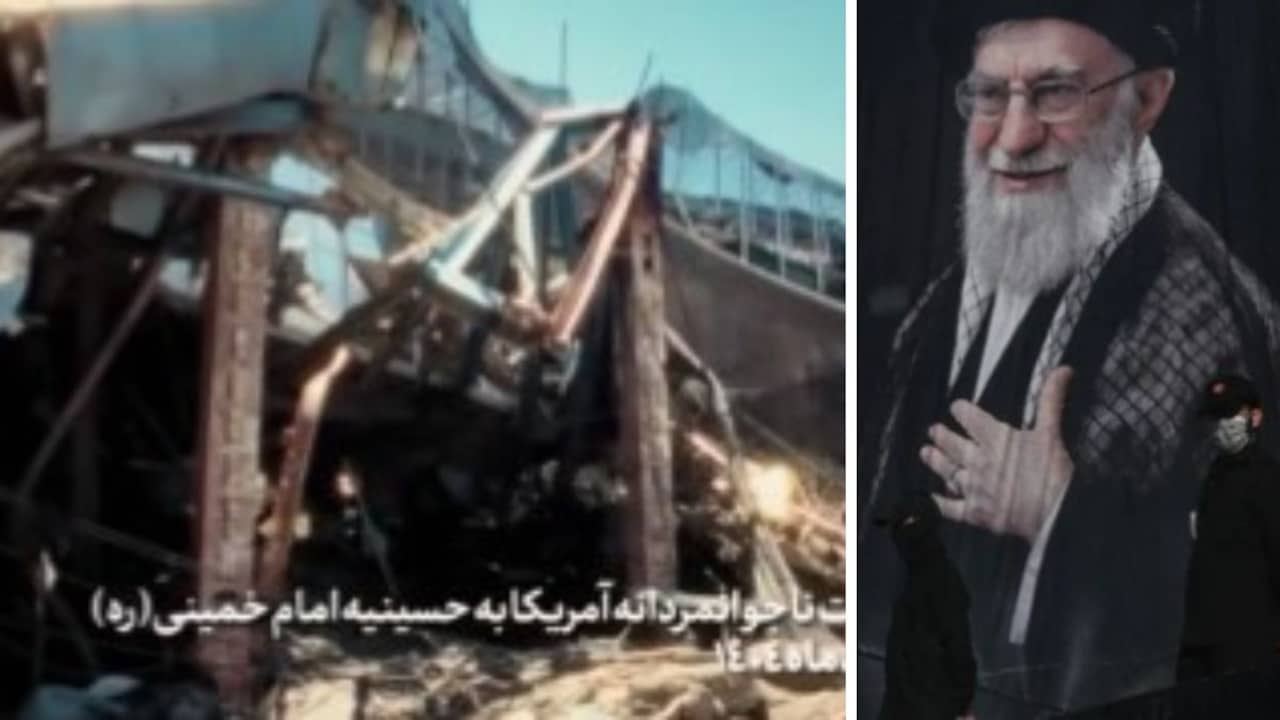
For months, the world only saw the ruins from space. Satellite images captured the flattened buildings and cratered earth of the supreme leader's Tehran compound after the massive February 28 military strike. We knew the scale of the destruction. We knew it killed Ali Khamenei. Yet, the Iranian regime kept the gates tightly shut, hiding the internal wreckage from the public eye.
That secrecy just ended.
Iranian state media recently broadcasted a fifty-second video clip showing the interior ruins of the Husseiniyeh Imam Khomeini, the main prayer and public address hall within the targeted compound. It is a rare, jarring look at the structural devastation inside the heart of Iran's Islamic Republic. Warped steel beams clip through mounds of pulverized concrete, and shattered walls stand exposed to the open air. Pro-regime media outlets, including the Revolutionary Guard-run Fars News Agency, blasted the clip across social channels.
This isn't just a simple news update. It is a carefully timed propaganda move that reveals a lot about the current internal state of Iran's leadership.
The Reality of the Attack on Tehran
To understand why this footage matters now, look back at what happened during those late winter strikes. The joint military campaign flattened multiple government-linked, strategic, and military installations across the country. The strike on the compound wasn't a minor tactical hit. It targeted the exact command facilities where Iran's top leadership operated.
Subsequent military updates confirmed that over fifty fighter jets hit the complex, targeting not just the surface buildings but a deep underground bunker network built specifically for wartime emergency command. The network ran beneath central Tehran streets, featuring reinforced meeting rooms and secure entry points. The regime tried to pretend the damage was manageable. This new interior footage proves otherwise.
The video focuses heavily on the Husseiniyeh Imam Khomeini hall. For decades, this room was the backdrop for Iranian state power. You probably remember the images of Khamenei sitting in an elevated chair, lecturing assemblies of officials or delivering fiery sermons while crowds chanted below. Now, that room is a pile of dirt and twisted iron.
The Strategy Behind Broadcasting Your Own Ruin
Dictatorships don't usually show their own scars unless they get something out of it. Usually, authoritarian regimes hide their vulnerabilities to maintain an image of absolute strength. Showing the absolute destruction of your top leader's home seems counterintuitive.
So why did they do it?
First, it cements a narrative of victimization. By showing the shattered prayer hall, the regime attempts to rally its remaining domestic base, turning a massive military defeat into a symbol of martyrdom. They want the public to focus on the destruction of a spiritual and political hub to spark nationalist outrage.
Second, the regime is trying to manage information. The external satellite photos already proved the compound was destroyed. Rumors about the sheer level of destruction have been circulating inside Iran for months, undermining official claims. By controlling the release of the interior footage, the state media attempts to put its own spin on the narrative before leaked videos from workers or low-level officials take over the internet.
What the Footage Tells Us About the Power Vacuum
The timing of this release coincides with ongoing regional diplomatic maneuvers and a highly fragile ceasefire environment. The conflict damaged critical infrastructure across Iran, shaking the regime's command and control capabilities to the core. Even after Khamenei's death, senior officials allegedly kept using parts of the undamaged underground complex until subsequent operations completely dismantled its utility.
Showing the ruins now is a clear sign of a regime trying to transition into a new political era. They can no longer hide the death of their leader or the destruction of his home. Instead, they are forced to integrate these physical ruins into their state identity. The clip ends with archival footage of Khamenei, signaling an attempt to preserve his legacy as a permanent fixture of the state's ideology, even when the physical structures of his rule are gone.
The Danger of Controlling the Narrative
Western analysts need to look past the dramatic visuals. The shattered walls and warped beams are proof of military precision, but the real story is how Iran's state apparatus functions under extreme pressure. They are using their own destruction as currency.
If you're tracking Middle Eastern stability, watch how the regime uses this footage in regional proxy networks. The message isn't just for the citizens in Tehran. It's a signal to groups across the region that the regime intends to keep fighting, using the ruins of its capital as a rallying cry. They want to show that despite losing their top leader and their primary command compound, the administrative state remains functional enough to produce and distribute media.
Pay attention to the specific media channels pushing this video. The involvement of Fars News indicates that the military wing of the government is controlling this messaging campaign. They are bypassing traditional state bureaucrats to deliver a raw, militarized message directly to the public.
Expect more of these controlled leaks over the coming weeks. The regime will likely release selective glimpses of other hit sites to manage public expectations and control the domestic conversation around the true cost of the spring conflict. Watch the state media feeds closely, ignore the emotional music overlays, and analyze the specific structures they choose to show. The choices they make in editing tell you exactly what they are most afraid of losing.