The stalling of diplomatic engagement between Washington and Tehran is rarely the result of a single missed phone call or a botched memo. It is the product of a deliberate, internal tug-of-war within the Iranian political establishment. While public attention often fixes on the geopolitical grandstanding in the Middle East, the real friction occurs in the windowless rooms of Tehran’s security apparatus. Hardline factions within the Iranian government, specifically those tied to the Islamic Revolutionary Guard Corps (IRGC) and the Office of the Supreme Leader, are systematically dismantling the path to peace. They do this not because they fear war, but because they fear the domestic consequences of a thaw.
For these groups, a state of perpetual "controlled tension" is a survival mechanism. A diplomatic breakthrough would necessitate economic transparency, a reduction in the IRGC’s grip on the black market, and a shift away from the "Resistance Economy" that keeps their coffers full while the Iranian middle class shrinks. To understand why talks have hit a wall, one must look past the nuclear spreadsheets and examine the internal mechanics of a regime that views a handshake with the West as a threat to its very existence.
The Payoff of a Failed Dialogue
Diplomacy is often viewed as a win-win scenario in Western capitals. In Tehran, the calculus is different. For the ultraconservative clerical elite and the military industrial complex that supports them, the failure of talks is a strategic victory. When negotiations collapse, the hardliners can point to the "unreliability" of the West as a justification for further domestic crackdowns. It validates their worldview and keeps the moderate or reformist voices on the sidelines.
The IRGC controls a massive portion of the Iranian economy, ranging from infrastructure projects to telecommunications and oil smuggling. Sanctions, while devastating to the general population, have created a lucrative "sanction-busting" economy. This shadow market is operated by the very people tasked with defending the revolution. If sanctions were lifted through a formal peace process, the need for this shadow economy would evaporate. Legal, transparent trade would return, and with it, competition that the IRGC is not equipped to handle. They are, in effect, incentivized to keep the country isolated.
The Veto Power of the IRGC
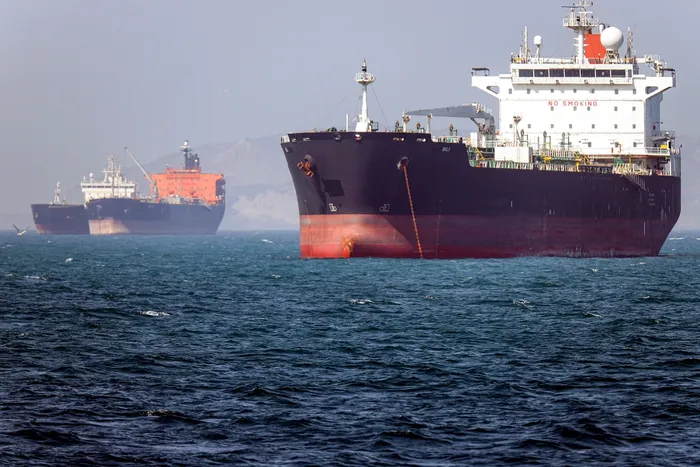
In the Iranian political structure, the President and the Foreign Ministry may suggest a direction, but the Supreme Council for National Security sets the limits. Within this council, the military and intelligence wings hold a functional veto over any deal that looks too much like a concession. We have seen this play out repeatedly over the last two years. Every time a draft agreement appears close to being finalized in Vienna or Muscat, a "new condition" or a sudden escalation in the region—such as a drone strike or a tanker seizure—mysteriously occurs.
These are not accidents. They are calculated signals sent by the hardliners to both Washington and their own negotiators. The message is clear: the diplomats do not speak for the men with the guns. By creating a climate of instability, the hardline faction ensures that the American administration faces too much domestic political pressure to follow through on a deal. It is a pincer movement executed with precision.
The Proxy Strategy as a Negotiating Lever
Iran’s network of regional proxies—from the Houthis in Yemen to various militias in Iraq and Syria—serves a dual purpose. Externally, they provide "strategic depth" against Israel and Saudi Arabia. Internally, they serve as the hardliners' trump card in any negotiation. The hardline faction argues that these groups are the only thing keeping the "Great Satan" at bay.
When the Biden-Harris administration, and now its successors, tried to separate the nuclear issue from regional behavior, they were met with a brick wall. The Iranian hardliners refused to decouple the two because the regional chaos is their primary source of leverage. They know that as long as they can threaten the flow of oil in the Strait of Hormuz or the stability of the Red Sea, they can force the U.S. back to the table on their terms. However, they have no intention of actually signing a document that would require them to abandon these assets. To do so would be to disarm themselves in a neighborhood they don't trust.
The Ghost of 2018
Trust is a rare commodity in the Middle East, and the 2018 U.S. withdrawal from the JCPOA (the nuclear deal) provided the Iranian hardliners with a permanent "I told you so." This event cannot be overstated in its importance. It destroyed the credibility of the Iranian moderates who had staked their careers on the idea that the U.S. could be a reliable partner.
Now, even if a U.S. administration offers significant guarantees, the hardliners in Tehran demand "objective guarantees" that no future president can undo. They know this is a legal and political impossibility in the American system. By demanding the impossible, they ensure that the status quo remains. They aren't looking for a deal; they are looking for a reason to say no while appearing to be the aggrieved party.
Misreading the Iranian Street
There is a common misconception in Western policy circles that economic pressure will eventually force the hardliners to the table. This assumes that the hardliners care about the economic well-being of the Iranian public. They do not. In fact, economic desperation often makes a population easier to control. When people are preoccupied with finding bread and medicine, they have less energy for political revolution.
The "Woman, Life, Freedom" protests showed the depth of public anger, but the hardline response was not to seek international relief. It was to double down on internal repression and look toward the East. The "Look to the East" policy—building closer ties with Russia and China—is the hardliners' ultimate hedge. By integrating into the BRICS framework and signing long-term cooperation agreements with Beijing, they believe they can bypass the Western financial system entirely. This makes the threat of U.S. sanctions increasingly irrelevant to the men in power, even as it continues to crush the Iranian working class.
The Nuclear Escalation as a Shield
Iran has moved its enrichment levels closer to weapons-grade than ever before. This is often framed as a "breakout" threat, but for the hardline faction, the nuclear program is more valuable as a shield than a sword. They understand that as long as they are on the threshold of a bomb, the U.S. and Israel are forced to treat them as a major power.
This nuclear brinkmanship is the ultimate insurance policy for the regime. It ensures that any military action against them would be catastrophically expensive and risky. The hardliners use the nuclear program to keep the West in a state of constant anxiety, extracting small concessions or "non-aggression" understandings without ever having to commit to a full, binding treaty. It is a policy of "no war, no peace," and it suits their interests perfectly.
Washington's Own Hardline Problem
It would be a mistake to view this solely as an Iranian phenomenon. The hardliners in Tehran have their counterparts in Washington. Every time a diplomatic opening appears, hawks in the U.S. Congress move to introduce new sanctions or demand conditions that they know are non-starters for the Iranian side. This creates a feedback loop.
A hardline move in Tehran triggers a hardline response in Washington, which the Iranian hardliners then use to justify their original position. This "hardliner's trap" has been the defining characteristic of U.S.-Iran relations for decades. Breaking it would require one side to take a massive political risk, and currently, neither the aging leadership in Tehran nor the polarized political establishment in D.C. has the appetite for it.
The Role of the Supreme Leader
Ultimately, all roads in Iran lead to Ali Khamenei. The Supreme Leader has mastered the art of balancing factions to maintain his own power. He allows the "pro-diplomacy" camp to exist because it provides a vent for public frustration and a channel for back-channel communication. But he consistently leans toward the security establishment when the chips are down.
Khamenei’s deep-seated suspicion of Western "cultural infiltration" means he views any deal not just as a political agreement, but as a gateway for the subversion of the Islamic Republic. For him, the hardliners are not an obstacle to his goals; they are the guardians of his legacy. He will not overrule them to save a deal because he believes their paranoia is the only thing keeping the system from collapsing like the Soviet Union did in the late 1980s.
The Illusion of a Deadlock
To the outside world, the situation looks like a deadlock. To the hardline faction in Tehran, it looks like a stable, manageable status quo. They have successfully shifted the narrative from "when will the deal be signed" to "how can we manage the ongoing crisis." By doing so, they have secured their grip on the country's resources and neutralized their domestic rivals.
The delay in peace talks isn't a failure of diplomacy; it is a success of internal Iranian power politics. As long as the IRGC and the ultra-conservatives find more value in conflict than in cooperation, the "invisible walls" will remain standing. The West continues to look for a technical solution to a problem that is fundamentally about the survival of a specific ruling class.
Real progress will not come from a better-worded treaty or a different set of sanctions. It will only come if the internal cost of isolation becomes greater than the internal cost of engagement—a shift that the hardliners are currently spending billions of dollars to prevent. Until then, the world is watching a shadow play where the actors on stage have no intention of reaching the final act.
Stop looking for the "breakthrough" in the news cycle. Watch the budget allocations for the IRGC and the movement of oil tankers in the dark. That is where the real policy is written.