The sun is setting over a packed stadium, and eighty thousand people are singing in unison. The noise is a physical force, vibrating through the concrete under your feet and the plastic of your seat. You are looking down at the pitch, watching a winger track a ball through the air. You do not look up. Nobody looks up. Why would you? The sky is just empty space.
Except it isn't. Discover more on a connected topic: this related article.
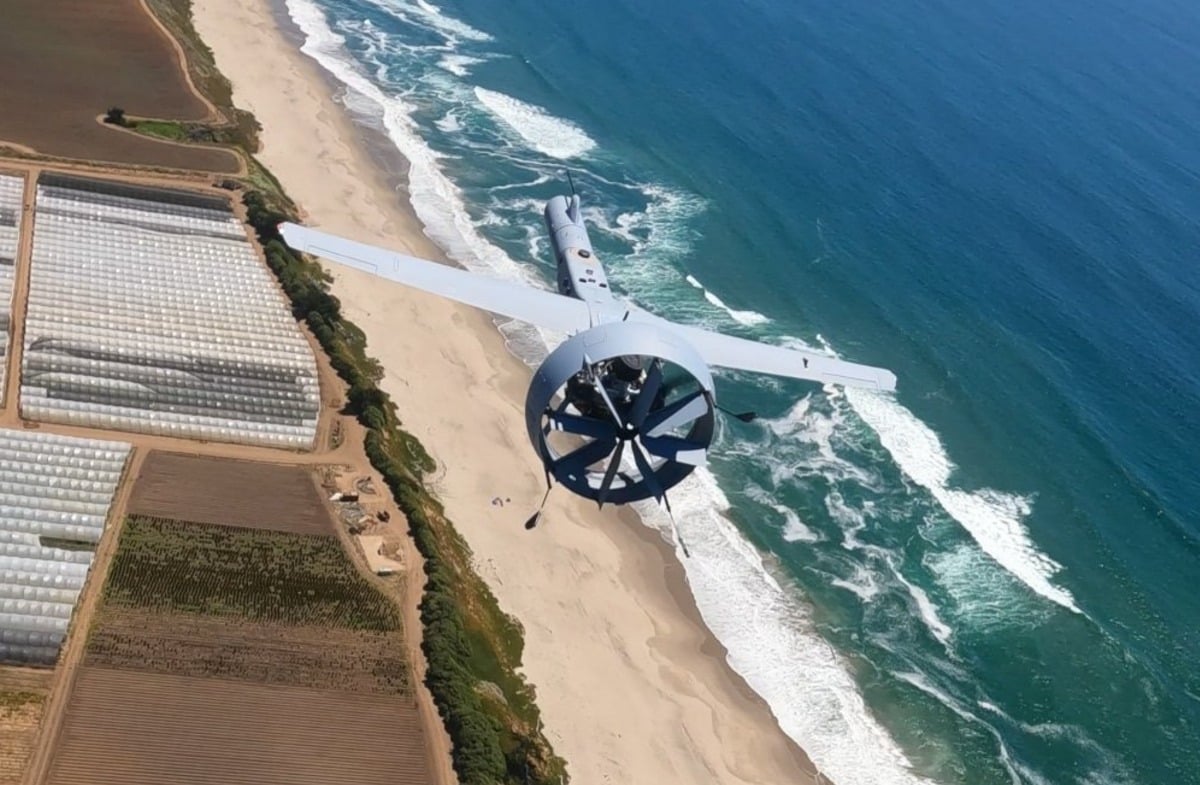
High above the stadium rim, a plastic drone the size of a dinner plate hovers, its tiny rotors spinning at thousands of revolutions per minute. To the person holding the remote control half a mile away, the stadium looks like a glowing bowl of light and humanity. To the security team sitting in a windowless room deep in the stadium's bowels, that drone is a blinking red anomaly on a radar screen. It is a variable they cannot control. And in the world of modern massive-scale event security, an uncontrollable variable is a nightmare.
As North America prepares to host the 2026 World Cup across sixteen cities, local police departments and stadium security officials are quietly spending millions of dollars to buy back control of the air. This is not the flashy, high-tech future promised in science fiction movies. It is a chaotic, bureaucratic scramble happening right now in municipal budget meetings from Miami to Vancouver. Cities are purchasing massive arrays of sensors, radio-frequency trackers, and signal-jamming equipment. They are building an invisible dome over our collective celebration. More analysis by ZDNet delves into similar views on this issue.
The urgency is driven by a stark reality: the sky has become democratized, and local law enforcement is terrified of what that means.
The Toy That Became a Threat
Ten years ago, a drone was a specialized gadget or a high-end toy for hobbyists. Today, you can buy a quadcopter at a local electronics store, take it out of the box, and have it flying over a crowded city park within twenty minutes. The software handles the stabilization. The GPS handles the navigation. A child can fly one.
That is the beauty of the technology. It is also the flaw.
Consider a hypothetical scenario, but one that security consultants across the country debate during every tabletop exercise. A well-meaning fan wants to get an incredible video of the opening kickoff. They launch a three-pound drone from a parking lot outside the stadium security perimeter. They fly it over the crowd. Suddenly, a gust of wind catches the craft, or the lithium-battery encounters a sudden voltage drop. The drone loses power.
A three-pound plastic object falling from three hundred feet does not sound like a weapon. But gravity accelerates it. By the time it hits the stands, it is traveling fast enough to crack a human skull. If it hits a crowded section, panic erupts. People rush for the exits. In a stadium packed to capacity, the crush of a crowd trying to escape an unknown threat is vastly more dangerous than the threat itself.
Then there are the malicious actors. Security agencies are looking closely at how small, off-the-shelf drones have been modified in overseas conflicts to carry small explosive payloads or surveillance equipment. The barrier to entry for airborne disruption has dropped to zero.
This is why major transit hubs, sheriff's departments, and stadium authorities are pouring funds into counter-unmanned aerial systems (C-UAS). They are fighting an asymmetric threat. A consumer drone costs a few hundred dollars. The equipment required to detect, track, and neutralize it costs hundreds of thousands.
The Blind Spot in the Budget
If you look at the public purchasing records of World Cup host cities over the past eighteen months, a pattern emerges. Millions of dollars are shifting into a category that barely existed a decade ago.
Local police departments are buying specialized radar systems that can differentiate between a migrating bird and a carbon-fiber drone. They are investing in radio frequency (RF) scanners that intercept the signals passing between a drone and its operator, allowing security to pinpoint exactly where the pilot is standing on a street corner outside the stadium gates.
But the real problem lies elsewhere. It is not just about having the money to buy the gear. It is about who is allowed to use it.
In the United States, federal law heavily restricts who can legally disrupt a drone's flight. Under current legislation, using a signal jammer to cut the connection between a pilot and a drone—or using a kinetic device to shoot it out of the sky—is a federal crime for almost everyone, including local police officers. The Federal Aviation Administration views a drone as an aircraft. Intentionally downing a drone is treated legally with the same severity as shooting down a commercial airliner.
Only a few federal agencies, like the Department of Homeland Security and the FBI, have the explicit legal authority to use active counter-drone measures. This creates a bizarre, terrifying paradox for local law enforcement. A local sheriff might see a suspicious drone hovering over a World Cup fan zone on their newly purchased multi-thousand-dollar radar screen, but they cannot legally press a button to disable it. They have to watch it, track the pilot, and wait for federal partners to step in.
The current spending spree is an attempt to close the gap. Cities are buying the detection infrastructure so they can at least see the threat coming, hoping that federal authorities will provide the legal muscle to stop it when the matches begin.
Inside the Security Room
To understand how this feels on the ground, you have to look past the spreadsheets and the corporate brochures of defense contractors.
Imagine a security technician named Marcus. He is sitting in a temporary command center. Outside, the midday heat is rising off the asphalt, and thousands of fans are singing, draped in flags, drinking beer, and walking through security turnstiles. Marcus is staring at three monitors. One shows a live map of the airspace.
A green dot appears. It is moving at fifteen miles per hour, heading directly toward the stadium’s open roof.
Marcus watches his screen. The system identifies the drone’s make and model based on its radio signature. The software draws a line back to the origin point: a public park two blocks away. Marcus radios a ground unit. Two officers on bicycles head toward the park to find the pilot.
Meanwhile, the dot keeps moving. Is it a tourist who doesn’t know the rules? Is it a media outlet trying to get an unapproved shot? Or is it something else? Marcus’s palms are damp. He has no physical way to stop the craft. He can only track it, communicate, and pray that the person holding the remote control is just careless, not malicious.
This tension is the hidden tax on our modern spectacles. We want the thrill of global events, the unity of the crowd, and the open sky. But to keep that sky safe, we are building a digital panopticon above our heads, staffed by anxious people watching green dots on screens, wondering if the next breeze will bring a tragedy.
The Mirage of Absolute Safety
We have a habit of believing that technology can solve the problems that technology creates. We buy a bigger lock to stop a better thief. We buy a drone detector to stop a drone.
But the sky is vast, and the technology evolves faster than municipal procurement cycles can keep up. By the time a city council approves a five-hundred-thousand-dollar contract for a specific radar system, the drone manufacturers have shifted to new frequencies, or implemented autonomous flight paths that do not rely on radio signals at all. A pre-programmed drone flying purely on internal computer vision does not emit an RF signature. It is invisible to standard scanners.
We are spending millions to protect a fleeting moment of joy. When the World Cup ends and the crowds go home, these cities will be left with complex, expensive military-grade surveillance networks integrated into their local policing infrastructure. The invisible dome will remain, long after the goals have been scored and the trophies handed out.
The stadium lights eventually turn off. The fans stream back into the subway stations and the parking lots, their voices hoarse, their minds replaying the match. They walk under the streetlights, completely unaware of the silent electronic warfare that just occurred over their heads. They do not know about Marcus, or the radar arrays, or the legal loopholes. They look down at their phones to check the scores, while above them, the empty air hums with signals, guarding a peace that feels entirely natural, and costs entirely too much.