The air in New York City is never truly still. It moves in predictable rhythms, pushed through subway grates by incoming trains, channeled between brick tenements by Atlantic winds, and exhaled by thousands of massive cooling towers perched precariously on concrete rooftops. We rarely think about the air we breathe until it turns against us.
On a sticky afternoon in the middle of summer, a seventy-year-old resident we will call Michael—a hypothetical composite of the vulnerable souls tracking this current outbreak—stood on his balcony in the Bronx. He watched the hazy skyline, breathing in the heavy, humid air. He did not know that a microscopic predator was drifting down from a rooftop three blocks away, suspended inside an invisible plume of water vapor.
Within two weeks, Michael would become a statistic. His name would be replaced by a grim headline signaling that the city’s latest battle with Legionnaires’ disease had claimed its first casualty.
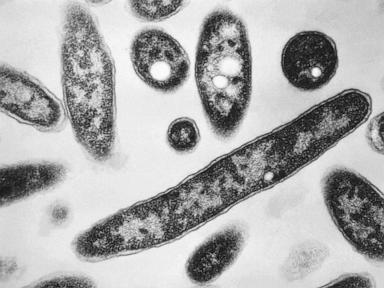
Every year, modern infrastructure creates unintended sanctuaries for ancient pathogens. When a cooling tower or a large plumbing system is improperly maintained, water temperatures hover in the exact sweet spot for danger, allowing a bacterium named Legionella pneumophila to multiply with terrifying speed. The tragedy of this disease is its stealth. You cannot see it. You cannot smell it. You only know it is there when the bodies begin arriving at local emergency rooms.
The Mist on East Tremont
To understand how a city of over eight million people becomes vulnerable to a waterborne ghost, you have to look at the architecture of our comfort. Modern buildings rely heavily on massive air conditioning systems to keep interiors bearable during brutal summer heatwaves. These systems use water to cool the air, and that water must go somewhere. It evaporates, creating a fine, microscopic mist that is pushed out into the open sky.
If that water is clean, the mist is harmless. If that water has been allowed to stagnate, the mist becomes a delivery mechanism for severe pneumonia.
Consider what happens next. A person walks down the sidewalk, perhaps rushing to catch the subway or carrying groceries home. They take a deep breath. The microscopic droplets bypass the body's natural defenses, traveling deep into the lungs, settling into the tiny air sacs where oxygen enters the bloodstream.
The human body reacts to this intrusion with immediate, violent confusion. What begins as a mild cough quickly escalates into something far more sinister. This is not the standard winter flu. It is an aggressive, fast-moving infection that targets the very mechanism of breathing.
The Phantom in the Pipes
Public health officials face a monumental task whenever a single case of Legionnaires' disease is confirmed. The bacterium does not spread from person to person. You cannot catch it by shaking hands with an infected neighbor or sitting next to someone who is coughing on the bus. It requires a common environmental source.
That realization shifts the focus from the hospital ward to the city's hidden infrastructure.
Detectives from the Department of Health must trace the footsteps of the infected, looking for intersecting paths. Where did they shop? Where do they live? Which parks did they sit in? They map these locations, looking for a central point where a contaminated cooling tower might be spraying its deadly mist over a multi-block radius.
The history of this disease teaches us that urban environments are uniquely suited to these outbreaks. The bacteria was first identified in 1976, after a mysterious respiratory illness tore through an American Legion convention at a hotel in Philadelphia. Dozens died, and hundreds fell ill before scientists realized the hotel's air conditioning system was breeding the pathogen. Decades later, despite strict regulations and advanced water treatment options, the fundamental vulnerability remains the same. Slime, scale, and stagnant water create a protective biofilm where the bacteria thrives, shielded from routine chemical cleanings.
When Breath Turns to Glass
For the families of those affected, the medical reality is a agonizing waiting game. Doctors watch the oxygen levels of patients drop as the infection causes the lungs to fill with fluid.
The illness hits older adults, smokers, and individuals with weakened immune systems with disproportionate force. While a healthy teenager might experience mild, flu-like symptoms known as Pontiac fever, an older individual faces a mortal threat. The lungs lose their elasticity. Every breath feels like trying to inhale through wet wool.
Antibiotics can kill the bacteria if they are administered early enough. But all too often, the initial symptoms are mistaken for a common cold or a standard bout of pneumonia. By the time the true culprit is identified through specific lab tests, the damage to the respiratory system is often irreversible.
The loss of a life in an outbreak like this is a stark reminder that our public health is only as strong as our collective maintenance schedules. A single building owner neglecting a rooftop tower can alter the trajectory of dozens of families who happen to live downwind.
The Geometry of an Outbreak
When news breaks of a death, panic tends to ripple through the affected neighborhoods. People stop turning on their taps. They avoid walking near large commercial properties.
Public health departments work quickly to test and disinfect suspected towers, pumping high doses of biocides into the systems to neutralize the threat. But the anxiety lingers long after the chemicals have done their job. The underlying fear is rooted in the randomness of it all. You can wash your hands, eat well, and avoid sick people, yet still fall victim to an invisible cloud generated by a machine you didn't even know existed.
The city continues to grow, its skyline stretching higher, its reliance on massive, centralized climate systems deepening. We accept these systems as part of the price of urban density, an unspoken agreement that the air inside will remain cool, and the water outside will be managed safely.
When that agreement breaks, the consequences are measured in empty chairs at dinner tables. The first death in a New York City outbreak is never just a statistic; it is a profound failure of the invisible systems designed to keep us safe while we simply try to breathe.
The summer sun beats down on the concrete streets, the haze thickens, and on hundreds of roofs, the cooling towers keep spinning, turning water into air, carrying the heavy responsibility of keeping a city alive.