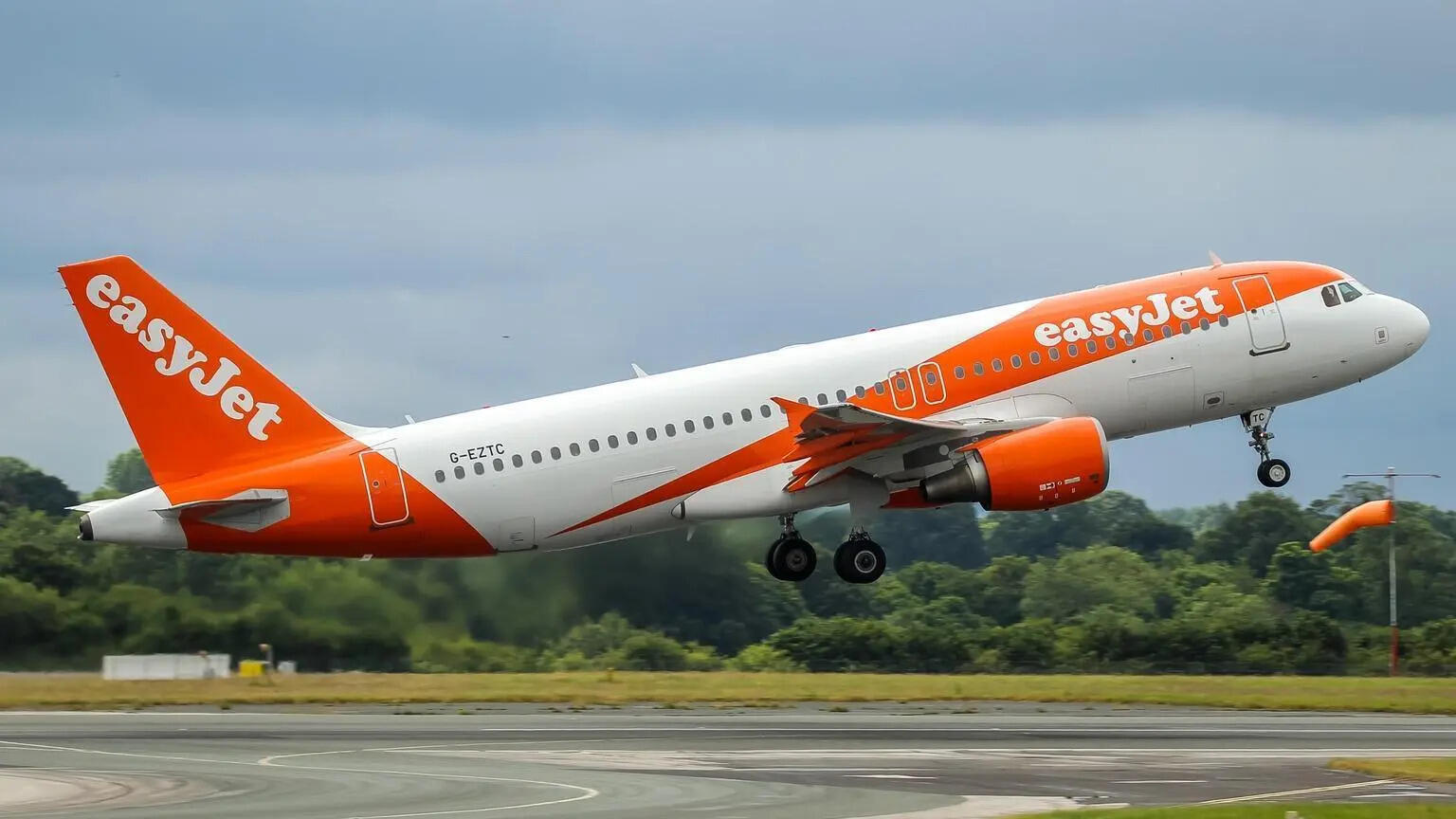
The tarmac at Manchester Airport is a labyrinth of yellow paint, screaming turbofans, and flashing strobe lights. To a passenger looking out a scratched window, it is a blur of motion. To the two professionals in the cockpit, it is a high-stakes puzzle where a single misread coordinate can change everything in a heartbeat.
It was a gray, standard morning when the crew of EasyJet Flight 2112 strapped into their Airbus A320. Destination: Tenerife. Ahead of them lay over four hours of cruising above the clouds, a routine holiday flight carrying dozens of unsuspecting passengers dreaming of Spanish sunshine.
But aviation does not care about routines. Aviation cares about precision.
On this particular day, a subtle, silent error crept into the flight deck long before the twin-engine jet ever started its roll. It was an error born not of malice or recklessness, but of the strange, high-pressure environment of modern air travel. It is a world where computers demand numbers, humans provide them, and sometimes, the translation fails.
The Physics of a Mistake
Every commercial takeoff is a calculated gamble against gravity. Before a pilot pushes the thrust levers forward, an onboard computer must know exactly how much runway is available. This length determines the speeds at which the aircraft can safely lift off, or, if something goes wrong, safely stop.
Airports have multiple entry points for a single runway. Think of them like highway on-ramps. If you enter at the very beginning, you have the full length of the asphalt to build speed. If you enter at an intersection further down, your runway is shorter.
The computer needs to know exactly which on-ramp you are using.
On Flight 2112, the pilots calculated their takeoff performance based on using the full length of Runway 23R from a taxiway intersection known as Bravo. It was a safe, standard calculation. But as they taxied through the Manchester morning, air traffic control offered a shortcut. They were cleared to take off from intersection Delta instead.
Delta was further down the strip.
Taking off from Delta meant the pilots had several hundred meters less asphalt ahead of them than the computer believed. In the fast-paced choreography of a departing airfield, the crew accepted the change. They taxied onto the runway. They pushed the throttles.
The engines roared to life.
What Happens in the Cockpit
Inside an Airbus, the illusion of safety is absolute. The instruments glow with reassuring green and blue hues. The automated systems monitor thousands of parameters per second. But automation creates a dangerous psychological phenomenon known as automation bias. We trust the screens. We believe the numbers.
As Flight 2112 accelerated down Runway 23R, the pilots were operating on data meant for a different piece of tarmac. The aircraft was traveling too slowly for the amount of runway it had left.
Consider the math happening behind the scenes. If a plane requires $1,500$ meters to reach takeoff speed safely, and the computer thinks it has $2,000$ meters, it will command the engines to use less thrust to save fuel and reduce wear. But if the plane is actually starting from a point that only leaves $1,300$ meters of concrete, it is running out of space before it runs out of gravity.
The human brain is an incredible machine, but it struggles with subtle changes in perspective. To the pilots, the runway looked long enough. The buildings flashed past. The airspeed indicators ticked upward.
Then, the end of the runway appeared much faster than expected.
Air traffic controllers in the tower watched the Airbus hurtle down the strip. They realized the aircraft was not lifting off where it should have been. The tension in a control tower during those seconds is thick enough to choke on. No one speaks. Everyone stares at the same point on the horizon.
The Invisible Margin
In aviation, safety is measured in margins. We build buffers into everything. We have backup hydraulic lines, triple-redundant computers, and extra fuel. On this day, those margins were tested to their absolute limits.
The crew realized the error late in the roll. The tarmac was running out. With the end of the runway fast approaching, the pilot flying pulled back on the sidestick. The nose pitched up. The wings bit into the air.
The aircraft climbed away into the Manchester gray, clearing the end of the runway safely, but with far less room to spare than anyone in the aviation industry ever deems acceptable. The passengers likely felt nothing more than a sharp tilt backward and the sudden sensation of flight. They ordered coffees. They looked at magazines. They had no idea that a few hundred meters of concrete had just vanished from beneath them.
A subsequent investigation by the Air Accidents Investigation Branch pulled back the curtain on what happened in that cockpit. It was not a story of incompetence. The pilots were experienced, well-trained, and sober.
The real culprit was a breakdown in the cross-checking process. When the intersection was changed, the new data was entered into the system, but the critical performance numbers were not fully recalculated for the shorter distance. It was a classic data entry trap. One pilot assumed the other had double-checked the math; the other assumed the computer had account for the change.
The Weight of Two Tones
We live in an age where we expect travel to be frictionless. We want cheap tickets, on-time departures, and seamless transitions from the terminal to the beach. To achieve this, the aviation industry has turned pilots into data managers. They spend less time wrestling with physical controls and more time typing into keypads.
But when a keyboard error can dictate whether a $70$-ton metal tube clears a perimeter fence, the nature of piloting changes. It becomes a job of intense psychological discipline. You are fighting complacency. You are fighting the voice in your head that says, We do this every day, and nothing ever goes wrong.
The incident at Manchester Airport is a reminder that safety is not a permanent state of being. It is an active, exhausting practice. Every flight requires a perfect alignment of human awareness and mechanical precision. When one slips, the other must hold.
The Airbus landed in Tenerife without further incident. The passengers stepped off into the warmth, entirely unaware of the invisible drama that had unfolded during their first thirty seconds of flight. They went to their hotels. The pilots went to a briefing room to figure out how a system designed to be foolproof had failed them.
The asphalt at Manchester Airport remains, a silent witness to a morning where the numbers almost ran out. The yellow lines are still there, waiting for the next crew to decipher them perfectly.