The coffee shop floor felt slightly uneven under Sarah’s boots as she waited for her morning latte. It was a mundane Tuesday, the kind of morning where the biggest worry is usually a dead car battery or a forgotten umbrella. But on the cracked screen of her phone, a notification flashed that seemed entirely disconnected from her world of rent payments and grocery lists: "US 10-year Treasury yield hits 4.49% after wholesale inflation shock."
To Sarah, a 32-year-old graphic designer, "wholesale inflation" sounded like something that happened in a distant warehouse, and "Treasury yields" belonged to the gray-suited men she saw darting through the financial district. She didn't feel like a player in the global bond market. She felt like a person trying to figure out if she could finally afford a starter home this year.
She didn't know it yet, but that 4.49% was a ghost in the room, reaching out to tighten its grip on her future.
The Signal in the Noise
When we talk about the Producer Price Index (PPI), the technical term for that "wholesale inflation shock," we are really talking about the cost of being alive before the bill ever reaches the consumer. Think of it as the price of the flour before it becomes the bread on your table, or the cost of the steel before it becomes the frame of your next car.
In April 2024, that cost didn't just drift upward; it jumped. The Labor Department reported a 0.5% increase in a single month. While that might sound like a rounding error, in the delicate ecosystem of global finance, it was a thunderclap. It signaled that the costs companies face are stubborn, refusing to bow to the high interest rates the Federal Reserve has used as a blunt instrument to cool the economy.
When producers pay more, they eventually stop swallowing the cost. They pass the plate to us.
But the immediate reaction wasn't at the grocery store. It was in the bond market. The 10-year Treasury note is often called the "risk-free" rate, the benchmark against which almost every other loan in the world is measured. When the wholesale inflation data leaked out, investors panicked. They realized that if inflation is sticking around, the Federal Reserve can’t cut interest rates as soon as everyone hoped.
They sold their bonds. When people sell bonds, the price goes down, and the yield—the return you get for holding that debt—goes up. That is how we arrived at 4.49%.
It is a number that represents a collective sigh of frustration from the most powerful bankers in the world. It is the sound of the "higher for longer" era slamming its fist on the table.
The Mortgage Shadow
Sarah walked back to her apartment, passing a "For Sale" sign on a charming, slightly weathered Victorian. For months, she had been tracking the numbers. She knew that every time that 10-year Treasury yield ticked upward, her dream of owning that house drifted further into the fog.
There is a direct, almost magnetic link between the 10-year Treasury yield and the 30-year fixed-rate mortgage. Lenders use the Treasury yield as their foundation. If the government has to pay 4.49% to borrow money for ten years, a bank certainly isn't going to lend Sarah money for thirty years at anything close to that. They add a "spread" to cover their risk and make a profit.
When the yield hits 4.49%, mortgage rates start knocking on the door of 7% or even 7.5%.
Consider the math of a life. On a $400,000 mortgage, the difference between a 3% rate—the golden era we left behind—and a 7% rate is roughly $1,000 every single month. That isn't just "data." That is the cost of a child's piano lessons. That is the ability to retire five years earlier. That is the difference between a life of breathing room and a life of constant, low-grade financial Suffocation.
Sarah looked at the Victorian. At 7%, the monthly payment was more than her entire take-home pay three years ago. The "wholesale inflation shock" wasn't a headline to her. It was a locked door.
The Fed’s Impossible Choice
Somewhere in a temperature-controlled room in Washington D.C., Jerome Powell and the members of the Federal Reserve are looking at the same 4.49%. They are the mechanics of a machine that is smoking under the hood, and they only have two buttons to press: one that slows the machine down and one that lets it run wild.
For over a year, they have kept interest rates at a twenty-year high. The goal was simple: make it expensive to borrow money so that people spend less, demand drops, and prices stabilize. It worked, for a while. Inflation fell from its terrifying peaks of 2022.
But the April PPI data suggests the descent has plateaued. The "last mile" of fighting inflation is proving to be a grueling uphill climb through thick mud.
If the Fed cuts rates now to help people like Sarah buy homes or to keep businesses from stalling, they risk letting inflation roar back. If they keep rates high—or heaven forbid, raise them—they risk breaking the back of the economy entirely, leading to layoffs and a recession.
The 4.49% yield is the market's way of saying, "We don't think the Fed is winning yet."
It’s a vote of no confidence in a quick return to the "old normal." The market is pricing in a reality where money remains expensive, where debt is a heavy burden, and where the easy-money party of the last decade is not just over, but a distant, hazy memory.
The Ripple in the Pond
The impact of that 4.49% doesn't stop at Sarah’s potential mortgage. It travels through the veins of the entire economy.
Take a small business owner—let’s call him Marcus—who runs a local construction firm. Marcus needs to lease new equipment to keep up with his contracts. When Treasury yields rise, the cost of corporate credit rises too. Suddenly, the monthly payment for a new excavator is $400 higher than it was last month.
Marcus looks at his books. He can't afford the equipment and the new apprentice he was planning to hire. He chooses the equipment because he can't work without it. The apprentice stays unemployed. The local economy loses a job. The ripple continues.
Even the government itself is caught in this tightening vise. The United States carries a massive debt load. When the interest rate on that debt—represented by the 10-year yield—goes up, the cost of servicing that debt explodes. More of our tax dollars go toward paying interest on old money rather than building new roads, funding schools, or researching cures for diseases.
We are collectively paying more for the past, leaving less for the future.
The Psychological Toll of 4.49
Numbers have a way of dehumanizing struggle. We talk about "basis points" and "quarter-on-quarter increases" because it's easier than talking about the anxiety of a father watching the price of eggs climb while his car loan interest reset.
The "shock" in the wholesale inflation report wasn't just about the 0.5% jump. It was about the erosion of hope. For months, the narrative was that inflation was "transitory" or "cooling." We were told the landing would be soft. But every time a report like this hits, it feels like the ground is moving further away.
It creates a culture of hesitancy. Investors hold back. Families delay big purchases. The "wait and see" mentality becomes a self-fulfilling prophecy of stagnation. We are living in an era of the "unaffordable life," where the traditional milestones of adulthood—the home, the new car, the stable savings account—feel like they are being moved to a higher shelf just as we reach for them.
The Ghost in the Machine
As evening fell, Sarah sat at her kitchen table, her laptop open to a compound interest calculator. She plugged in the new numbers, the ones dictated by a wholesale inflation report she barely understood three hours ago.
She saw the total interest she would pay over thirty years at 7.2% versus 4.5%. The number was staggering. It was the price of an entire second house, paid to a bank simply for the privilege of borrowing money in an inflationary era.
She closed the laptop.
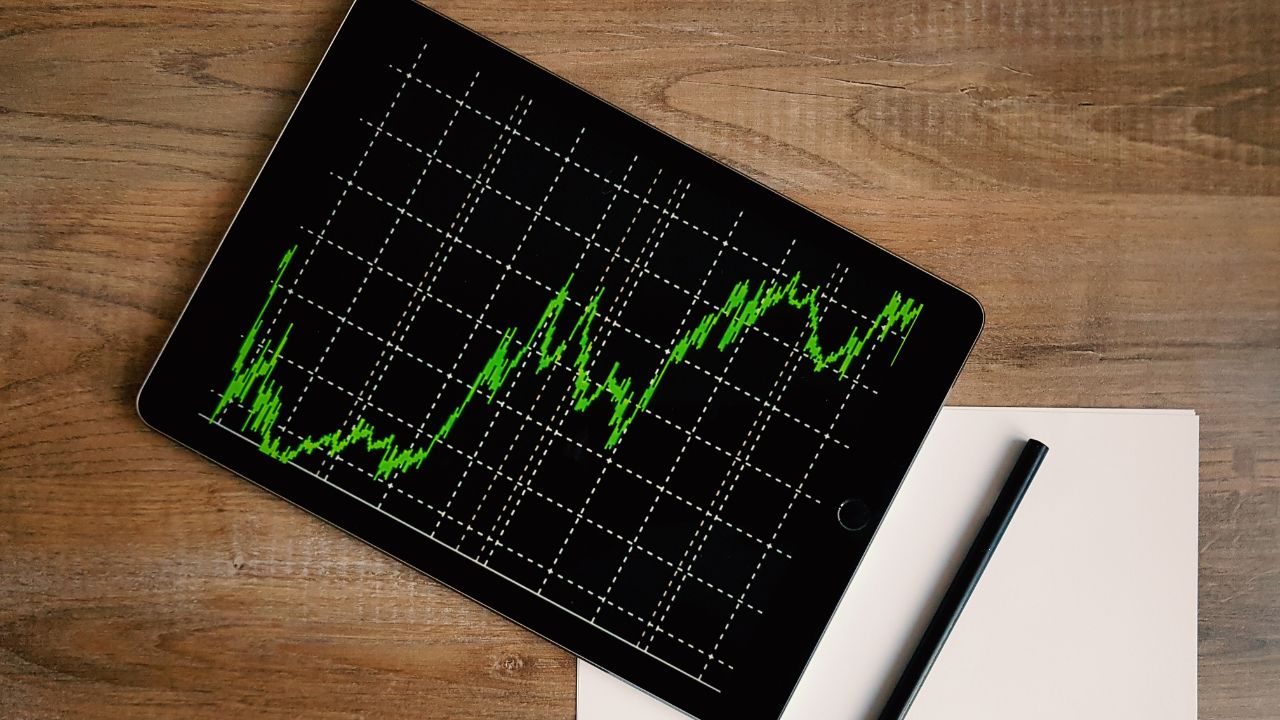
The 10-year Treasury yield isn't just a line on a chart. It is a measurement of our collective uncertainty. It is the price of the world's doubt. When it hits 4.49%, it isn't just a financial milestone; it is a weight added to the shoulders of everyone trying to build a life.
It is the silent, invisible factor that decides who gets to move forward and who has to stay put.
Outside, the lights in the Victorian house across the street flickered on. Someone else lived there, someone who likely bought it when the yields were low and the world felt a little more certain. Sarah wondered if they knew how lucky they were, or if they too were looking at the news, watching the 4.49% on their screens, and feeling the walls of the global economy slowly, quietly closing in.
The latte Sarah bought that morning was already cold. The price of the milk, the beans, and the paper cup had all been influenced by the same wholesale forces that sent the bond market into a tailspin. Everything is connected. Every "shock" in a warehouse in Ohio or a port in California eventually finds its way to a kitchen table in a quiet neighborhood.
We are all tethered to that 4.49%. We are all waiting for the machine to stop smoking, for the yields to drop, and for the ghost to finally leave the room. But for now, the hand remains on the wallet, firm and unyielding.