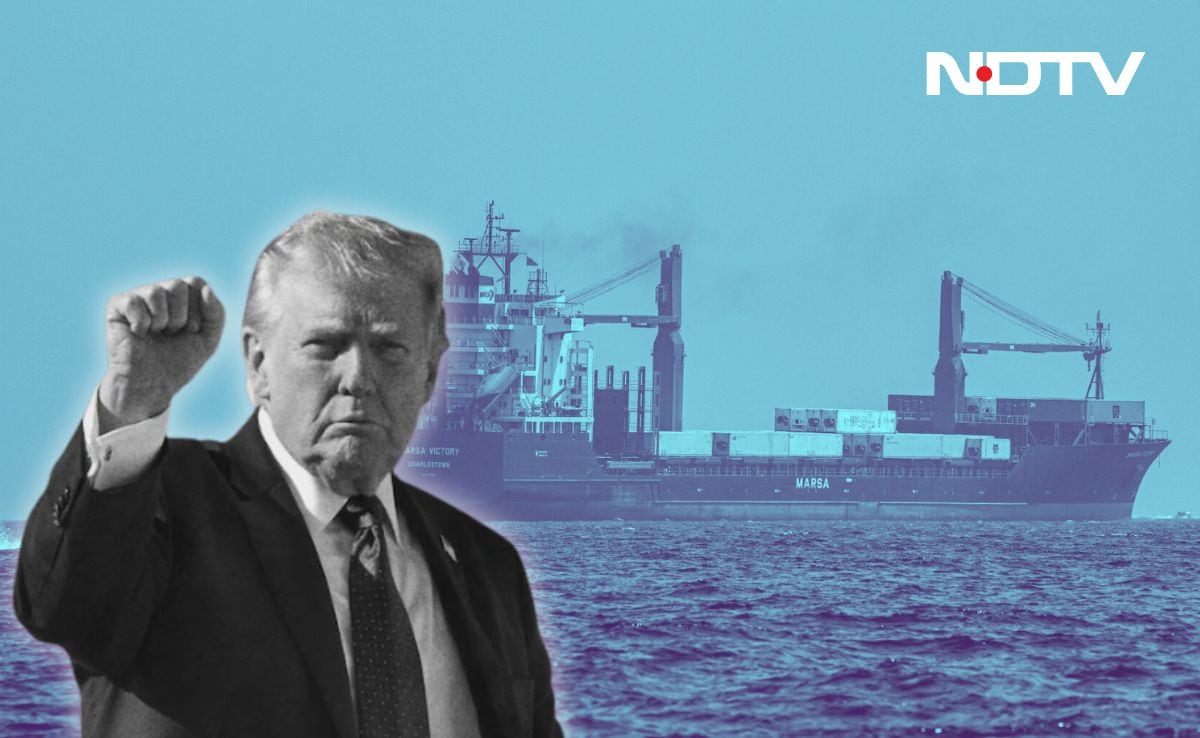
The water in the Strait of Hormuz does not look like a battlefield. On a calm morning, it is a thick, glassy turquoise, catching the fierce glare of the Persian Gulf sun. But if you stand on the coast of Oman’s Musandam Peninsula, looking out at the narrow ribbon of sea where Iran and the Arabian Peninsula almost touch, you are looking at the carotid artery of the global economy.
Twenty-one miles. That is the narrowest point. It is a distance a marathon runner could cover in a couple of hours. Yet through this tiny nautical bottleneck flows one-fifth of the world’s petroleum.
When Washington and Tehran begin to trade threats over this strip of water, the ripples do not just stay in the Middle East. They travel across thousands of miles of open ocean, quietly altering the price of a gallon of milk in Ohio, the operational budget of a manufacturing plant in Tokyo, and the heating bill of a family in Munich. The conflict over the Strait of Hormuz is rarely just about geography. It is about the terrifying fragility of the modern world.
The Mirage of an Easy Fix
Political rhetoric likes to treat the Strait of Hormuz like a garden gate—something that can be swung open or locked shut with a simple twist of a key.
Recently, the narrative shifted toward a sudden, dramatic resolution. Claims emerged that the geopolitical deadlock keeping the region on a knife-edge was about to dissolve, that a simple diplomatic re-engagement could instantly stabilize the waterway. It sounded clean. It sounded decisive.
It was also largely a fantasy.
Tehran quickly fired back, calling the celebratory announcements a mixture of truth and lies. To understand why Iran rejected the narrative of an easy fix, you have to look past the political theater and examine the physical reality of the water itself.
Imagine a highway where twenty massive supertankers, each carrying millions of barrels of crude oil, are forced to file through a single, tightly monitored lane every single day. Now imagine that the entity managing the traffic on one side of that highway has been strangled by economic sanctions for decades. They do not see the shipping lanes as a neutral commercial zone. They see them as leverage.
The View from the Bridge
To comprehend the stakes, leave the air-conditioned press rooms of Washington and Tehran behind. Step onto the bridge of a Very Large Crude Carrier (VLCC) navigating the strait.
The air inside the bridge smells of stale coffee and electronic ozone. Outside, the heat hits like a physical wall, routinely soaring past 110 degrees Fahrenheit. The captain is not thinking about grand strategy or electoral politics. The captain is looking at radar blips.
Navigating Hormuz requires absolute precision. The actual shipping channels inside the strait are only two miles wide in each direction, separated by a two-mile buffer zone. If a vessel veers just slightly off course, it enters Iranian territorial waters.
Suddenly, a fast-attack craft appears on the horizon. It belongs to the Islamic Revolutionary Guard Corps Navy (IRGCN). These are not massive destroyers; they are small, agile, heavily armed speedboats that swarm around commercial tankers like hornets. They cut across the bow. They broadcast cryptic warnings over maritime radio frequencies.
For the crew on that tanker, the grand chess match of international diplomacy shrinks down to a single, terrifying question: Will we make it to the open ocean today?
When shipping insurance companies see these encounters on the news, they do not write analytical op-eds. They raise their rates. A single spike in the "war risk premium" for a oil tanker can add hundreds of thousands of dollars to the cost of a single voyage. That cost does not vanish. It is quietly passed down the supply chain until it hits your wallet.
The Mechanics of Mirror Warfare
The public debate over whether the strait can or cannot be easily reopened misses a deeper truth about how modern economic warfare operates. It is not fought with massive invasions. It is fought with ambiguity and shadows.
Iran has spent years mastering the art of asymmetric maritime strategy. They know they cannot match the conventional naval power of the United States or its allies. They do not need to.
Instead, Tehran relies on a vast arsenal of anti-ship missiles, sea mines, and a fleet of stealthy midget submarines perfectly suited for the shallow, murky waters of the Persian Gulf. More importantly, they have mastered the grey zone.
Consider the phenomenon of the ghost fleets.
To bypass Western sanctions, a massive, parallel maritime economy has emerged. Tankers turn off their Automatic Identification System (AIS) transponders, effectively going dark on global tracking maps. They change their flags, repaint their hulls, and conduct risky ship-to-ship oil transfers in the middle of the night.
This shadow banking and shipping network has kept Iran’s economy alive despite years of maximum pressure. When Western leaders claim they can easily negotiate the reopening or stabilization of the strait, they are pretending this incredibly complex, highly lucrative underground network can be dismantled overnight with a signature on a page. Iran’s leadership knows better. They have built their survival around this chaos.
The Arithmetic of Interdependence
We like to believe our modern, digital lives are detached from the archaic realities of maritime trade. We buy software, stream media, and trade digital currencies. But the physical world still demands its tribute.
The global energy supply chain is an incredibly tight drum. There is very little slack in the system. If the flow of oil through Hormuz drops by even fifteen percent for a sustained period, the world enters uncharted economic territory.
Alternative routes exist, but they are entirely inadequate. Saudi Arabia operates the East-West Pipeline, which can pump crude across the peninsula to the Red Sea, bypassing Hormuz entirely. The United Arab Emirates has the Habshan-Fujairah pipeline. Combined, however, these backup options can handle only a fraction of the volume that moves through the strait daily. They are band-aids on a severed artery.
The reality of this interdependence means that a single miscalculation in the strait can trigger an immediate domino effect.
- Phase One: A tanker is seized or struck by a drone.
- Phase Two: Maritime insurance rates triple overnight, forcing smaller shipping companies to halt operations in the Gulf.
- Phase Three: Oil refineries in Asia, which rely heavily on heavy sour crude from the region, scramble for alternative supplies, bidding up prices globally.
- Phase Four: Gas stations across Europe and North America adjust their signs, triggering a fresh wave of inflationary pressure through every sector that relies on transportation.
This is the invisible thread connecting a remote stretch of water in the Middle East to the daily lives of billions of people who will never see it.
The Exhaustion of the Endless Standoff
Living with this constant vulnerability breeds a strange kind of collective psychological fatigue. For decades, the world has braced for the big explosion in the Persian Gulf—the definitive conflict that would close the strait and break the global economy.
But the explosion never quite happens. Instead, we get a perpetual slow burn.
A drone is shot down. A tanker is limpet-mined. A diplomatic press conference dissolves into accusations of dishonesty. We watch the oil prices tick up, then tick down, normalizing a state of constant, low-level crisis.
This normalization is the real danger. It allows political actors to make bold, sweeping claims about solving the problem, confident that the public has forgotten the intricate history of the dispute. Iran's fierce pushback against recent Western claims of progress is a reminder that the underlying grievances—the sanctions, the regional proxy wars, the fundamental battle for sovereignty—remain entirely unresolved.
The sun begins to set over the Musandam Peninsula, casting long, dark shadows across the water. Out in the shipping lanes, the lights of the supertankers begin to flicker on, one by one, forming a fragile, glowing line against the gathering dark. They move slowly, deliberately, carrying the lifeblood of our mechanized civilization through a corridor of pure uncertainty, entirely dependent on a peace that is rewritten hour by hour, lie by lie, truth by truth.