The headlines are vibrating with the same tired anxiety they’ve peddled since 2003. You’ve seen the charts of troop movements. You’ve read the frantic op-eds about "red lines" and "imminent escalations." The narrative is set: Washington is dusting off the Iraq playbook, and Iran is the next target for a full-scale regime-change invasion.
It’s a lie. Not because the players are peaceful, but because the math of modern warfare has changed while the punditry stayed stuck in the twentieth century.
The "Is the US ready to invade Iran?" question is the wrong question. It assumes that "readiness" is a matter of political will or carrier strike groups. In reality, a conventional invasion of Iran is a logistical impossibility that would bankrupt the American empire faster than any domestic crisis. If you’re waiting for boots on the ground in Tehran, you’re watching a movie that was canceled during pre-production.
The Geography of a Meat Grinder
Most analysts look at a map and see a country. They should be looking at a fortress. Iran is not Iraq. Iraq is a flat basin; once you punch through the border, it’s a straight shot to Baghdad. Iran is a rugged, mountainous plateau shielded by the Zagros and Elburz ranges.
To invade Iran, you don’t just "cross a border." You have to conduct the most complex amphibious assault since D-Day against a coastline that is essentially a thousand-mile ambush point. The Persian Gulf is a bathtub, and the US Navy is sitting in it with a toaster.
I’ve spent years analyzing defense procurement and regional logistics. The sheer scale of what is required to hold Iranian territory makes the surge in Iraq look like a weekend retreat. We are talking about a country three times the size of France with a population of 85 million people who, regardless of their feelings toward the clerical regime, have a historical tendency to unite against foreign invaders.
The "lazy consensus" suggests that US technological superiority wins the day. It doesn't. Technology wins battles; geography wins wars of attrition.
The Myth of the "Clean" Strike
The competitor's narrative often pivots to "surgical strikes" as a precursor to invasion. This is the ultimate "industry" delusion. There is no such thing as a surgical strike against a nation that has spent forty years hardening its infrastructure.
The Iranian nuclear program isn't sitting in a warehouse with a target painted on the roof. It is buried under hundreds of feet of rock in places like Fordow. To "neutralize" these assets, you don't just drop a few bombs. You initiate a multi-month campaign that necessitates the total destruction of Iran’s Integrated Air Defense System (IADS).
Once you do that, you’ve started a war. There is no "limited" version of this.
The Cost of a Closed Strait
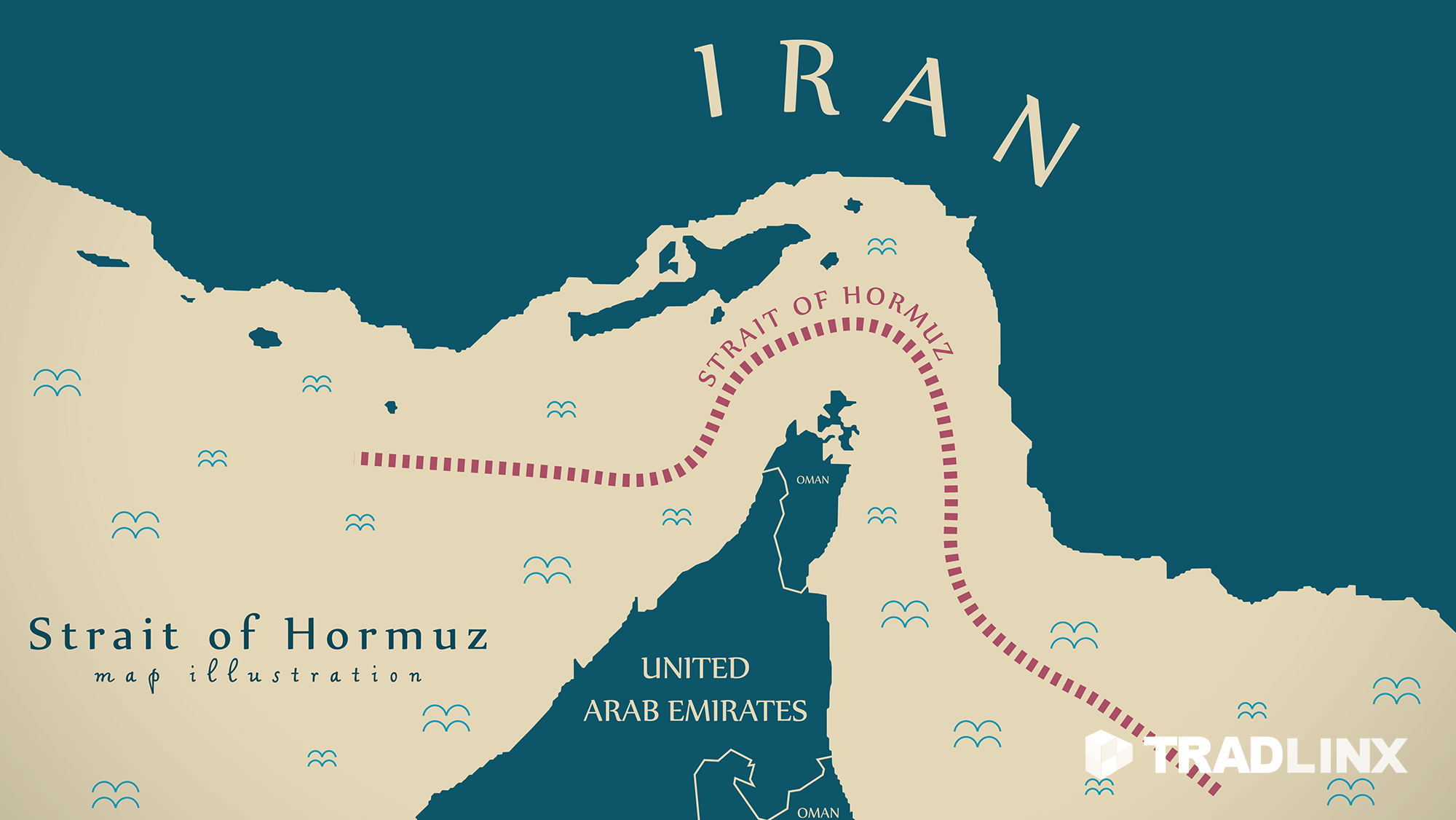
If a single Tomahawk hits Iranian soil, the global economy breaks. This isn't hyperbole; it's physics. The Strait of Hormuz is the world's most important oil chokepoint. Iran doesn't need a blue-water navy to close it. They have thousands of "suicide" fast-attack boats, sea mines, and shore-to-ship missiles hidden in coastal caves.
Imagine a scenario where oil hits $250 a barrel overnight. Your "ready to invade" theory falls apart the moment the Western middle class realizes they can't afford to drive to work. The US political system cannot survive the economic fallout of an Iranian counter-strike on energy infrastructure. Washington knows this. Tehran knows this. Only the professional pundits seem to have forgotten.
Trump’s Cabinet is a Signal, Not a Strategy
The media points to "hawks" in the administration as proof of an impending invasion. This is a fundamental misunderstanding of how the current administration operates. These appointments aren't a war council; they are a marketing department for "Maximum Pressure 2.0."
The goal isn't to occupy Tehran. The goal is to squeeze the Iranian economy until the regime is forced to accept a deal that makes the JCPOA look like a gift. It’s a leveraged buyout approach applied to geopolitics.
- Sanctions are the primary weapon. They are cheaper than aircraft carriers and don't come with body bags.
- Proxy attrition is the secondary weapon. Using regional allies to bleed Iranian resources in Yemen, Syria, and Lebanon.
- Cyber warfare is the tertiary weapon. Stuxnet was just the beginning; the real war is happening in the code of power grids and water treatment plants.
When you see a carrier move into the North Arabian Sea, don't think "invasion." Think "theatrical intimidation." It’s a classic sales tactic: show the client the worst-case scenario so they sign the contract you actually want.
The Asymmetric Nightmare
We need to talk about the "Millennium Challenge 2002." For those who don't know, this was a massive US war game simulating a conflict with a Middle Eastern adversary (clearly Iran). The "Red Team" commander, Lt. Gen. Paul Van Riper, used "low-tech" tactics—motorcycles, light planes, and small boats—to sink sixteen US warships, including an aircraft carrier, in the first few days.
The Pentagon restarted the exercise with "corrected" rules because they couldn't handle the reality: a high-tech military is incredibly vulnerable to asymmetric swarm tactics in confined waters.
Iran has spent twenty years perfecting exactly what Van Riper proved would work. They aren't going to meet a US tank division in an open field. They are going to use $20,000 drones to destroy $2 billion destroyers. They are going to use Hezbollah to turn the entire Levant into a front line.
The "People Also Ask" Delusion
People ask: "Can the US take Tehran in a week?"
The answer is: Maybe.
The real question is: "Can the US leave Tehran in a decade?"
The answer is: No.
The hard truth that the "pro-invasion" crowd avoids is that there is no viable "Day After" plan. If you collapse the Islamic Republic, you inherit a vacuum filled by various ethnic separatist groups, IRGC remnants, and a humanitarian crisis that would dwarf the Syrian refugee wave. The US has no appetite for another twenty-year nation-building project that ends with a frantic evacuation from an airport.
The Strategic Pivot to Nowhere
The US is currently trying to "pivot to Asia" to counter China. You cannot pivot to Asia while being sucked into a land war with 85 million Iranians. Beijing would love nothing more than for the US to commit five carrier groups and half its ground forces to the Zagros Mountains. It would be the greatest gift the CCP ever received.
The hawks in Washington are loud, but the accountants and the globalists are louder. The business of America is not war; it's the maintenance of a global order that allows for the flow of capital. An invasion of Iran is the "black swan" event that ends that order.
Stop Falling for the Hype
The "invasion" talk is a distraction. It’s a tool used by politicians to look tough and by media outlets to drive clicks.
The reality is much more boring and much more brutal. We are entering a decade of "Gray Zone" conflict. It will be characterized by assassinations, currency devaluations, satellite interference, and regional proxy skirmishes. It is a war of a thousand cuts, not a single knockout blow.
If you are waiting for a declaration of war and a beach landing, you’ve already missed the conflict. It’s happening right now, in the banking systems and the drone factories.
The US isn't ready to invade Iran because the US isn't stupid enough to try. The costs are infinite, the gains are marginal, and the risk of total systemic collapse is 100%.
Anyone telling you otherwise is either selling a book or looking for a job at a think tank funded by defense contractors.
Go back to your charts. Look at the terrain. Look at the Strait. Look at the debt clock.
The invasion is a fantasy. The stalemate is the reality. Deal with it.