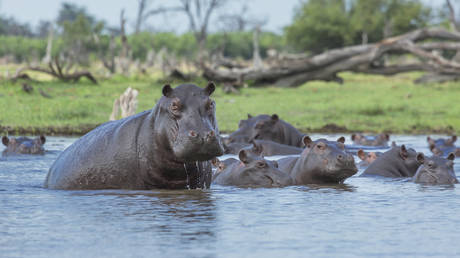
The international community is currently swooning over a bizarre geopolitical rescue mission. Recent headlines trumpet Russia’s offer to spearhead a coalition to relocate Pablo Escobar’s infamous "cocaine hippos" from the Magdalena River basin to sanctuaries abroad. The narrative is predictably heartwarming. It features images of vulnerable, displaced megafauna rescued from the brink of a state-sanctioned cull by benevolent foreign interventionists.
It is a beautiful story. It is also an ecological disaster wrapped in a public relations stunt.
The Western media’s collective obsession with saving these animals represents a profound, dangerous misunderstanding of conservation biology. For years, well-meaning animal rights groups and opportunistic foreign governments have treated Colombia’s hippopotamus problem as a sentimental rescue operation. In reality, it is a textbook biological invasion that threatens to permanently alter one of the most biodiverse aquatic ecosystems on the planet. By framing the removal or eradication of these animals as a tragedy, foreign observers are prioritizing internet-friendly sentimentality over actual environmental science.
The harsh truth is simple. The hippos must go, and the global fixation on saving them is actively sabotaging Colombia's native ecosystems.
The Myth of the Accidental Rewilding
Let us dismantle the most prominent academic defense of Colombia's hippos: the concept of "accidental rewilding."
A handful of fringe researchers have argued that the introduction of Hippopotamus amphibius to South America inadvertently replaces extinct Pleistocene megafauna. The argument suggests these four-ton beasts are merely filling an ecological niche left vacant since giant ground sloths and gomphotheres roamed the continent 10,000 years ago.
This is bad science masquerading as progressive ecology.
I have spent years analyzing how invasive species disrupt fragile habitats, and the data regarding the Magdalena River tells a grim story. Unlike Africa's sub-Saharan rivers, which evolved over millennia to handle the massive organic load generated by hippo herds, Colombian waterways are highly sensitive, nutrient-poor systems. A single adult hippo consumes up to 80 pounds of vegetation a night and deposits an equivalent mountain of nutrient-rich waste directly into the water during the day.
Biologists at the Universidad Nacional de Colombia and the regional environmental agency, Cornare, have documented the results. The massive influx of nitrogen and phosphorus is driving severe eutrophication. This process triggers toxic cyanobacteria blooms, chokes out native fish populations, and depletes dissolved oxygen.
To compare this destructive payload to the ecological footprint of extinct, land-based Pleistocene mammals is absurd. The Magdalena River is not a prehistoric savannah. It is a modern, delicate river system supporting hundreds of endemic species of fish, manatees, and otters that are completely unequipped to survive a hostile takeover by African megafauna.
The Relocation Lie
When local authorities suggested a targeted cull to control the population—which has surged past 150 individuals and could hit 1,000 by 2035 if left unchecked—the international backlash was swift. Activists demanded relocation. Enter foreign governments and private sanctuaries offering to fly these animals across oceans to safe havens in Mexico, India, or Russia.
This is a logistical fantasy designed to make donors feel good while accomplishing absolutely nothing.
Consider the cold mechanics of moving a hippo. Capturing a wild, territorial, two-ton mammal in a dense tropical river basin requires heavy sedation. Hippos are notoriously difficult to anesthetize; their thick skin makes darting highly imprecise, and their unique physiology means they often suffocate under their own weight or drown if they retreat into the water before the drugs take effect.
Even if you successfully sedate the animal, the economics are indefensible. Relocating a single hippo costs tens of thousands of dollars in specialized crates, heavy machinery, air freight, and veterinary oversight. To move the current population would require millions.
Where does that money come from? It is stripped away from underfunded local conservation programs desperately trying to protect the cotton-top tamarin, the jaguar, and the West Indian manatee—native species that lack the charismatic outlaw appeal of Escobar’s pets. Spending millions of dollars to airlift a destructive invasive species across the globe while native species slide quietly into extinction is not conservation. It is an ethical failure.
The Chemical Castration Failure
When relocation proves too expensive, critics of population management point to chemical sterilization or surgical castration as the humane alternative. "Why not just fix them?" asks the internet chorus.
Because it has already been tried, and it is an unmitigated failure.
Cornare has spent years attempting to administer GonaCon, a contraceptive vaccine, via darts, alongside performing actual surgical castrations on select individuals. The operational reality is a nightmare. Tracking a wild hippo through muddy terrain, administering a highly precise dose, and tracking the animal for necessary booster shots is nearly impossible in the dense Colombian wilderness.
Surgical castration is even more dangerous. A hippo’s testes are internal, requiring complex, invasive abdominal surgery in an open-field environment where infection risks are sky-high. The process takes hours, puts veterinary teams at extreme physical risk, and costs roughly $10,000 per animal.
While a dedicated team manages to castrate a handful of males over several months, the rest of the herd continues to breed exponentially. The math simply does not work. You cannot out-sterilize a breeding rate that is accelerating in an environment with zero natural predators, endless food, and no droughts to check population growth.
The Human Cost of Sentimentality
The international discourse completely ignores the human element. In Africa, hippos are widely recognized as one of the most dangerous mammals on the continent, responsible for hundreds of human fatalities each year. In Colombia, a generation has grown up viewing them as quirky tourist attractions.
That illusion is breaking down.
Hippos have already begun expanding out of the immediate vicinity of the Hacienda Nápoles estate, moving into agricultural zones and fishing villages along the Magdalena River. There have already been documented attacks on local farmers and fishermen. A collision between an SUV and a hippo on a highway in Puerto Triunfo highlighted the escalating public safety crisis.
When a wealthy Western activist or a foreign politician campaigns to save these animals from a cull, they are actively choosing the lives of invasive predators over the safety and livelihoods of Colombian rural communities. It is a patronizing, neo-colonial approach to conservation that dictates how a sovereign nation should manage its territory, while bearing none of the physical or economic consequences of that decision.
Stop Trying to Fix the Unfixable
The hard truth that nobody wants to admit is that euthanasia is the only viable, ecologically responsible path forward.
Every single day spent debating the ethics of a cull or waiting for a foreign government to fund a highly publicized airlift is a day the Magdalena River inches closer to ecological collapse. The hippos are reproducing faster than any relocation or sterilization program can manage.
True conservation requires making brutal, unsentimental choices based on data, not optics. If we genuinely care about protecting global biodiversity, we must support Colombia’s right to eradicate an invasive threat using the most efficient, humane methods available.
Stop funding the international rescue syndicates. Stop cheering for empty political gestures from foreign capitals. Let the local biologists do their jobs before the Magdalena River becomes a dead zone. All the emotional internet outrage in the world will not bring back a destroyed ecosystem once the damage is complete. Knock off the sentimentality and let the cull happen.