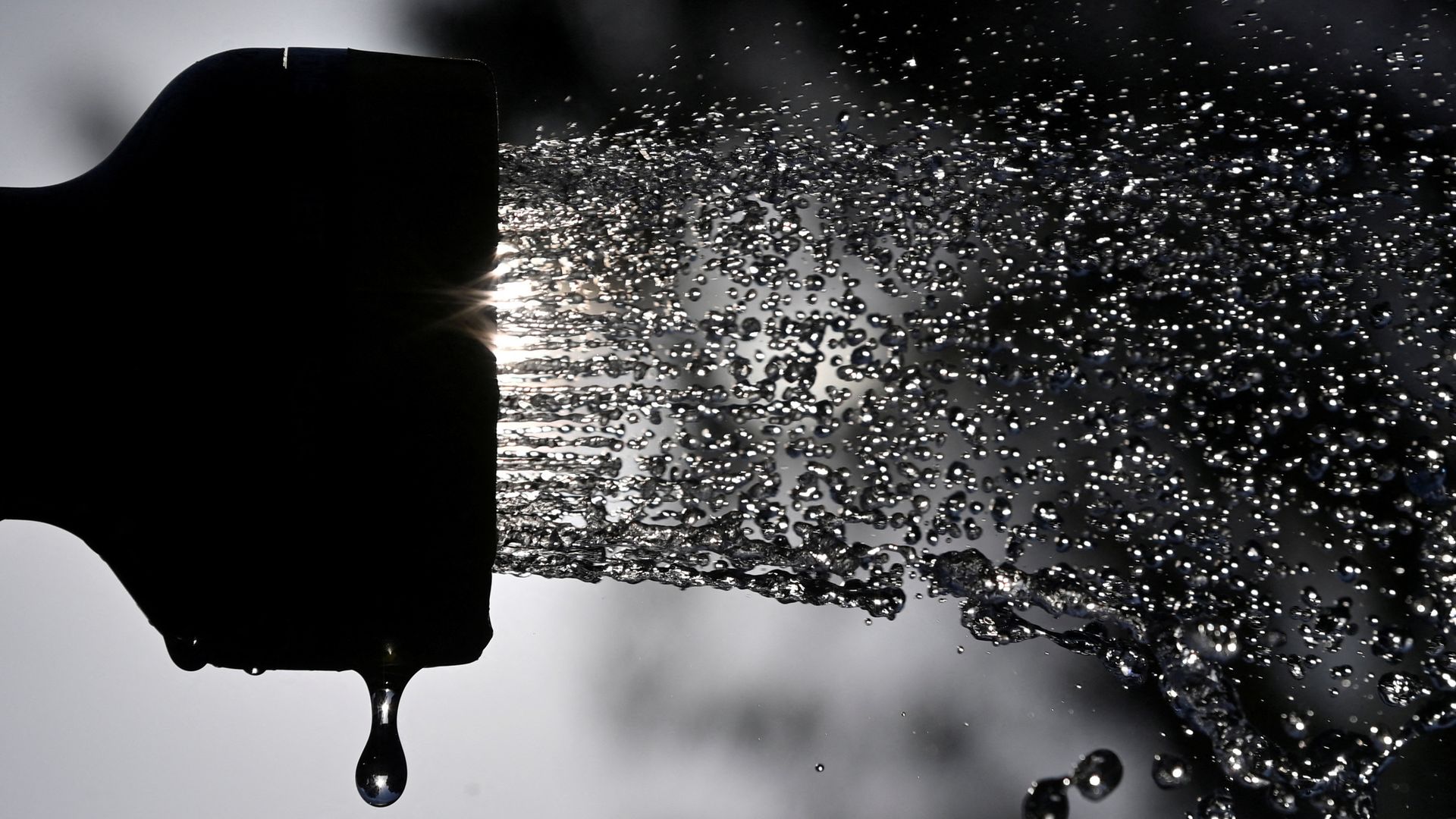
Millions of households across south and south-east England are now under strict temporary use bans, turning the simple act of using a garden hose into a criminal offense carrying a £1,000 fine. Water companies point to record summer heatwaves, parched reservoirs, and declining groundwater levels as clear evidence of a climate emergency.
But this is a crisis born of financial engineering, not just dry weather.
While the public is told to ration every drop, the infrastructure distributing that water is fundamentally broken. The math reveals a striking disparity. A network-wide hosepipe ban saves approximately 577 million liters of water a day. Meanwhile, water companies in England and Wales leak an astonishing 2.87 billion to 2.95 billion liters every single day. The network hemorrhages five times more water through cracked, aging pipes than a total hosepipe ban could ever hope to conserve.
The Economics of a Leaky System
For more than three decades, the privatized water industry has operated on a model that prioritizes shareholder returns over capital reinvestment. It has been 37 years since a major new reservoir was built in England, leaving the country reliant on a Victorian-era grid entirely unsuited for modern demands.
The structural failure is most visible in the ongoing collapse of Thames Water. Serving 15.5 million people, the utility has accumulated over £15 billion in debt after years of aggressive dividend payouts and financial restructuring. In July 2026, the company drew down the final £677 million of an emergency debt lifeline, warning that it could completely run out of money by November.
"Roughly 20% of all treated water is lost to leaking pipes before it ever reaches a consumer's tap."
When a fifth of the product vanishes underground, any retail business would face bankruptcy. In the regulated utility sector, however, these systemic inefficiencies are routinely priced into the asset base.
Why Changing the Pipes is Not Happening
Fixing the problem is not a simple matter of dispatching repair crews. The UK water mains network spans more than 426,000 kilometers, much of it laid in clay-heavy soils that shift, shrink, and swell with seasonal temperature spikes. During a summer heatwave, the ground shifts violently, cracking brittle Victorian cast-iron pipes precisely when supply tension is at its worst.
Water System Imbalance (Daily Liters)
===================================================
[||||] 577M Liters Saved via Ban
[||||||||||||||||||||] 2.87B+ Liters Lost via Leaks
===================================================
To achieve modern infrastructure standards would require a wholesale, generational replacement of the underground network. The price tag for such an overhaul runs into hundreds of billions of pounds—far exceeding the industry's current £104 billion investment cycle for the late 2020s.
Instead of undertaking this radical transformation, companies use regulatory mechanisms to request massive hikes in consumer bills. Thames Water, for instance, previously floated the necessity of a 40% bill increase to make its turnaround plan attractive to international investors.
The Regulatory Failure
The economic regulator, Ofwat, has found itself trapped between a political mandate to keep consumer bills affordable and an infrastructure crisis that requires massive capital injections. While Ofwat has instituted financial penalties for companies missing leak targets, the fines are treated by mega-utilities as a cost of doing business rather than a deterrent.
About one-third of the total leakage actually occurs on customer supply pipes—the network running from the street mains to individual properties. While utilities claim this shifts part of the legal responsibility to the property owner, the argument rings hollow to a public watching billions of liters bubble through cracked public asphalt every afternoon.
The introduction of smart water meters and acoustic sensors has helped identify localized network drops, but data analytics cannot fix a pipe that has been rotting since the late 19th century.
The Push for Public Ownership
With climate advisors warning that intense droughts could leave England with a daily water shortfall of 5 billion liters by the 2050s, the current corporate structure appears entirely unsustainable. The conversation is rapidly shifting toward structural overhaul.
The government continues to evaluate a senior creditor-backed rescue plan involving a £9.4 billion debt write-off, but political appetite for corporate bailouts is low. The alternative is the Special Administration Regime: a formal mechanism that would place failing water giants into temporary public ownership.
Nationalization is no longer a radical theoretical position; it is a live operational blueprint.
Demanding that citizens stop watering their gardens while billions of gallons leak out of an unmaintained grid is a political strategy with a very short shelf life. The temporary use bans plastered across regional news are not a reflection of shifting weather patterns, but a visible symptom of a corporate model that ran out of water, ran out of money, and ran out of time.