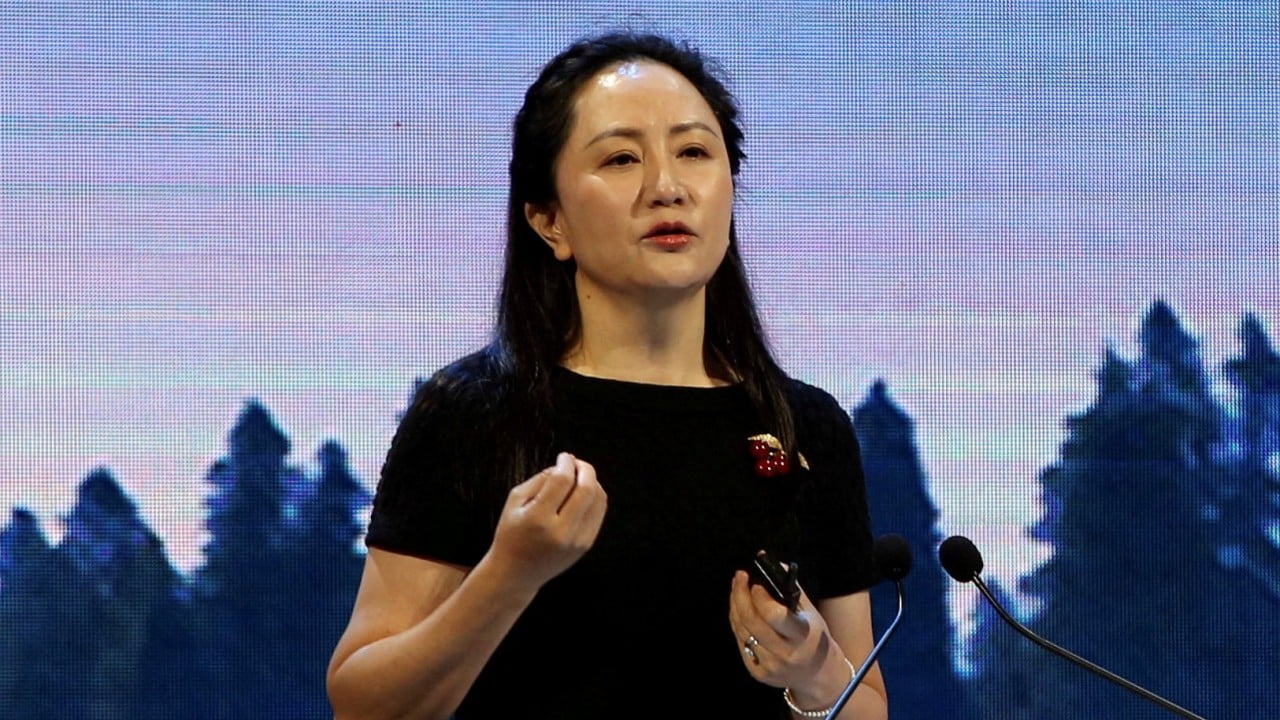
A federal judge in Brooklyn dropped a legal hammer that fundamentally alters the upcoming criminal trial of Chinese telecom titan Huawei. US District Judge Ann Donnelly ruled that prosecutors can use the explicit, highly damaging admissions made by Huawei Chief Financial Officer Meng Wanzhou against the corporation itself when jury selection begins on September 8. This decision essentially turns the company’s own crown jewel executive into the chief witness for the American government, blowing a hole through Huawei’s long-standing defense strategy.
The ruling directly addresses the core tension of corporate criminal liability. Huawei had fiercely argued that using Meng’s past statements would violate its corporate right to remain silent, and that it should have the right to cross-examine her at trial. Judge Donnelly discarded those objections in four crisp pages, noting a simple, unassailable reality: Meng was, and still is, the Chief Financial Officer of Huawei Technologies. When she spoke about her corporate actions, she spoke for the company.
To understand why this matters, one has to look back to the high-stakes geopolitical drama of 2018. Meng, the daughter of Huawei founder Ren Zhengfei, was arrested on a US warrant during a layover in Vancouver. What followed was a three-year diplomatic standoff that locked Canada, China, and the United States in a bitter circle of recrimination. Meng spent those years under house arrest in her multi-million-dollar Vancouver mansion, fighting an extradition request grounded in allegations of massive bank fraud.
The standoff broke in September 2021 through a highly unusual deferred prosecution agreement. To secure her freedom and fly back to a hero's welcome in Shenzhen, Meng signed a four-page statement of facts. In that document, she admitted to misleading a global financial institution—specifically HSBC—about Huawei’s hidden control over Skycom Tech, a shell company operating illegally in Iran in direct violation of US sanctions.
The Precision of the Legal Trap
Corporate defense attorneys usually try to shield a company from the actions of rogue employees. That playbook fails here because Meng is corporate royalty, and her 2021 deal was engineered precisely to protect her personally while leaving the corporate entity fully exposed.
By signing that statement of facts to save herself from an American prison cell, Meng handed the Department of Justice a signed confession detailing how Huawei bypassed international banking compliance systems. She admitted that she told bank executives that Huawei’s relationship with Skycom was merely "normal business cooperation." She admitted that this statement was false. She acknowledged that Huawei maintained absolute operational control over Skycom, using the entity to clear roughly 100 million dollars in US-dollar transactions through the American financial system while supporting telecom projects in Iran.
Judge Donnelly's ruling means prosecutors do not need to call Meng to the stand to prove these facts. They can simply read her signed admissions to the jury. The defense cannot cross-examine a written document, nor can they realistically argue that their own CFO was lying when she confessed under penalty of perjury.
The Corporate Illusion of Silence
Huawei’s legal team attempted a sophisticated constitutional maneuver. They argued that because the corporation itself has a right to a fair trial, introducing a non-testifying co-defendant's confession would breach evidentiary rules. They wanted the benefits of a corporate shield without the corporate accountability.
Judge Donnelly rejected this logic by focusing on the doctrine of adoptive admissions. When a company keeps an executive in the C-suite after that executive formally documents corporate actions taken during their employment, the company cannot suddenly pretend those actions belong to an isolated individual. Huawei adopted her conduct by utilizing her leadership to sustain its banking relationships.
The strategic implications for the September trial are severe. Prosecutors are no longer tasked with connecting a series of circumstantial dots through lower-level employees and encrypted emails to prove the sanctions-busting scheme. The apex of the company has already drawn the map for them.
A Decoupled Battlefield
This trial is no longer just about banking compliance or historical transactions in the Middle East. It has evolved into a broader war over industrial espionage and technological supremacy. The Department of Justice has since piled on a superseding indictment, adding charges of systematic trade secret theft. They allege a multi-year corporate effort to steal intellectual property from American competitors, cementing Huawei’s status as Washington's primary economic adversary.
Western nations spent years attempting to isolate the company, cutting off access to advanced American semiconductors and banning its equipment from 5G networks over national security anxieties. Conventional wisdom suggested these restrictions would cripple the telecom giant.
The reality on the ground contradicts that narrative. Huawei did not collapse under the weight of export controls. Instead, the company pivoted. It re-engineered its supply chains, developed domestic silicon alternatives, and expanded aggressively into smart vehicle components and enterprise artificial intelligence infrastructure within the Chinese domestic market.
This resilience makes the upcoming Brooklyn trial an unpredictable battleground. While Huawei has detached itself from heavy reliance on the American financial system, a criminal conviction in a US federal court carries massive structural penalties. It gives Washington the legal mandate to impose absolute, secondary sanctions on any foreign bank, logistics firm, or tech supplier that continues to do business with the company worldwide.
The Department of Justice is not merely seeking a symbolic fine or a corporate slap on the wrist. They are laying the groundwork for an administrative execution. By locking Meng Wanzhou’s admissions into the evidentiary record, the court has stripped Huawei of its rhetorical armor, forcing a company that rebuilt its entire technological foundation to face its own history inside an American courtroom.