The Fracture Line Across the Rhine
When European officials talk about trade deficits, they usually hide behind bloodless accounting jargon. They talk about capital flows and supply chain recalibrations while ignoring the industrial wreck in their backyard. The European Union's commercial deficit with China widened past three hundred billion euros, exposing a structural flaw that Brussels can no longer paper over with diplomatic statements.
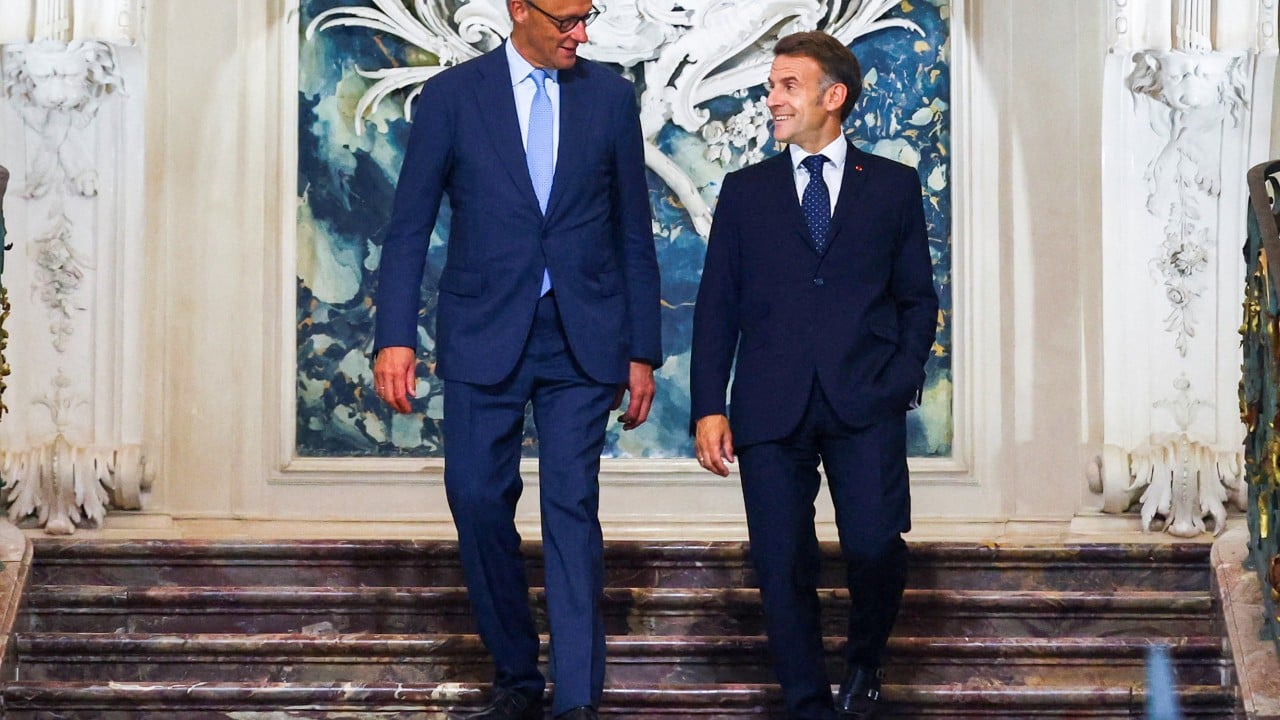
For years, Paris played the role of the hawkish outsider, warning that cheap, state-subsidized Chinese manufactured goods would eventually gut European manufacturing. Berlin played the quiet beneficiary, relying on Beijing to buy high-end machinery and premium cars. That silent pact is over. Germany's industrial machine is stalling, forced to pivot toward France's confrontational trade posture because its own corporate leaders can no longer secure profitable market share in China. For a more detailed analysis into similar topics, we suggest: this related article.
This shift is not a sudden ideological awakening. It is a desperate tactical retreat driven by bleak balance sheets.
+-------------------------------------------------------------------+
|               EU-CHINA TRADE DYNAMICS: THE PIVOT                  |
+-------------------------------------------------------------------+
|  TRADITIONAL MODEL               |  NEW REALITY                   |
|                                  |                                |
|  * Germany exports machinery     |  * China manufactures its own  |
|  * France demands tariffs        |  * Germany backs French tariffs|
|  * Beijing absorbs capital goods |  * EU markets flooded with EVs |
+-------------------------------------------------------------------+
How the German Export Model Broke Down
The mechanics of this breakdown are straightforward. The old playbook relied on a reciprocal economic marriage. Germany supplied the advanced industrial tools, precision equipment, and internal combustion vehicles that propelled China’s modernization. In return, Europe imported consumer goods, electronics, and low-cost components. For additional background on this issue, extensive analysis is available on Reuters.
That model functioned as long as Chinese domestic producers lagged behind Western engineering capabilities. They no longer do.
Beijing directed hundreds of billions in direct state capital, subsidized credit, and cheap land toward domestic industrial titans. Chinese firms stopped buying German capital equipment because they started building their own. Worse, they began exporting those same high-value goods back into the European single market at prices European factories cannot match without operating at a loss.
Take the automotive sector. When an electric vehicle built in Jiangsu ships to Hamburg with a price tag twenty percent below a comparable vehicle assembled in Lower Saxony, consumers buy the cheaper car. The margin compression hits the supply chain immediately. Tier-two and tier-three automotive suppliers across the Ruhr Valley are slashing shifts, laying off technicians, and quietly freezing capital expenditure.
France recognized this trend early because its domestic industries lacked Germany’s initial technical advantage. Former French leadership pushed for aggressive anti-subsidy duties, protective tariffs, and strict local-content mandates. Berlin resisted for a decade, terrified that Beijing would retaliate against German automakers operating factories inside Chinese borders.
The turning point came when those same German automakers realized their Chinese factories were losing market share to agile local manufacturers anyway. Retaliation became a secondary fear. Survival at home became the primary concern.
The Subsidies Machine vs Market Economics
Understanding why European producers are losing requires examining the financial plumbing of Chinese industrial policy. Western trade policy operates on the assumption that corporations compete against corporations under standard market conditions. European companies borrow money at commercial interest rates, answer to quarterly earnings demands from shareholders, and pay market-adjusted energy rates.
The competitive landscape in East Asia operates under fundamentally different mechanics.
State Directed Capital Flows
State-owned banks extend credit based on strategic production targets rather than immediate profitability. If a local battery cell plant loses money for five consecutive years, state credit continues to flow as long as the plant meets regional output goals and maintains employment levels.
Energy Subsidies
Municipal governments absorb local utility costs for strategic manufacturing hubs, giving heavy industrial producers an immediate overhead advantage over European competitors facing elevated post-2022 energy prices.
Vertical Supply Integration
By controlling the processing of critical raw materials from lithium to rare earths, domestic producers secure input materials at cost, while foreign buyers pay global spot prices marked up by supply volatility.
    [State Banking Sector] ---> Low-Interest Credit ---+
                                                       |
    [Municipal Utilities]  ---> Discounted Energy   ---+---> [Domestic Manufacturer]
                                                       |
    [Raw Material Chains]  ---> Input at Cost       ---+
                                                       |
                                                       v
                                            [Undercuts Global Market]
When these elements combine, a European manufacturer running on private capital cannot compete on price. It is not an issue of corporate inefficiency or inferior engineering. It is a structural conflict between market-based corporations and a state-backed production engine.
The Friction Inside Brussels
While Berlin and Paris are moving toward a unified front, the mechanics of implementing trade defenses across twenty-seven member states remain chaotic. Smaller European nations without heavy industrial bases view cheap imports differently.
A country whose economy relies primarily on services or agriculture sees little benefit in paying higher prices for electric cars or solar components just to preserve factory jobs in Bavaria or Lyon. These governments fear that French and German industrial hawkishness will trigger a trade war that hurts their own export sectors, such as agriculture, wine, or luxury products.
Beijing understands these internal divisions and exploits them effectively. By targeting specific national exports—like pork from Spain or spirits from France—in response to proposed EU tariffs, China creates immediate domestic political pressure within individual member states.
Consider a hypothetical trade dispute over solar panel components. If Brussels levies a thirty percent duty on imported silicon wafers, a German panel manufacturer might survive. However, an Italian installation firm relying on cheap components goes out of business, laying off solar installers in Naples. The trade defense that saves a factory in the north breaks a business in the south.
This dynamic creates endless friction inside the European Commission. Drafting trade policy becomes an exercise in managing collateral damage across borders rather than presenting a firm, unified economic posture.
Beyond Tariffs
Tariffs are a blunt instrument. They make noise in headlines, but they rarely solve the underlying structural imbalance. Raising duties on foreign goods merely passes the cost onto domestic consumers while providing a temporary buffer for struggling local factories.
If the European bloc wants to reverse this downward trend, it has to move beyond defensive tariffs and overhaul its internal industrial strategy.
- Reforming State Aid Rules: Current regulations severely restrict European governments from directly subsidizing domestic high-tech manufacturing, leaving local firms exposed to heavily subsidized global competitors.
- Securing Raw Material Channels: European manufacturers remain vulnerable to sudden export controls on critical minerals. Joint procurement initiatives must secure long-term access to essential raw inputs independent of single-source suppliers.
- Mandating Reciprocal Market Access: European markets remain largely open to foreign capital, while Western firms operating abroad face joint-venture requirements, forced technology transfers, and restricted access to public procurement contracts.
- Reducing Energy Costs for Heavy Industry: High energy costs across Western Europe render energy-intensive manufacturing non-viable over the long term, regardless of tariff protections.
The hard truth is that Europe waited too long to address these vulnerabilities. For two decades, European politicians treated cheap imports as a free lunch that kept inflation low while high-margin capital exports kept national treasuries full. They ignored the reality that technical advantages expire and state-directed economies do not play by market rules.
The convergence of French economic nationalism and German industrial desperation represents a turning point for European trade policy. Yet, erecting trade barriers without fixing domestic energy costs, burdensome regulatory environments, and capital market fragmentation will not save European industry. It will only make the eventual decline more expensive for the citizens who foot the bill.