The rare diplomatic alarm sounded by London, Paris, and Berlin this week exposes a fundamental shift in the geopolitical chessboard. By issuing a joint condemnation of "novel" Chinese maritime operations east of Taiwan, the three major European powers are acknowledging a grim reality. Beijing is no longer just threatening an invasion across the narrow Taiwan Strait. It is actively executing a chokehold maneuver on the island’s Pacific flank, threatening the maritime lifelines that sustain the global economy. This coordinated European response reveals that the continent's leadership now views a Taiwan conflict not as a distant Asian flashpoint, but as an immediate threat to Western economic survival.
The Illusion of the Taiwan Strait Barrier
For decades, military planners focused almost exclusively on the western side of Taiwan. The ninety-mile-wide Taiwan Strait was seen as the primary arena where any future conflict would ignite.
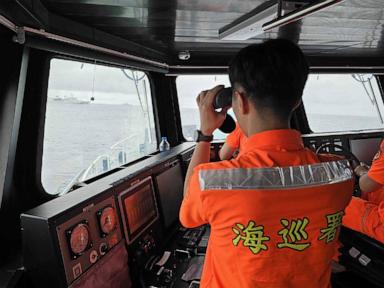
That geographic comfort zone is gone. The joint statement from the British Office Taipei, the French Office in Taipei, and the German Institute Taipei targeted aggressive maneuvers occurring in the open Pacific waters to the east of the island. This area was historically considered Taiwan's secure backyard and its primary route for reinforcement from the United States and its allies. By deploying coast guard patrols and maritime survey vessels to these deep waters, Beijing is demonstrating its ability to isolate the island completely.
This is grey-zone warfare executed with clinical precision. Instead of using gray hull warships that would trigger an immediate military escalation, Beijing utilized the China Coast Guard to intercept and interrogate commercial vessels. European intelligence sources indicate that these ships targeted at least three international merchant vessels, demanding documentation and claiming sovereign jurisdiction over waters that have always been treated as international shipping lanes.
The timing was calculated to maximize psychological impact. It occurred just as Taiwan commenced its five-day immediate combat readiness exercises, designed to test how rapidly its forces can transition from peacetime posture to active defense.
The Fujian Shadow and the Strategic Chokehold
The naval hardware backing these law enforcement operations removes any doubt about Beijing's ultimate objective. Just hours after the European statement, China sailed its newest and most advanced aircraft carrier, the Fujian, through the region.
The Fujian represents a massive leap in naval engineering. It is China's first domestically designed carrier equipped with electromagnetic catapults, allowing it to launch heavier aircraft with greater fuel and weapons payloads more frequently than its predecessors.
Deploying this specific asset during Taiwan's combat readiness drills sends an unambiguous message to the international community. The People’s Liberation Army can project sustained air and naval power into the Philippine Sea, effectively blocking the exact corridors the US Navy would use to project assistance from bases in Guam and Japan.
Taiwanese Defense Minister Wellington Koo openly labeled these maneuvers as a form of cognitive warfare. The goal is to convince both the Taiwanese population and Western capitals that defense of the island is mathematically impossible. When Chinese authorities announced they had inspected nearly two hundred vessels and rectified violations in these waters, they were establishing a legal precedent of administrative control.
This bureaucratic creep is far more dangerous than an outright amphibious assault. It allows Beijing to slowly strangle Taiwan's economy under the guise of domestic traffic regulation without firing a single shot.
Why Europe Blew Its Diplomatic Cover
European nations usually prefer to hide behind ambiguous diplomatic statements regarding Taiwan. They lack formal diplomatic relations with Taipei and are deeply dependent on trade with mainland China.
The sudden public intervention by the UK, France, and Germany indicates that the economic stakes have surpassed the limits of diplomatic politeness. A blockade or disruption of the waters east of Taiwan would instantly paralyze European manufacturing. Over half of the global container fleet passes through the Taiwan Strait and surrounding waters annually. More importantly, the advanced semiconductors that power everything from German automobiles to French aerospace systems are manufactured almost exclusively on the island.
The Western capitals cannot afford to look away. Their joint declaration emphasized that the safety of international shipping and all navigational rights must be guaranteed under international law.
This European assertiveness is also a response to shifting regional dynamics among US allies in Asia. Japanese Prime Minister Sanae Takaichi previously signaled that Tokyo views the security of Taiwan as directly linked to Japan’s own survival, hinting at potential military involvement if the status quo is shattered. By backing the rules-based order in the Pacific, London, Paris, and Berlin are trying to reinforce a global deterrent matrix, showing Beijing that an aggressive move will trigger a unified economic and political response from the entire Western bloc.
The Failure of Traditional Deterrence
The current strategy of issuing strongly worded statements is yielding diminishing returns. Beijing has consistently ignored these diplomatic protests, viewing them as empty rhetoric unaccompanied by real economic or military consequences.
China's Foreign Ministry routinely dismisses these concerns as foreign interference in its internal affairs. The state apparatus maintains that Taiwan is a breakaway province, and its official statements reiterate that Beijing will never renounce the use of force to achieve what it terms reunification. Every joint statement issued by European capitals is met with increased sorties of fighter jets and deeper incursions by maritime survey ships mapping the underwater topography around Taiwan's critical undersea communication cables.
The West faces a structural dilemma. If European powers limit their actions to diplomatic paperwork, Beijing will continue to advance its maritime boundaries through incremental enforcement. If they escalate by sending their own naval assets to escort commercial shipping through the area, they risk a direct kinetic confrontation with a highly modernized Chinese navy operating right on its own doorstep.
The reality on the water is changing faster than Western policy can adapt. Taiwan's defensive strategy is shifting toward asymmetric warfare, accelerating the deployment of mobile missile launchers and sea drones to counter the growing encirclement. Yet, as the warning time for a potential conflict shrinks from weeks to hours, the margin for diplomatic miscalculation disappears entirely. The joint warning from Europe is not a sign of strength. It is a confession of profound anxiety over a maritime theater where the West is rapidly losing its ability to dictate the terms of engagement.