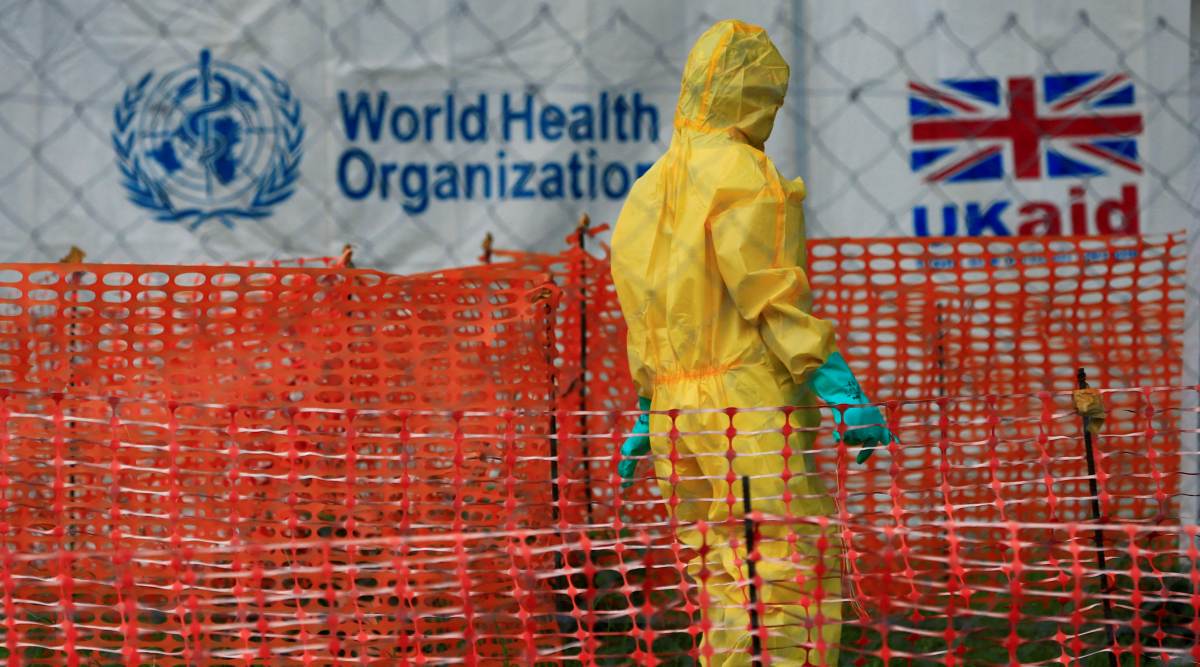
The World Health Organization declarations of a Public Health Emergency of International Concern follow a familiar script. Bureaucrats sound the alarm, international media cycles through a brief panic, and the public assumes a mutant super-virus is about to breach their borders. But the reality of the current Ebola outbreak is far more mundane and significantly more terrifying. The crisis is not a failure of medical science, which now possesses highly effective vaccines and monoclonal antibody treatments. It is a failure of infrastructure, trust, and historical memory.
Ebola is not an unstoppable invisible killer. It is a fragile pathogen that requires direct contact with bodily fluids to spread, meaning every single infection is preventable. The emergency exists because the structural systems designed to contain it are broken from the ground up.
The Illusion of a Biological Monster
Public imagination treats Ebola as an apex predator of the microscopic world. It liquefies organs, it strikes without warning, and it kills with terrifying speed. This dramatic framing makes for excellent cinema, but it completely distorts how the virus actually operates in the wild.
In reality, Ebola is a remarkably poor traveler. Unlike respiratory viruses that can drift across a crowded subway car on a sneeze, Ebola demands proximity. It spreads through direct contact with the blood, secretions, or other bodily fluids of someone who is already visibly, profoundly ill, or from the bodies of those who have succumbed to the disease.
When an outbreak spirals out of control, it is never because the virus suddenly learned how to fly. It happens because basic infection control has collapsed.
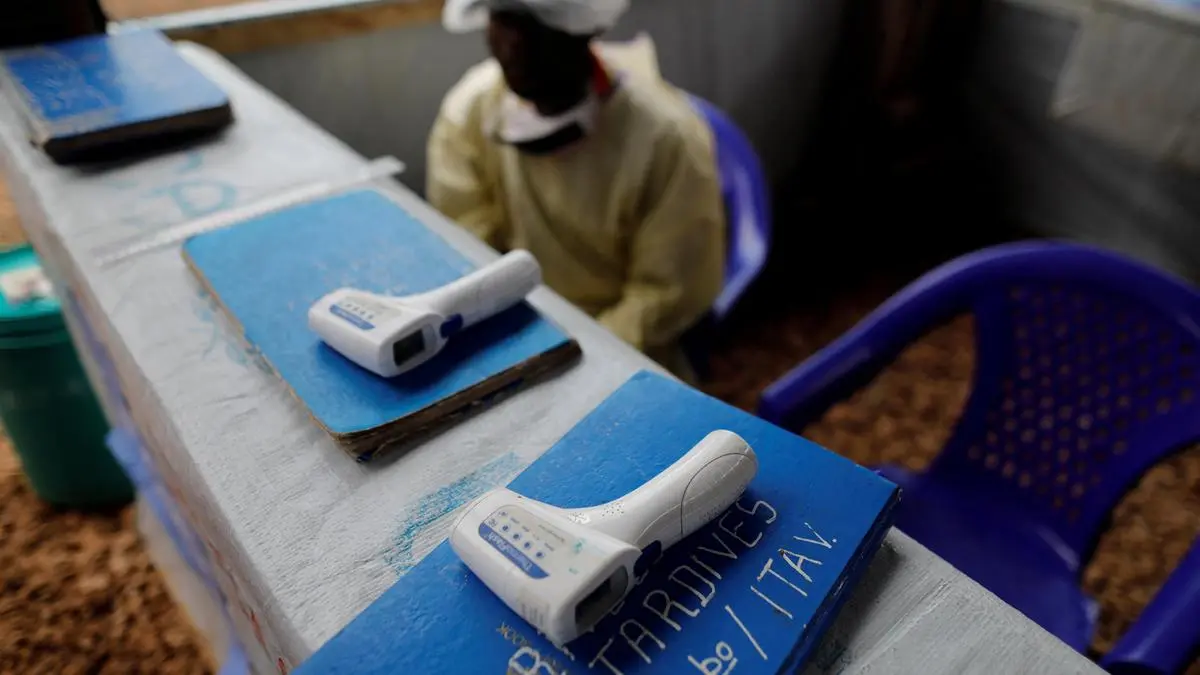
Consider a typical rural clinic in a zone under economic duress. If a nurse lacks disposable gloves, or if running water is a luxury rather than a guarantee, a single undiagnosed patient becomes a vector. The medical staff, working with the best intentions but without the bare essentials, become the primary transmitters.
By the time the international community notices the spike in cases, the virus has already used the healthcare system itself as an accelerator. The monster isn’t the microbe. The monster is the deprivation that allows it to pool and spread.
The Vaccine Paradox
We currently possess tools that past generations of epidemiologists could only dream of. The Ervebo vaccine, a highly effective single-dose shot, offers robust protection against the Zaire strain of the virus. We also have targeted treatments like Inmazeb and Ebanga, which utilize monoclonal antibodies to neutralize the virus even after infection has taken hold.
Scientifically, the war should be over. Logistically, it has barely begun.
The Ervebo vaccine requires ultra-cold chain storage. It must be kept at temperatures between -60°C and -80°C until shortly before administration. Delivering a medicine that requires conditions colder than an Antarctic winter to a remote village with an unstable power grid is an absolute nightmare.
Imagine a hypothetical scenario where a health worker must transport two hundred doses of this vaccine across a dirt road washed out by seasonal rains. They are traveling via motorcycle, balancing a specialized cooler powered by a shifting battery pack. If the battery dies or the road delays them by twelve hours, the doses are ruined. They are tracking a biological fire with wet matches.
This creates a brutal paradox. The communities that need the intervention most are the ones least equipped to receive it. The existence of a cure on a shelf in Geneva or Atlanta does nothing for a patient in a village that cannot even secure steady electricity for its surgical theater.
The Skepticism Built on History
Even when the cold chain holds and the vaccines arrive, health workers routinely hit a wall of human resistance. This is often written off by Western observers as ignorance or misinformation. That interpretation is lazy, condescending, and dangerously wrong.
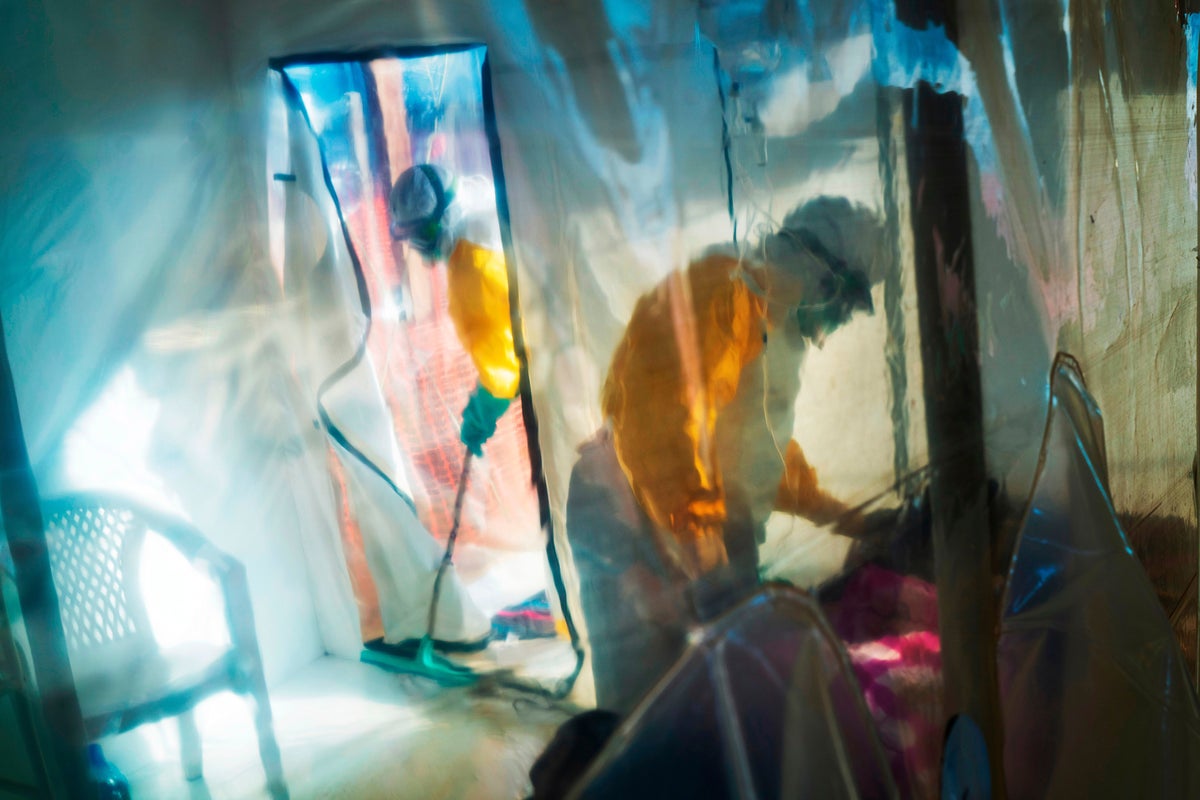
When an international medical team rolls into a marginalized community wearing positive-pressure suits, driving pristine white SUVs, and speaking foreign languages, they do not look like saviors. They look like an occupying force.
For decades, these same populations may have watched their children die of easily preventable diseases like measles, malaria, or basic diarrheal dehydration without seeing a single international dollar. Then, suddenly, a disease appears that threatens the global North, and millions of dollars in bio-containment gear arrive overnight.
The local population looks at this sudden influx of resources and draws a logical conclusion. This intervention is not for their benefit; it is to protect the outsiders.
When health teams demand that traditional burial practices be abandoned—practices that involve washing and honoring the deceased, which are highly infectious moments with an Ebola victim—they are asking families to desecrate their dead based on the word of strangers. Without deep, localized trust, the medical response becomes a source of friction rather than healing.
The Fatal Flaw in Global Health Funding
The international community treats global health emergencies like sudden, unpredictable lightning strikes. Funding flows in a reactive surge once the alarm is sounded, and then evaporates the moment the immediate threat drops off the front pages.
This boom-and-bust cycle is fundamentally incompatible with viral containment.
[Emergency Declared] -> [Massive Funding Surge] -> [Temporary Staff Deployment]
                                                                  |
[Neglect & Vulnerability] <- [Resources Evaporate] <- [Outbreak Contained]
When the money dries up, the specialized isolation wards are repurposed or left to rot. The local contact tracers, who spent months building relationships with skeptical communities, lose their stipends and return to other work. The surveillance systems that monitor wildlife reservoirs for the next spillover event go dark.
We are essentially paying to put out a house fire over and over again, while refusing to install indoor plumbing or inspect the electrical wiring.
Building a resilient healthcare system means paying for the unglamorous things. It means funding consistent salaries for local nurses, ensuring a steady supply of clean needles, and establishing reliable clean water access. If a clinic can manage a routine case of cholera safely, it can handle the first case of Ebola before it triggers a global alert.
The Wildlife Reservoir We Cannot Close
We cannot eradicate Ebola because we cannot eradicate its natural hosts. The virus resides in fruit bats of the Pteropodidae family, which carry the pathogen without showing symptoms.
As human populations expand through logging, mining, and agricultural development, the buffer zone between civilization and wildlife vanishes. A child eats a piece of fruit dropped by a bat; a hunter prepares wild bushmeat for a local market. The barrier drops, and the virus crosses over.
These spillover events are a mathematical certainty as long as economic pressures drive deforestation and unregulated foraging. You cannot solve the Ebola problem without addressing the economic realities that force people deeper into primeval forests.
Telling a subsistence farmer to avoid hunting bushmeat when his family is facing malnutrition is a non-starter. Environmental policy, economic security, and public health are not separate silos. They are the exact same problem described in different words.
The Reality of Containment
The path to containing the current emergency requires dropping the cinematic heroics and focusing on the grinding work of logistics and community politics.
First, the international community must decentralize control. Local health workers, religious leaders, and traditional healers must be the face of the response, armed with the resources and training to do the work themselves. They have the cultural currency that money cannot buy.
Second, the fixation on high-tech cures must be balanced by an obsession with basic supplies. A clinic stocked with infinite monoclonal antibodies but zero clean linen is still a death trap.
The current outbreak will eventually subside, not because we invented a miracle, but because enough resources will be thrown at the wall to temporarily blunt the transmission chains. But until the underlying structural decay is repaired, the next outbreak is already incubating in the shadows, waiting for our attention to drift away once more.