The British prime minister is broken. When Keir Starmer stood outside Downing Street on Monday morning to announce his resignation, he was not just confirming his own political demise after fewer than two years in power. He was certifying a systemic collapse.
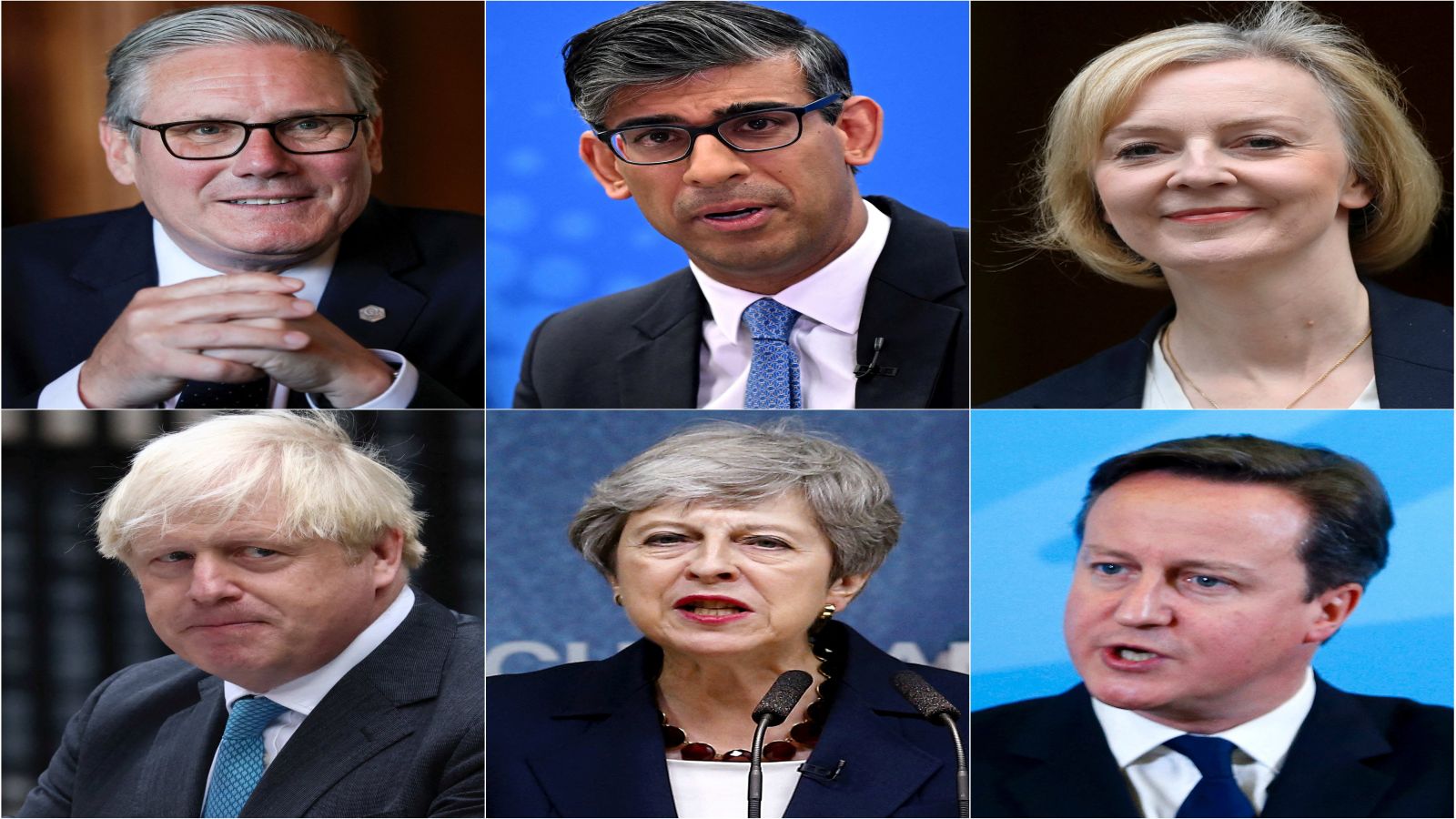
Britain has now burned through six prime ministers in a single decade. The position that once offered a baseline of international stability has transformed into a high-turnover management position where the occupant is chewed up, spat out, and replaced before the ink on their manifesto dries.
Voters are told that each downfall is isolated. They are told that David Cameron got unlucky with a referendum, Theresa May lacked negotiating flair, Boris Johnson lacked personal integrity, Liz Truss lacked economic sense, Rishi Sunak lacked a political connection with the public, and Starmer lacked a clear message. This diagnosis is shallow. The reality is far darker. The modern British premiership has been hollowed out by structural rot, institutional panic, and a Westminster ecosystem that makes sustainable governance impossible.
The Myth of the Imperial Prime Minister
Modern political science often frames the British prime minister as an autocrat in all but name. They command a parliamentary majority, control the patronage machine, and guide the national narrative. This view is completely obsolete.
The machinery of Number 10 is shockingly small and chronically weak. Unlike the White House, which acts as a massive executive branch with thousands of dedicated staffers, the British prime minister operates out of a cramped, 18th-century townhouse with a small circle of transient political advisers and career civil servants. When a prime minister enters office with a historic majority, as Starmer did in July 2024, they find themselves sitting at a steering wheel that is entirely disconnected from the engine of the state.
This structural weakness creates an immediate reliance on a tiny, insular group of strategists. For Starmer, this meant falling into a protective crouch with a narrow circle of operators. When policy ideas failed to materialize, the prime minister could not lean on a massive institutional policy shop because one simply does not exist inside Downing Street. Instead, the administration began replacing top civil servants and political aides in a panicked attempt to find a magic fix for stagnant growth and crumbling public services. It was a classic symptom of a deeper illness. If the structure cannot deliver, the leader takes the blame.
Why Big Majorities Mean Absolutely Nothing Now
The conventional wisdom of British politics dictated that a large parliamentary majority guaranteed survival. If you held the numbers, you held the power. That rule was obliterated by the Conservative collapse and has now been double-checked by the rapid fall of Labour.
Majorities are wider now, but they are incredibly shallow. The electorate is volatile, drifting between parties with an ease that would have horrified 20th-century party managers. Starmer’s massive 2024 victory was built on a platform of voter fatigue with the previous government rather than an outpouring of love for his specific platform. The moment the new administration stumbled into unforced political errors, the coalition of convenience dissolved.
The immediate driver of Starmer’s fall was the rapid erosion of support within his parliamentary party, driven by sheer terror. Members of Parliament watch opinion polls with a degree of panic that makes long-term policy formulation impossible. In May's local and devolved elections, Labour suffered heavy losses. MPs saw the anti-immigration Reform UK party rising in nationwide polls while urban, progressive voters defected to the Green Party.
The instinct of the modern backbencher is no longer loyalty to the leader. It is personal survival. When a prime minister’s personal approval ratings crater, their own MPs turn on them with vicious speed. The party machinery acts as a circular firing squad, seeking to remove the leader before the national infection guarantees their own job losses at the next election.
The Toxic Legacy of Post Brexit Churn
The structural instability cannot be understood without examining the historical chain reaction that began in 2016. Every single prime minister since the European Union referendum has been trapped in a cycle of crisis management that leaves no room for actual strategy.
David Cameron walked away the morning after the nation rejected his stance on Europe, setting a dangerous precedent. He established the idea that if a prime minister loses a major political gamble, the correct response is to leave someone else to sweep up the glass.
Theresa May inherited the resulting mess. She spent three agonising years attempting to force a highly complex withdrawal agreement through a fundamentally divided Parliament. She was caught between a hardline faction of her own party that demanded an absolute break with Europe and an opposition that smelled blood. Her downfall was not a failure of character. It was a mathematical mathematical certainty.
Boris Johnson capitalized on that deadlock by promising to just get it done. He won a major election victory in 2019, yet his entire premiership became a masterclass in institutional degradation. The administration behaved as though rules were for other people, culminating in the lockdown-busting parties that shattered public trust. When his ministers finally revolted in 2022, it was not because they had suddenly discovered a moral compass. It was because the data showed the public had stopped believing a word he said.
Then came the absurd interlude of Liz Truss. Her 49 days in office proved that a prime minister can no longer ignore global financial markets. By proposing a massive package of unfunded tax cuts, she triggered an immediate run on the pound and sent mortgage rates soaring. It was the purest demonstration of the modern prime minister’s helplessness. The markets simply vetoed her policy, and her party dumped her before the week was out.
Rishi Sunak was brought in as a technocratic accountant to stabilize the sinking ship. He lasted less than two years, hamstrung by high inflation and a public that had already decided the party’s time was up. His exit opened the door for Starmer, who promised to be the sober adult who would end the circus.
Instead, the circus simply changed its flags.
The Mirage of the Non Politician Leader
Starmer's undoing offers a critical lesson for the future of British governance. He was sold to the public as a non-traditional politician. A former human rights lawyer and Director of Public Prosecutions, he was supposed to bring managerial competence and legal rigor to a system exhausted by drama.
This exact background became his undoing. Governance is not a legal exercise. It requires an innate political instinct, a clear worldview, and the ability to articulate a compelling story to the public. Starmer lacked all three.
From the beginning, the administration operated on a risk-averse strategy designed to avoid mistakes rather than to build something new. The government entered office without a coherent theory of change. They treated every challenge as a blank sheet of paper, looking for a bureaucratic fix rather than a political solution.
The public quickly grew cynical. When the government moved to restrict winter fuel payments for pensioners while simultaneously dealing with a controversy over senior politicians accepting gifts of clothing and event tickets, the narrative of a clean break from the past died. The appointment of Peter Mandelson as the UK ambassador to the United States capped off this pattern of profound political misjudgment. When old controversies surrounding Mandelson re-emerged, the prime minister’s handling of the situation looked weak and reactive.
Competence is not a policy. If a leader cannot explain what the sacrifices are for, the public will eventually decide the pain is pointless.
The Destructive Power of the Media Loop
The pace of British political life is now dictated by an aggressive, 24-hour media cycle and social media platforms that amplify outrage. A prime minister no longer has months to let a policy bed in. They do not even have days.
A policy announced at 9:00 AM is analyzed, criticized, and condemned by noon. By the evening news, backbench MPs are already being asked if they still support the leader. This creates an environment of constant panic inside Downing Street. Decisions are made not based on ten-year outcomes, but on how to survive the next two hours of television interviews.
This constant anxiety leads to a pattern of rapid policy reversals. During his short time in office, Starmer developed a reputation for abandoning positions the moment they encountered serious resistance. Far from projecting flexibility, this constant shifting convinced both his party and the public that he lacked core convictions. Once a prime minister is viewed as a leaf in the wind, their authority is gone.
The Coming Andy Burnham Era
The exit of Starmer opens the path for Andy Burnham, the former Mayor of Greater Manchester, to take control of Downing Street. Burnham’s return to Westminster via a special election in Makerfield was explicitly designed to position him as the savior of a party in freefall.
Burnham represents a completely different style of politics. He has spent years outside the Westminster bubble, cultivating an image as a champion of the regions against a distant, uncaring capital. He understands how to communicate with working-class voters who have drifted toward populist alternatives.
Yet, any observer who believes a change of leadership will magically solve Britain's underlying crisis is delusional. Burnham will inherit the exact same broken system that destroyed his predecessors. He will face an economy stuck in long-term stagnation, public services on the brink of collapse, and a parliamentary party that has learned that the easiest way to handle a drop in the polls is to decapitate the leader.
The British premiership has become a poisoned chalice. Until the country addresses the fundamental weaknesses of how its executive branch operates, how its parties choose leaders, and how its political class communicates with the public, the doors of Downing Street will continue to revolve. The next crisis is not a matter of if, but when.