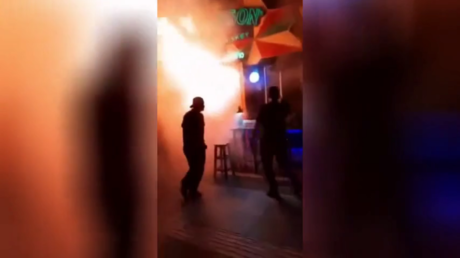
The tragic fire at the Rong Beer Na Lat Phrao pub in northern Bangkok, which claimed at least 27 lives and left over 60 injured, is not an isolated accident. It is the predictable consequence of a systemic regulatory failure deeply embedded in the city's nightlife economy. While initial coverage focused heavily on the graphic social media videos of panicked patrons fleeing horizontal plumes of fire, the real story lies in the structural, financial, and regulatory compromises made long before the first spark ignited.
When the blaze broke out near the main stage just before midnight on Sunday, the venue turned into a lethal trap within seconds. The immediate cause appears to be an electrical short circuit in a ceiling air conditioning unit, which quickly ignited cheap, highly flammable soundproofing foam. But smoke and structural fire do not kill dozens of people simultaneously if emergency infrastructure functions as intended. The staggering death toll at this licensed venue was entirely preventable, caused directly by blocked emergency exits, padlocked doors, and architectural modifications designed to protect profits over human lives.
The Anatomy of a Nightlife Death Trap
First responders arriving at the Na Lat Phrao beer hall faced an immediate obstacle course. The main entrance was quickly choked by a jet of flame and toxic black smoke, forcing hundreds of patrons to look for alternative exits in total darkness after the power grid failed. What they found instead were dead ends.
A high concentration of the deceased was discovered crammed into the rear bathrooms. Investigations revealed that panicked customers fled toward the toilets because the official emergency exits were either hidden, heavily obstructed, or outright unopenable.
[Main Stage / Source of Fire]
       │
       ▼ (Path of Toxic Smoke & Fire)
[Main Crowd Area] ───► Blocked Exit 1 (Piled with Beer Crates)
       │
       ▼ (Crowd Flees Blindly to the Rear)
[Kitchen & Bathrooms] ───► Blocked Exit 2 (Bolted to Prevent Unpaid Tabs)
       │
       ▼
[Fatal Trapped Zone]
Inspectors found that one emergency exit was actively blocked by stacks of heavy beer crates and tables, a common space-saving tactic in crowded venues. More damning, however, was the state of a crucial rear exit door located near the kitchen. Thai Prime Minister Anutin Charnvirakul, during a direct inspection of the blackened hull, confirmed that this door was secured from the inside with two heavy bolts.
The rationale behind the locked door is as mundane as it is criminal. The venue proprietor had ordered the exit bolted out of fear that customers would use it to slip out into the night without paying their bar tabs. To hide the security breach, the door was marked with a "staff only" sign. In the pitch black, choking environment of a fast-moving structure fire, patrons had zero chance of identifying it as a path to survival.
The Mirage of Compliance
Bangkok Governor Chadchart Sittipunt noted that the Rong Beer Na Lat Phrao possessed all the legal permits required to operate as a restaurant and live music venue. It had even passed a formal municipal fire safety inspection just three months prior, in April. At that time, inspectors documented functional emergency signs, clear pathways, and an adequate distribution of fire extinguishers.
This reveals the central flaw in the city's enforcement mechanism. The condition of a nightlife venue during a scheduled daytime municipal walkthrough bears almost no resemblance to its layout during peak operational hours. Once the inspectors leave, tables are added to maximize floor space, exit corridors are converted into temporary inventory storage, and secondary doors are locked for asset protection.
Furthermore, the extensive use of cheap soundproofing materials remains a rampant, unchecked hazard across the capital's entertainment districts. To comply with city noise ordinances and avoid complaints from surrounding residential neighborhoods, bar owners line ceilings and walls with highly combustible polyurethane foam. When exposed to an electrical arc, this material acts as a solid accelerant, dripping liquid fire onto the crowd below while releasing highly toxic hydrogen cyanide and carbon monoxide gas. It is the smoke, saturated with these toxins, that knocked out the victims long before the flames ever reached the back of the building.
The Unbroken Line of Historical Precedent
The script of the Na Lat Phrao disaster is identical to historical tragedies that have defined Thai nightlife regulation for decades.
The repetition of these exact variables across a seventeen-year window points to a structural failure in accountability. In the aftermath of each tragedy, high-profile raids are conducted, sweeping orders are issued to inspect every venue in the country, and minor scapegoats are prosecuted. Yet, the economic incentives that govern the nightlife sector ensure that the baseline environment remains dangerous.
The Economic Realities of Enforcement
A stark gray area exists between rigid safety codes and the survival metrics of small-to-medium entertainment businesses. Upgrading a commercial venue to include modern, automated fire suppression systems, certified non-flammable acoustic treatment, and pressurized smoke-evacuation shafts costs millions of Baht. For many operators running on razor-thin margins, such capital expenditures are completely unfeasible.
Instead, a informal system of accommodation often fills the gap. Venue owners manage regulatory pressure through localized agreements, relying on the fact that spot-checks are infrequent and predictable. When safety violations are treated as negotiable line items rather than absolute operational red lines, catastrophes like the one in Lat Phrao become matters of statistical certainty.
National Police Chief Kittiratt Phanphet has established criminal negligence as the core focus of the current investigation. While the immediate managers and owners of the venue will undoubtedly face severe legal consequences, true systemic reform requires changing how municipal inspections are handled. Random, unannounced inspections during peak operating hours—specifically targeting the accessibility of emergency exits and the structural composition of interior modifications—are the only way to break the cycle. Until the cost of blocking an exit door outweighs the financial risk of a skipped bar tab, the safety of Bangkok's vibrant nightlife remains an illusion.