The federal government is currently monitoring 41 people across the United States for potential exposure to Andes hantavirus, a rare and frequently lethal respiratory pathogen. Public health agencies insist there are zero confirmed cases within domestic borders and maintain that the immediate risk to the general public remains low. However, this official reassurance masks a much more complicated and volatile reality unfolding behind closed doors. The monitoring operation is not a standard response to routine rural rodent exposure. It is a high-stakes containment effort triggered by a luxury cruise ship outbreak that has already killed three people, crossed international borders via commercial flights, and exposed structural vulnerabilities in global biosafety enforcement.
To understand why epidemiologists are quietly holding their breath, one must look beyond the reassuring press releases. Standard North American hantaviruses, such as the Sin Nombre strain, are evolutionary dead ends in humans. A person inhales dust contaminated by infected rodent droppings, falls critically ill, but cannot pass the virus to their family or healthcare providers. The lineage stops there.
Andes hantavirus is entirely different. It possesses the unique, terrifying capability of human-to-human transmission.
The current domestic crisis traces back to the MV Hondius, an expedition cruise ship that departed Argentina on April 1 for a voyage toward Antarctica. By the time the vessel arrived at the industrial port of Granadilla de Abona in Spain's Canary Islands on May 10, an invisible catastrophe was already underway. Eleven passengers worldwide have since been confirmed or are highly suspected to have contracted the virus. A Dutch couple and a German national are dead.
Because the virus went undetected during the early stages of the voyage, multiple passengers disembarked and boarded commercial flights back to their respective home countries before public health authorities could intervene.
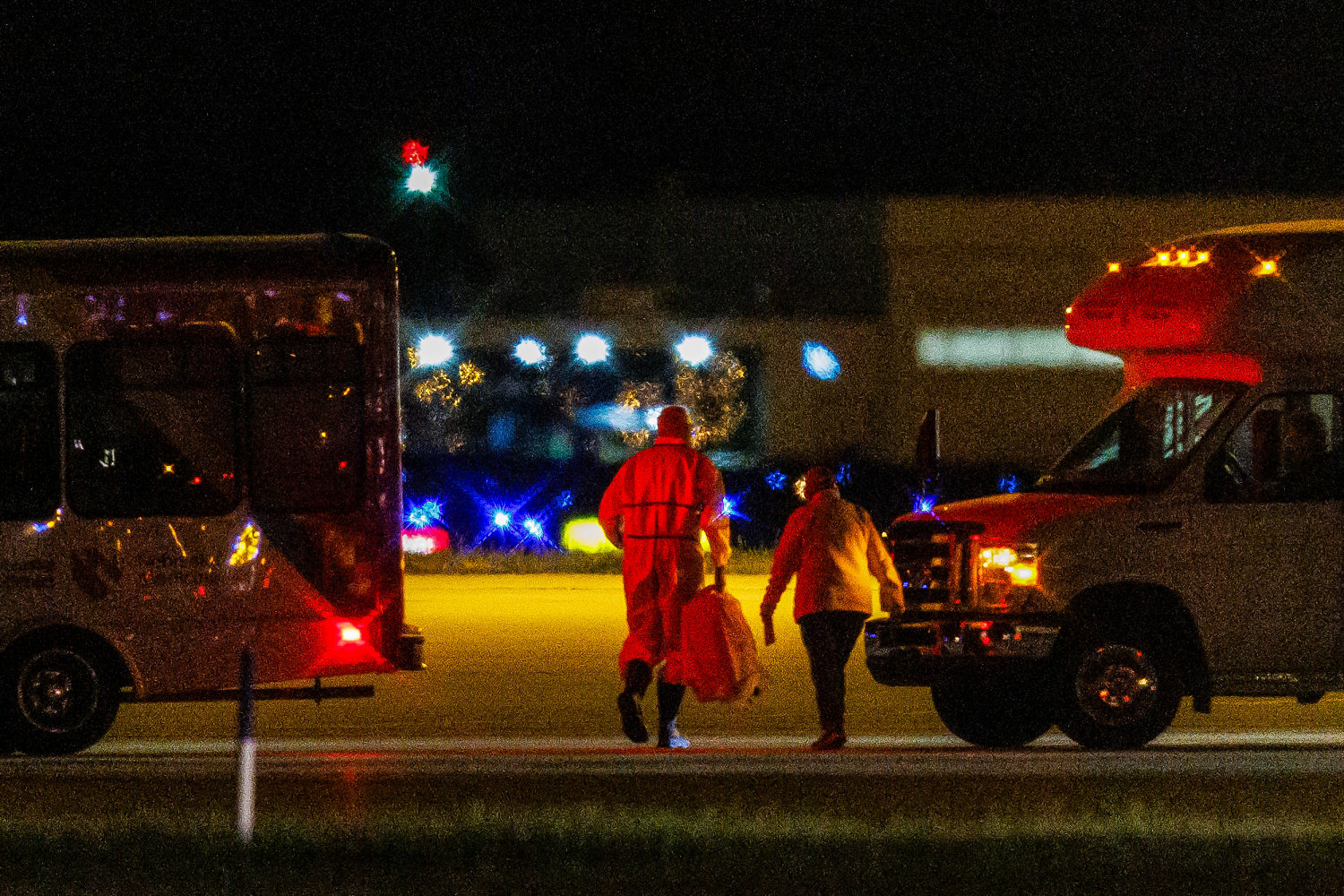
The 41 individuals currently scattered across the United States fall into three distinct risk tiers. The first tier consists of 18 passengers who were flown directly to specialized medical centers, including the University of Nebraska Medical Center and facilities in Atlanta, Georgia, for strict quarantine. The second tier includes passengers who slipped back into the country unnoticed and are now undergoing voluntary home isolation in states like Arizona and California. The third, and most troubling, tier involves everyday citizens who never set foot on the MV Hondius but sat near symptomatic passengers on commercial flights or interacted with them domestically, such as a cluster of three residents currently monitored by the Kansas Department of Health and Environment.
The Forty Two Day Waiting Game
The primary operational hurdle facing the Centers for Disease Control and Prevention is the exceptionally long incubation period of the Andes strain. Symptoms can take anywhere from one to eight weeks to manifest. Public health protocols have locked down a mandatory 42-day observation window for everyone involved.
This duration creates a profound diagnostic blind spot. A passenger can walk off a plane, clear an initial thermal imaging scan, test negative via polymerase chain reaction assays, and still be harboring a replicating viral load that will not trigger symptoms for another month.
[Exposure Event] ──► [Up to 42 Days of Incubation (Asymptomatic)] ──► [Symptomatic Phase (Highly Infectious)]
                               ▲
                      Diagnostic Blind Spot
During this multi-week latency period, traditional testing is largely ineffective. Health departments are reduced to calling monitored individuals daily to record temperatures and check for the first signs of a febrile illness. If a fever or muscle aches develop, the window for seamless containment snaps shut.
The stakes are elevated by the total absence of specialized medical countermeasures. There is no FDA-approved vaccine for Andes hantavirus. There are no targeted antiviral therapies proven to arrest its replication. If an individual progresses to Hantavirus Pulmonary Syndrome, their lungs rapidly fill with fluid, causing severe respiratory distress.
The only medical recourse is aggressive supportive care. Patients are placed on mechanical ventilators or, in severe cases, Extracorporeal Membrane Oxygenation, an advanced therapy that bypasses the lungs entirely to oxygenate the blood externally. In previous outbreaks in South America, even with state-of-the-art intensive care, the mortality rate for the Andes strain has hovered near 30%.
Fragmented Borders and Fired Inspectors
While the World Health Organization attempts to coordinate the international response, the logistical execution relies on the individual capabilities of 23 different national governments. This fractured landscape creates massive operational disparities.
The United States enters this response with its public health architecture significantly altered. Recent policy shifts resulted in the termination of the CDC’s dedicated cruise ship inspection personnel and a formal withdrawal from direct financial integration with the WHO. Consequently, federal authorities have had to rebuild communication pipelines on the fly to track passenger manifests and trace domestic flight contacts.
Instead of issuing federal quarantine mandates for every exposed individual, the CDC has opted for a cooperative approach. Field officials are working alongside state health departments in Maryland, New Jersey, Washington, and Kansas to implement localized, voluntary home monitoring plans.
This strategy relies heavily on human compliance. Expecting individuals to perfectly isolate at home for six weeks without breaking quarantine to buy groceries or visit family is a significant gamble. A single breach of isolation by an asymptomatic carrier who suddenly becomes infectious can create secondary clusters in communities completely unrelated to the original cruise.
What the Next Fortnight Holds
The next two weeks will dictate whether this incident remains a localized containment success or escalates into a broader public health challenge. If the 42-day window expires without any of the 41 monitored Americans testing positive, the domestic threat will dissolve.
However, the international footprint of the outbreak means the danger remains fluid. France has already confirmed its first cruise-related hantavirus case, proving that the virus successfully migrated off the ship and into European population centers.
The true test of the current containment strategy lies in the third-tier contacts—the airline passengers and family members who had no direct contact with the ship's environment. If secondary transmission is detected among individuals who merely shared cabin air on a transcontinental flight, the baseline assumptions regarding how easily the Andes strain spreads through close contact will have to be fundamentally reevaluated. For now, public health laboratories are quietly expanding their testing capacity, waiting to see if the virus has already slipped through the net.