The headlines are screaming about a three-year high in consumer inflation. They are pointing the finger at Tehran. They are drawing straight lines from missile trajectories to the price of a gallon of milk in Ohio. It is a neat, tidy, and utterly fraudulent narrative.
If you believe that a regional conflict in the Middle East is the primary driver of the structural rot in the U.S. dollar, you aren’t paying attention to the plumbing of the global financial system. You are falling for the oldest trick in the political playbook: blaming the "supply shock" to mask the "currency debasement."
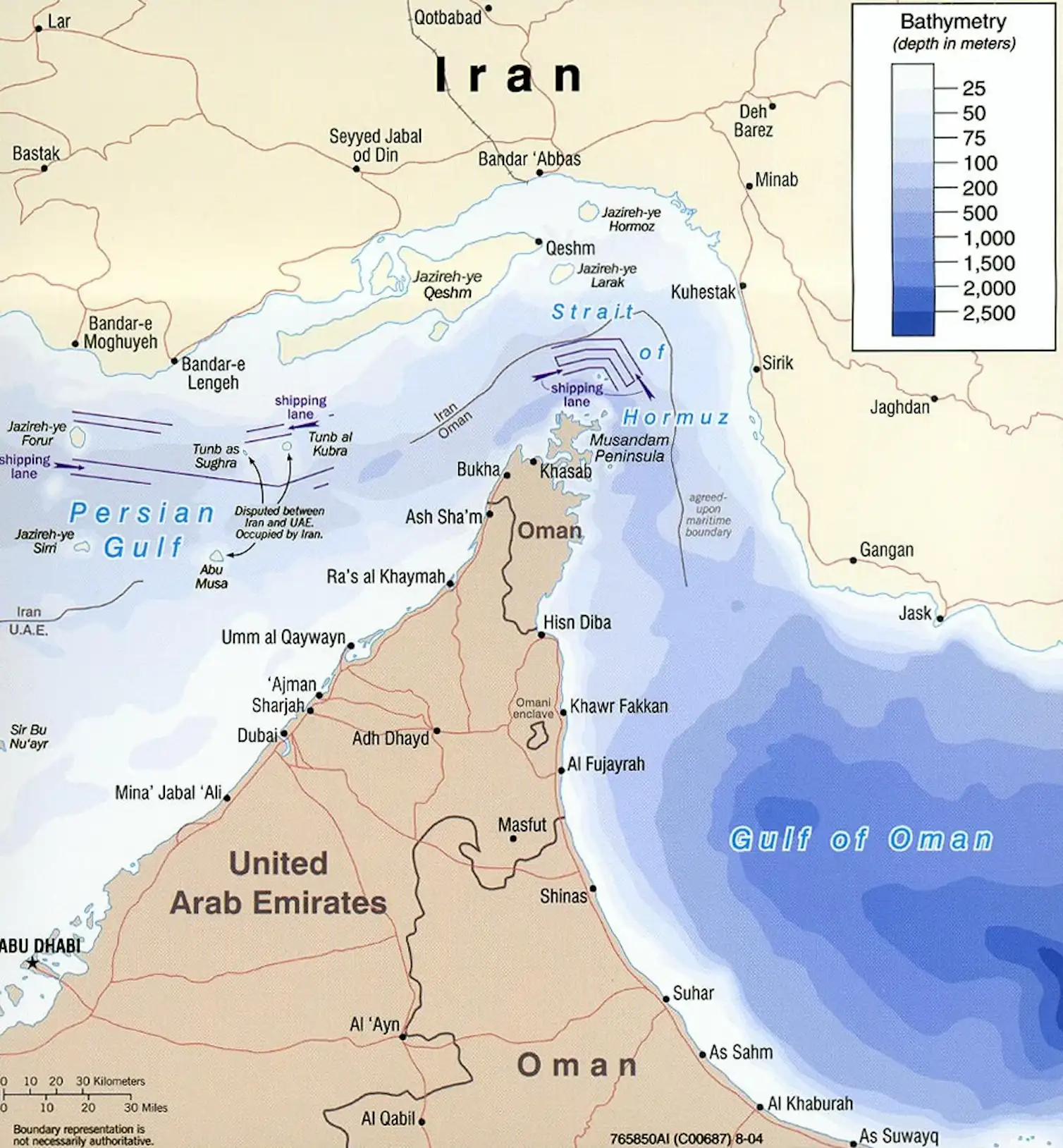
The competitor press is obsessed with the Brent crude spike. They want to talk about the Strait of Hormuz. They want to talk about shipping lanes. I have spent two decades watching analysts mistake the symptom for the disease. The "Oil Shock" is a convenient scapegoat for a Federal Reserve that has painted itself into a corner.
Inflation isn't rising because oil is expensive. Oil is expensive because the medium you use to buy it is losing its integrity.
The Myth of Cost-Push Inflation
Mainstream economists love the term "cost-push inflation." It suggests that because a raw material like oil gets pricier, everything else must naturally follow. It creates a sense of victimhood—as if the American consumer is merely a bystander to geopolitical chaos.
This is a fundamental misunderstanding of how money works.
If the supply of money stayed constant and the price of oil doubled, people would spend more on gas and less on everything else. The price of steaks, Netflix subscriptions, and new shoes would actually face downward pressure because the total pool of available dollars hasn't changed. You’d have a shift in relative prices, not an aggregate rise in the Consumer Price Index (CPI).
When everything—from your rent to your ribeye—goes up simultaneously, that isn't a supply chain hiccup. That is an expansion of the monetary base. The Iran conflict is just the spark that lit a forest already soaked in five trillion dollars of kerosene printed during the last decade of "emergency" measures.
Energy Independence is a Paper Shield
The "lazy consensus" argues that because the U.S. is a net exporter of energy, we should be insulated from these shocks. I’ve sat in boardrooms where executives actually believed this. They were wrong.
Oil is a fungible, global commodity. It doesn't matter if the barrel was sucked out of the ground in West Texas or the Rub' al Khali. If the global price hits $120, the Texas producer isn't going to give a "patriot discount" to the local refinery. They sell to the highest bidder.
But here is the nuance the news cycles miss: The U.S. "energy independence" narrative actually makes our inflation worse during a conflict.
Why? Because our entire industrial complex is now tethered to global energy arbitrage. When prices spike, the capital expenditure required to maintain fracking operations balloons. The "shale gale" requires constant, high-interest financing. As the Fed keeps rates "higher for longer" to fight the very inflation the oil spike is causing, the cost of extracting that "independent" energy skyrockets. It’s a feedback loop of incompetence.
The Real Numbers the CPI Hides
The Bureau of Labor Statistics (BLS) uses a "chained" CPI and "hedonic adjustments." If a steak gets too expensive and you buy ground beef instead, the BLS says your cost of living didn't go up—you just "substituted."
If your smartphone costs the same as last year but has a better camera, they claim the price actually dropped because you got more "utility" for your dollar. You can't eat utility. You can't pay rent with a better megapixels-per-dollar ratio.
The current "three-year high" they are reporting is a sanitized, basement-level version of reality. If we used the 1980 methodology for calculating inflation, we wouldn't be talking about a three-year high. We’d be talking about a forty-year crisis.
- Owner’s Equivalent Rent (OER): This is a fantasy number where the BLS asks homeowners what they think they could rent their house for. It’s a guess. Meanwhile, actual spot-market rents in cities like Austin or Miami are moving at double the reported rate.
- Energy Weighting: The CPI gives energy a relatively small weighting (around 7-8%). But energy is the "master resource." It is the input for every plastic, every fertilizer, and every mile of transport.
Why a "Peace Treaty" Won't Save Your Savings
Imagine a scenario where a total ceasefire is signed tomorrow. The Strait of Hormuz is clear. Oil drops back to $65 a barrel.
Does your grocery bill go down? Does your insurance premium drop? Does the price of a new Ford F-150 revert to 2019 levels?
No.
Inflation is like toothpaste. Once it’s out of the tube, you aren't getting it back in. Prices are "sticky" on the way down but "greased" on the way up. The structural deficit of the United States government is currently running at roughly $2 trillion a year. We are adding $1 trillion in debt every 100 days.
To fund this, the Treasury must issue bonds. To keep those bonds from crashing the economy with high yields, the Fed eventually has to step in and buy them with created money. That is the engine of inflation. Iran is just the hood ornament.
Stop Hedging with Commodities
The "unconventional" advice that actually works is to stop thinking like a 1970s day trader.
Everyone tells you to buy oil stocks (XLE) or gold when a war breaks out. That’s a crowded trade. It’s also a defensive trade. If you want to actually survive the debasement, you have to look at the "Short the Dollar" trade.
This doesn't mean trading the DXY. It means owning assets that the government cannot print and that are essential for the next phase of the global economy.
- Quality over Quantity: In an inflationary spiral, companies with "pricing power" are the only survivors. If a company can raise prices by 15% and its customers don't leave, buy it. If they have to eat the cost, dump it.
- Fixed-Rate Debt as an Asset: If you have a 3% mortgage, you have a massive short position against the dollar. The bank gave you "expensive" dollars years ago, and you are paying them back with "cheap," inflated dollars. This is the only time the math favors the debtor.
- The Scarcity Premium: Bitcoin, land, and specific intellectual property. These are the only things that don't care about the Federal Funds Rate or the Iranian Revolutionary Guard.
The Brutal Truth About "Stability"
The "People Also Ask" sections on Google are filled with variations of "When will prices go back to normal?"
The answer is: Never.
"Normal" is a moving target designed to keep you productive while your purchasing power is harvested. The goal of the central bank isn't "zero inflation." Their explicit goal is 2% inflation. That means they want your money to lose half its value every 35 years.
When they miss that target and hit 6% or 8%, they don't try to bring prices back down (deflation). They just try to slow the rate at which you get poorer.
The Iran conflict is a tragedy of human life and a mess for global logistics. But as a financial catalyst, it is being used as a smoke screen. It provides the political cover needed to justify the next round of quantitative easing. "We have to support the economy during the oil shock," they will say.
And they will print. And the CPI will climb. And you will be told it's because of a drone strike six thousand miles away.
Stop looking at the Middle East. Start looking at the balance sheet of the Federal Reserve.
The war on your savings started long before the first missile was fired in the Gulf. You are being robbed in broad daylight, and you're being told to blame the gas station.
Change your lens or lose your shirt.