Anatomy of an Unkillable Protest
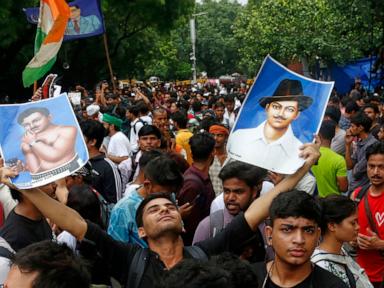
When Indian security forces cleared youth encampments across major urban centers, state officials declared the demonstrations effectively dead. They miscalculated completely. The youth-led civil resistance network known as the Cockroach movement—named for its self-described ability to survive extreme environmental hostility, nuclear fallout, and direct extermination efforts—simply fractured into thousands of invisible, highly mobile units. Police batons can dismantle a stage, but they cannot baton an idea that refuses to stay in one place long enough to be hit.
The movement emerged from a volatile mix of surging youth unemployment, controversial structural reforms, and rising political disaffection among young citizens. Rather than relying on traditional leadership structures or centralized headquarters, organizers deliberately built a decentralized, resilient apparatus. When authority strikes one node, ten others pop up in adjacent neighborhood alleyways or encrypt themselves across peer-to-peer networks.
Understanding this dynamic requires looking past the surface-level clashes on the streets. The core strategy relies on low-resource, high-frequency disruption.
Decentralization as a Survival Mechanism
Traditional political movements fail when their leaders are arrested. The Cockroach movement anticipated this vulnerability from its inception.
+-----------------------------------------------------------------+
|                    TRADITIONAL VS. CELLULAR                     |
+-----------------------------------------------------------------+
| TRADITIONAL PROTEST:                                            |
| [ Central Command ] ---> [ Field Leaders ] ---> [ Protesters ]  |
|         |                                                       |
|   (Single point                                                 |
|    of failure)                                                  |
+-----------------------------------------------------------------+
| CELLULAR RESISTANCE:                                            |
| [ Autonomous Cell ] <---> [ Autonomous Cell ]                   |
|         ^                         ^                             |
|         |                         |                             |
|         v                         v                             |
| [ Autonomous Cell ] <---> [ Autonomous Cell ]                   |
|   (No central head; resilient to targeted arrests)              |
+-----------------------------------------------------------------+
By operating without a single figurehead, the group neutralizes standard police playbooks. Law enforcement officers spent weeks attempting to identify ringleaders, executing midnight raids on empty apartments and seizing hardware that contained no actionable intelligence.
Instead of mass rallies planned weeks in advance, participants utilize flash-mob tactics. A crowd of three hundred gathers at a transit hub, delivers a coordinated set of demands, distributes educational pamphlets, and disperses into the surrounding crowds within fifteen minutes—long before riot squads can deploy.
Digital Guerrilla Warfare and Street Reality
The state's primary countermeasure has historically been the localized internet blackout. Cut the network, the theory goes, and you cut the movement's nervous system.
It worked in the past. It fails now.
Protesters modified off-the-shelf software to form local mesh networks over Bluetooth and Wi-Fi Direct. These ad-hoc digital bridges allow messages, location alerts, and tactical updates to hop from phone to phone across miles of dense urban terrain without touching a cellular tower or standard service provider.
The Tools of Modern Dissidence
- Offline Mesh Messaging: Apps that route encrypted text packets through peer devices.
- Rapid Dispersal Protocols: Timed alerts that scatter crowds instantly to minimize physical exposure.
- Distributed Mutual Aid: Micro-donations processed through decentralized ledger technology to fund bail, medical supplies, and basic rations.
- Analog Signal Arrays: Hand signals, whistles, and localized chalk markings that convey real-time police movements without electronic traces.
This synthesis of low-tech street smarts and modified consumer tech makes traditional crowd control obsolete.
"A boot can stamp out a fire, but it only scatters the embers across dry grass." — Anonymous organizer, New Delhi operational node
Economic Friction and the Cost of Containment
Suppression is expensive.
Maintaining thousands of militarized police officers on standby across multiple metro regions bleeds municipal budgets daily. Business districts forced into recurring shutdowns suffer real financial attrition. Meanwhile, the protesters incur almost no operational overhead. A dozen cans of spray paint, a handful of modified smartphones, and a public transport pass constitute the entirety of an activist's physical toolkit.
Consider the asymmetry of this expenditure:
| Resource Factor | State Containment Strategy | Decentralized Youth Network |
|---|---|---|
| Financial Overhead | Massive (Overtime pay, transport, riot gear, logistics) | Microscopic (Individual sustained transport, open-source tech) |
| Command Structure | Rigid hierarchical approval chains | Instantaneous autonomous node execution |
| Information Speed | Delayed through official intelligence channels | Real-time crowd-sourced intelligence feeds |
| Public Visibility | High risk of negative PR during heavy-handed sweeps | High sympathy through grassroots digital outreach |
This economic imbalance creates a ticking clock for authorities. State resources are finite, political goodwill decays under prolonged visual militarization, and international market observers grow skittish when domestic stability relies on perpetual security deployments.
Why Standard Crackdowns Backfire
Heavy-handed responses create a predictable feedback loop.
When security forces employ severe tactics against unarmed youth, moderate citizens who previously ignored the movement's grievances are forced to pay attention. Aggressive enforcement converts passive observers into active logistical supporters. Safe houses open up. Medical students volunteer off-shift care. Tech-savvy professionals offer server bandwidth and encryption assistance.
Police raids do not clear the streets; they simply change the identity of the people standing on them.
State strategists historically rely on fatigue. They assume young dissidents will eventually run out of energy, money, or momentum and return to their classrooms or careers. That assumption ignores the core driver of this uprising: those classrooms offer few clear futures, and those careers are increasingly out of reach. You cannot fatigue a demographic that feels it has nothing left to lose.
The state is playing a chess game against an opponent playing water. You can strike the surface hard, splash water over the banks, and break your hand on the riverbed, but the fluid simply flows around the fist and continues moving downstream.
The Cockroach movement continues because its structural conditions remain completely unaddressed. Until the underlying economic and political pressures shift, no amount of force will clear the streets for long.