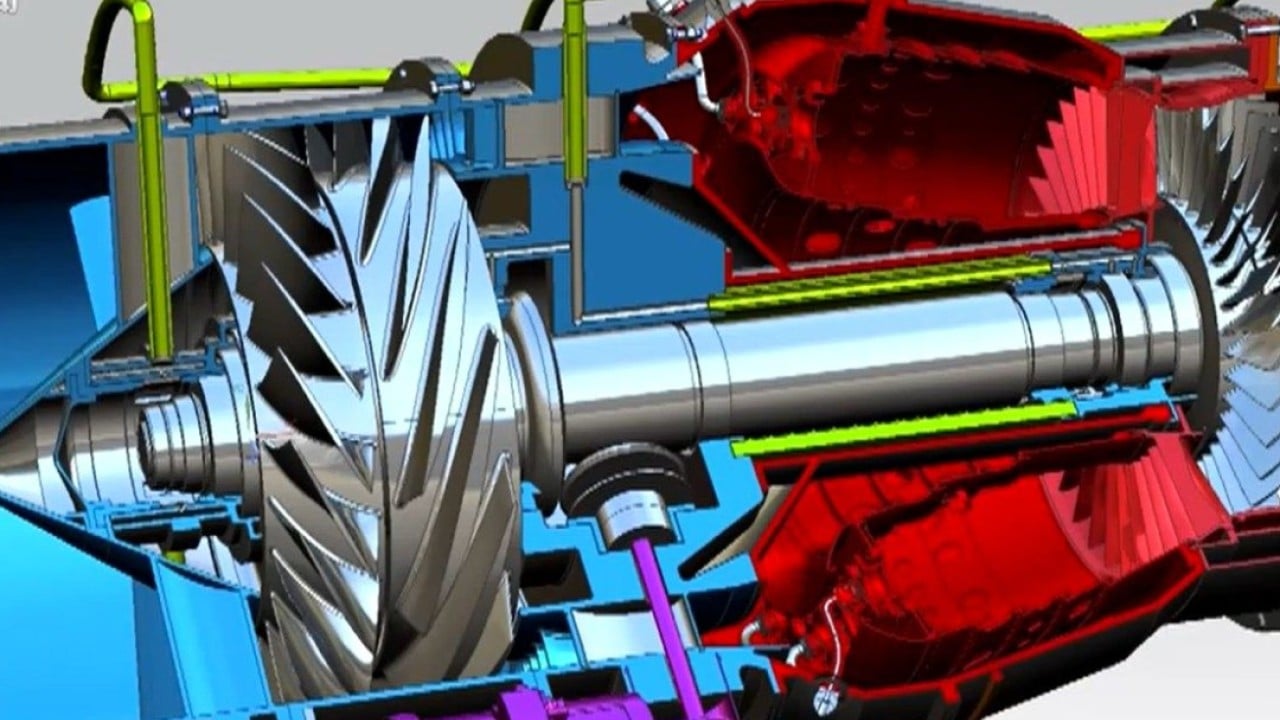
The press is currently swooning over China’s supposed "breakthrough" in air-breathing engine technology—a system claiming to transition smoothly from a standstill to Mach 6. They call it a miracle of engineering. I call it a fundamental misunderstanding of thermodynamics and the brutal reality of weight-to-thrust ratios.
We are currently witnessing a global obsession with "Mach 6" as a magic number. The narrative suggests that if you can just push an engine past the hypersonic threshold using a single integrated system, you’ve won the next century of warfare. This is a fantasy. It ignores the "Turbine-Based Combined Cycle" (TBCC) graveyard, where billions of dollars go to die. The problem isn’t the top speed; it’s the physics of the transition.
The Mach 2.5 Wall is Real
Modern jet engines are masterpieces of precision, but they are essentially high-speed fans. Once you hit Mach 2.5, the air coming into the intake is moving so fast that it creates a massive pressure wave. To keep the engine from exploding, you have to slow that air down to subsonic speeds before it hits the compressor blades. This generates heat. Lots of it.
By the time you reach Mach 3, the "stagnation temperature" of the incoming air is high enough to melt the very turbine blades meant to compress it. This is why the SR-71 Blackbird—a fifty-year-old masterpiece—used a complex system of bypass tubes to essentially turn its engines into ramjets at high speeds.
The competitor’s claim that a new Chinese design solves this with a "simple" tweak to the internal geometry is laughable. You cannot "tweak" your way out of the Second Law of Thermodynamics.
The Weight Penalty Nobody Talks About
Hypersonic enthusiasts love to talk about "single-stage-to-high-Mach" capability. They want one engine that does everything. In the engineering world, we have a name for a tool that tries to do everything: a Swiss Army Knife. It’s mediocre at every single task it performs.
To make an engine work at Mach 0 (takeoff) and Mach 6 (hypersonic cruise), you have to carry around two different sets of hardware. You need the heavy turbomachinery for the takeoff and the specialized, hardened flow paths for the scramjet phase.
- The Turbo-Deadweight: Once you hit Mach 3.5 and the scramjet takes over, your multi-million dollar turbine is just a 5,000-pound paperweight.
- The Drag Factor: The massive intakes required to feed a scramjet at Mach 6 are aerodynamically disastrous at subsonic speeds.
I’ve watched aerospace firms burn through entire quarterly budgets trying to optimize the "transition phase"—the terrifying few seconds where the turbine shuts down and the scramjet ignites. If that handoff isn't perfect, the engine "unstarts." The airflow reverses, the shockwave exits the front of the intake, and the aircraft essentially hits a brick wall in the sky.
The Scramjet Delusion
Let’s talk about the "Scramjet" (Supersonic Combustion Ramjet). The concept is simple: keep the air moving at supersonic speeds through the engine and spray fuel into it.
Imagine trying to keep a match lit in a hurricane. That is what supersonic combustion is like. You have milliseconds to inject fuel, mix it, and ignite it before it exits the back of the nozzle. The length of the engine dictates the "dwell time" of the fuel. To get enough thrust to push a fighter jet to Mach 6, the engine would need to be prohibitively long or use exotic fuels that are too volatile for carrier decks or standard airfields.
China’s state-run media loves to showcase wind tunnel results. Wind tunnels are great. They are also static, controlled environments where you don't have to worry about the airframe warping under the 2,000-degree Fahrenheit heat of atmospheric friction. A Mach 6 engine is useless if the wings of the plane it’s attached to turn into the consistency of taffy after ten minutes of flight.
Why "Faster" is the Wrong Metric
The "People Also Ask" sections of the internet are obsessed with one question: "Who has the fastest jet?"
This is the wrong question. The right question is: "What is the cost-per-kill of a hypersonic platform vs. a swarm of sub-Mach 3 stealth drones?"
Building a Mach 6 fighter jet is an exercise in vanity. A missile traveling at Mach 6 is a weapon. A piloted aircraft traveling at Mach 6 is a logistical nightmare. The pilot cannot see, the sensors cannot penetrate the plasma sheath created by the friction, and the turning radius at those speeds is measured in entire provinces.
We are chasing a "Mach 6" dream because it looks good in a parade, not because it wins wars. The United States’ own ventures, like the X-30 National Aero-Space Plane, failed not because the math was wrong, but because the material science didn't exist to make it practical. China isn't magically immune to the melting point of titanium.
The Hydrogen Trap
To make Mach 6 work, you often hear about liquid hydrogen cooling. The idea is to run super-cold fuel through the skin of the engine to keep it from melting, then burn that heated fuel for thrust.
I’ve seen the blueprints for these systems. They are beautiful. They are also a plumber’s nightmare. Hydrogen embrittlement turns high-strength metals brittle and prone to cracking. Managing cryogenic liquids on a flight line is a specialized skill set that doesn't scale to a mass-produced fighter fleet.
If your "future fighter" requires a localized liquid hydrogen plant and a team of physicists to refuel it, you don't have a weapon. You have a science project.
Stop Chasing the Number
The competitor’s article paints a picture of a looming Chinese dominance powered by this Mach 6 engine. It’s a classic case of falling for the "brochure specs."
If you want to understand the future of the sky, stop looking at top speed. Look at heat dissipation. Look at the software that manages the transition between engine cycles. Look at the ability to maintain stealth while the air around the nose cone is literally glowing with ionized heat.
The Mach 6 air-breathing engine is a fascinating piece of laboratory hardware. But as a viable powerplant for a next-generation fighter? It’s a thermodynamic suicide pact.
The first nation that realizes "smarter" beats "faster" is the one that will actually own the airspace. You can fly at Mach 6 all you want; you’re still just a very fast, very hot target that can’t turn.
Don't buy the hype. Physics doesn't care about your five-year plan.
Building a jet that can hit Mach 6 is easy if you don't care about it landing in one piece or being affordable enough to build more than two. Building a fleet that can actually sustain those speeds? That’s where the "miracle" ends and the bankruptcy begins.
Focus on the materials. Focus on the cooling. Ignore the Mach meter.
The Mach 6 engine isn't the future of flight—it's the most expensive way to prove that the atmosphere is a very thick, very hot place that doesn't want you there.
Stop asking how fast we can go. Start asking how we plan to survive the heat.