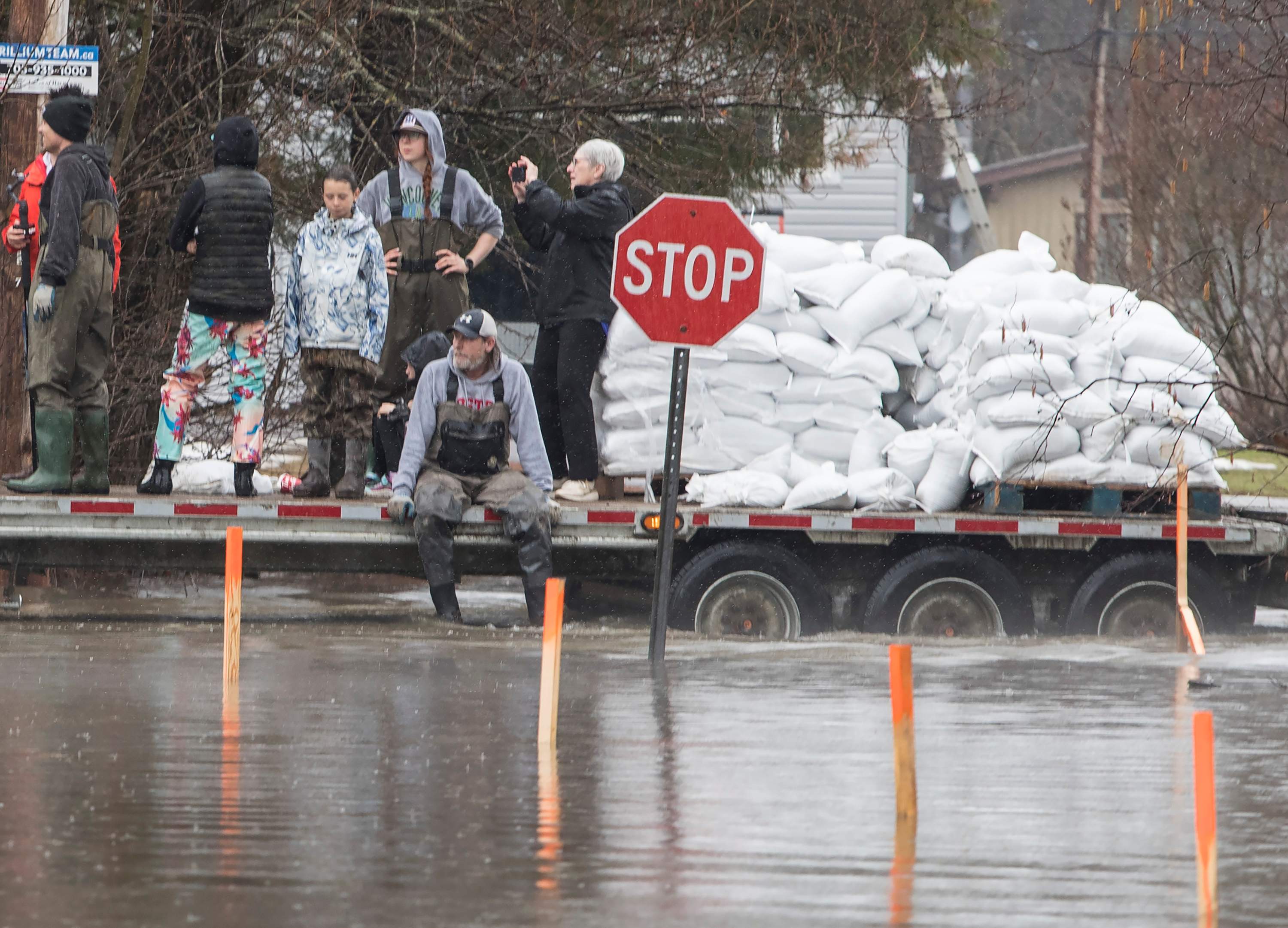
The termination of the state of emergency in Minden Hills, Ontario, serves as a case study in the temporary equilibrium between localized infrastructure capacity and seasonal meltwater velocity. While the immediate threat to property has subsided, the transition from crisis management to hydrological stability reveals a fragile dependency on precise weather patterns rather than long-term systemic resilience. The cessation of emergency measures signals that water levels have reached a predictable, non-destructive plateau, yet the underlying risk factors of the Gull River system remain unaddressed.
The Mechanics of Hydrological Equilibrium
The stabilization of the Gull River is not an isolated event but the result of a specific intersection between three variables: input volume from the upper watershed, controlled discharge via the Trent-Severn Waterway (TSW), and local absorption capacity. In Minden Hills, the state of emergency was a response to the saturation point where these three variables failed to align.
The Gull River functions as a conduit for the vast Haliburton Highlands. When the snowpack melts—a process known as freshet—the watershed enters a state of high energy. The stability achieved this week indicates that the "peak flow" has passed. This means the rate of water entering the system from northern lakes is now equal to or less than the rate at which the TSW can funnel water through its dam networks and eventually into the Kawartha Lakes.
Structural prose defines this as the Discharge-Input Delta. When the delta is negative (Discharge > Input), flood risk evaporates. The current status of "stable water levels" confirms that the delta has moved into a manageable range, allowing the municipality to reallocate resources from physical defense—such as sandbagging and road closures—to assessment and maintenance.
Vulnerability Drivers in the Minden Corridor
The geography of Minden Hills creates a natural bottleneck. The town is situated on a floodplain where the river's gradient flattens significantly. This loss of velocity forces the river to expand laterally when volume increases.
Three primary drivers dictate the severity of these events:
- Thermal Trends: Rapid temperature spikes in late April accelerate snowmelt, exceeding the drainage capacity of frozen or saturated soil.
- Basin Saturation: The inability of the ground to act as a sponge. If the preceding autumn was wet, the ground freezes while saturated, ensuring that 100% of spring melt becomes surface runoff.
- Anthropogenic Hardening: The development of shorelines and town centers replaces permeable soil with asphalt and structures, increasing the "coefficient of runoff."
In the recent emergency, the stabilization occurred because the thermal trend normalized. A gradual melt allowed the TSW operators to manipulate the dam at Gull Lake and secondary structures to meter the flow. Without this human intervention, the natural hydrology of the region would likely have sustained higher water levels for a longer duration, potentially causing catastrophic failure of septic systems and electrical infrastructure in low-lying areas.
Operational Limitations of Emergency Rescission
Rescinding a state of emergency is a tactical decision based on the restoration of municipal control. It does not imply the absence of water; it implies the absence of an unmanaged threat. The logic behind this decision rests on the Infrastructure Stress Threshold.
Once water levels drop below the elevation of critical roadbeds and the basements of primary residences, the immediate danger to life and limb passes. However, this leaves several latent risks that the "stable" label often obscures.
- Sub-Surface Erosion: Even as surface levels recede, the high-velocity flow during the peak period may have undermined road embankments or bridge abutments.
- Hydrostatic Pressure: Saturated soils surrounding residential foundations continue to exert inward pressure. A rapid drawdown of river levels can actually cause foundation walls to fail if the external water pressure drops faster than the internal soil moisture can drain.
- Contamination Lag: Receding waters often leave behind biological and chemical contaminants. The stabilization of the river is merely the first step in a multi-week environmental remediation cycle.
The municipality’s ability to "end" the emergency is therefore a declaration of confidence in the TSW’s forecasting models. It assumes that no significant rainfall events are forecasted for the five-day horizon, which would otherwise reactivate the freshet's momentum.
The TSW Regulatory Framework
The Gull River is not a wild system; it is a managed hydraulic environment. The Trent-Severn Waterway, overseen by Parks Canada, manages water levels for navigation, power generation, and flood mitigation. This creates a conflict of interest between different stakeholders.
- Upstream Reservoir Residents: Want water levels lowered in spring to prevent dock damage.
- Downstream Municipalities (Minden): Want upstream water held back to prevent flooding in the town core.
- Power Producers: Require consistent flow for hydroelectric turbines.
The "stable" status reported this week reflects a successful, albeit tense, negotiation of these competing needs. The TSW operators must engage in Pre-emptive Drawdown, emptying lakes like Kawagama and Gull Lake during the winter to create a "void" for the spring melt. If the melt is larger than the calculated void, Minden Hills floods. The end of the state of emergency signifies that the "void" was sufficient to absorb the 2026 freshet without a total breach of the town's defensive capacity.
Economic Implications of Frequent Stabilization Cycles
The repetitive nature of flooding in Minden Hills has created a distinct economic footprint. Frequent states of emergency impact the local economy through:
- Insurance Premium Escalation: The "High Risk" designation for the Minden core has led to a withdrawal of certain flood coverage options or prohibitively high deductibles.
- Property Value Depreciation: The "flood history" of a property is a permanent ledger item that dictates its liquidity in the real estate market.
- Municipal Tax Burden: The cost of sandbagging, emergency personnel overtime, and post-flood debris removal is a recurring line item that diverts funds from proactive infrastructure upgrades.
The shift toward a "stable" status allows local businesses to resume operations, but it does not recoup the lost revenue from the duration of the emergency. For a seasonal economy, a spring flood can delay the opening of the tourism season, creating a ripple effect through the summer months.
Strategic Forecast and Asset Protection
The cessation of the emergency must be viewed as a window for proactive mitigation rather than a return to complacency. The current hydrological data suggests that while the 2026 event was manageable, the frequency of "high-water anomalies" is increasing.
Future stability depends on moving from reactive emergency declarations to a Hardened Infrastructure Model. This involves:
- The Elevation Strategy: Raising critical road segments above the 100-year flood level to ensure transit remains viable during high-water periods.
- Natural Buffer Restoration: Re-naturalizing shorelines north of the town to increase the watershed’s inherent lag time—the time it takes for a drop of rain to reach the river.
- Precision Telemetry: Increasing the density of automated flow gauges in the upper Gull River basin to provide earlier warning and more granular data for the TSW management team.
The immediate strategic priority for property owners in the Minden corridor is the assessment of "foundation fatigue." Following the stabilization of the river, the focus must shift to the internal drainage systems of structures. Ensuring that sump pumps are redundant and that backflow valves are operational is the only logical defense against a system that relies on the precise management of a massive, volatile watershed. The river is stable for now, but the Gull River’s capacity to exceed its banks remains a permanent feature of the regional geography. Owners should utilize this period of low velocity to reinforce rip-rap shorelines and inspect for signs of scouring before the next precipitation cycle re-energizes the basin.