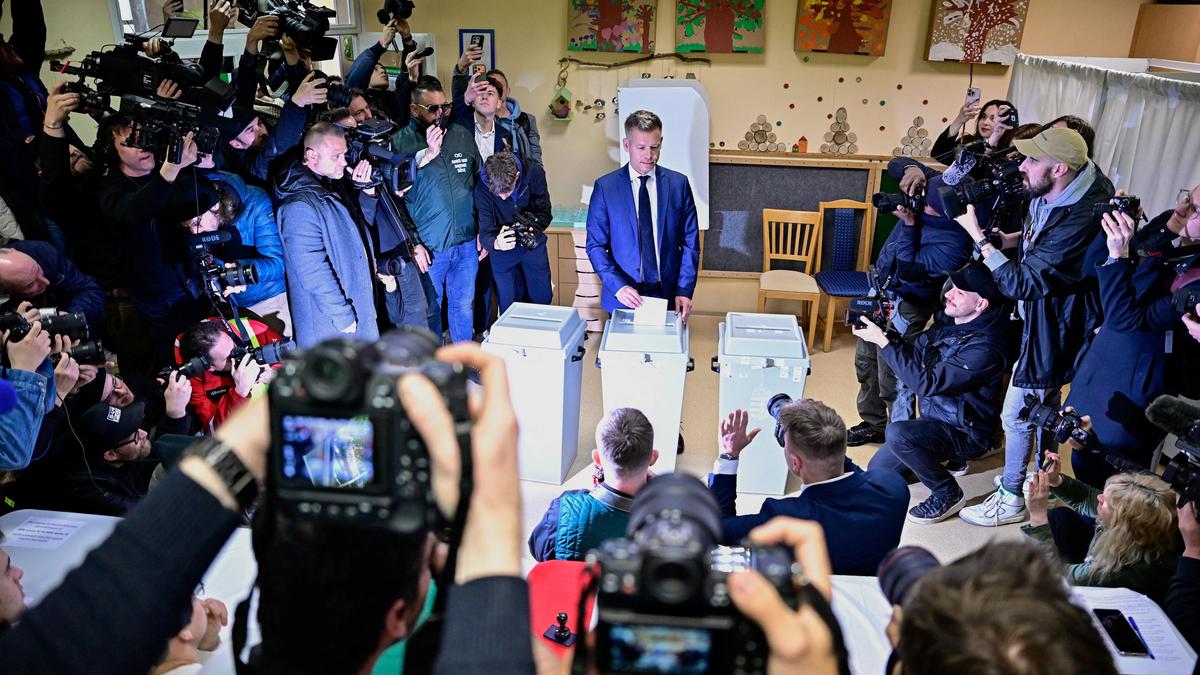
Hungarians are heading to the polls today in what feels like a fever dream for the ruling Fidesz party. For sixteen years, Prime Minister Viktor Orban has been the undisputed heavyweight of Central European politics, building a self-styled "illiberal democracy" that served as a blueprint for populists worldwide. But this time, the air in Budapest is different. The usual sense of inevitable victory has been replaced by a genuine, grinding tension.
The reason for this shift isn't just economic stagnation or the usual grumbling about corruption. It's Péter Magyar. A former insider who lived within the very circles he now seeks to dismantle, Magyar has turned the 2026 election into a survival struggle for the Orban system. Even if Orban manages to hold onto power through a skewed electoral map, the "Orban model" has already been cracked.
The challenger who knows where the bodies are buried
Péter Magyar isn't your typical opposition leader. He doesn't come from the fragmented, often ineffective liberal coalition that Orban has swatted away in previous cycles. He was part of the machine. As the ex-husband of former Justice Minister Judit Varga, he saw the inner workings of the Fidesz power structure before launching his Tisza party in 2024.
That history gives him a level of credibility with rural, conservative voters that the Budapest-centric opposition never had. He talks like them. He understands the grievances of people who feel abandoned by a government that spends more time fighting "Brussels" than fixing hospitals.
What the polls are actually saying
If you look at the raw numbers, the situation looks dire for the incumbents. Independent pollsters like Medián and 21 Kutatóközpont have shown the Tisza party leading by double digits among decided voters. In some surveys, support for Magyar’s movement has topped 55%, while Fidesz has slumped toward the mid-30s.
But in Hungary, the popular vote is only half the story. The electoral system is a labyrinth designed to protect the winner.
- Gerrymandered Districts: Orban’s government redrew the map years ago, ensuring that rural Fidesz strongholds carry more weight than urban centers.
- The Winner Compensation Rule: This quirky law gives extra "compensation" votes to the party that wins a district, essentially turning a narrow victory into a seat-count landslide.
- Mail-in Ballots: Ethnic Hungarians living in neighboring countries, who overwhelmingly support Orban, can vote by mail, providing a consistent "safety net" for Fidesz.
Basically, Magyar doesn't just need to win; he needs to win by a massive margin—likely six points or more—just to get a simple majority in parliament.
Why a simple majority might not be enough
Even if the Tisza party pulls off the unthinkable and secures more seats than Fidesz, they'll be walking into a trap. Since 2010, Orban has used his two-thirds "supermajority" to rewrite the constitution and "capture" the state.
Nearly every institution that’s supposed to provide a check on power is led by a Fidesz loyalist with a long-term mandate. The President of the Republic can stall legislation. The Constitutional Court is packed with Orban appointees. Even the Budget Council has the power to veto spending plans, which could lead to the dissolution of parliament and forced new elections.
Magyar is essentially trying to move into a house where the previous owner still has the keys to every room and has changed all the codes to the security system. Without a two-thirds majority of his own, he won't be able to easily undo the "cardinal laws" that keep the Orban system functioning.
The Russian shadow and the EU's frozen billions
The stakes extend far beyond the borders of Hungary. Orban has spent years acting as a "spoiler" within the European Union and NATO. He’s the most Moscow-friendly leader in the bloc, frequently blocking aid to Ukraine and maintaining close ties with Vladimir Putin.
Recent leaks—allegedly including transcripts of conversations between Orban and Putin—have fueled accusations that Budapest is acting as a Trojan horse for Russian interests. The EU has responded by freezing roughly €20 billion in funds due to rule-of-law violations.
If Magyar wins, he’s pledged to repair the relationship with Brussels and join the European Public Prosecutor’s Office to fight corruption. That would mean the money starts flowing again. But don't expect him to be a total pushover. Magyar has already signaled he'll still be tough on issues like migration and certain EU agriculture policies. He’s a nationalist; he’s just a nationalist who wants a functional country.
What to watch for as the night unfolds
As the results start trickling in after the 7 pm close of polls, don't just look at the total seat count. Pay attention to these three things:
- Voter Turnout: High turnout—historically over 70%—usually favors the opposition in Hungary. If the numbers are lower, Orban's superior "mobilization machine" in rural areas will likely carry the day.
- The Budapest Sweep: If Magyar doesn't win nearly every single seat in the capital, his path to a majority is effectively blocked.
- The 5% Threshold: Watch whether smaller parties like the satirical Two-Tailed Dog Party or the far-right Mi Hazánk make it in. If Mi Hazánk enters parliament, they could act as a kingmaker for Orban.
Whether Magyar wins or loses tonight, the myth of Orban’s invincibility is dead. You can’t put the genie back in the bottle once half the country has decided they’re tired of the "illiberal" experiment.
Keep an eye on the official National Election Office (NVI) updates. If the certification of results gets delayed by legal challenges, it’s a sign that the ruling party is digging in for a long, messy transition. Either way, the era of easy, predictable elections in Hungary is over.