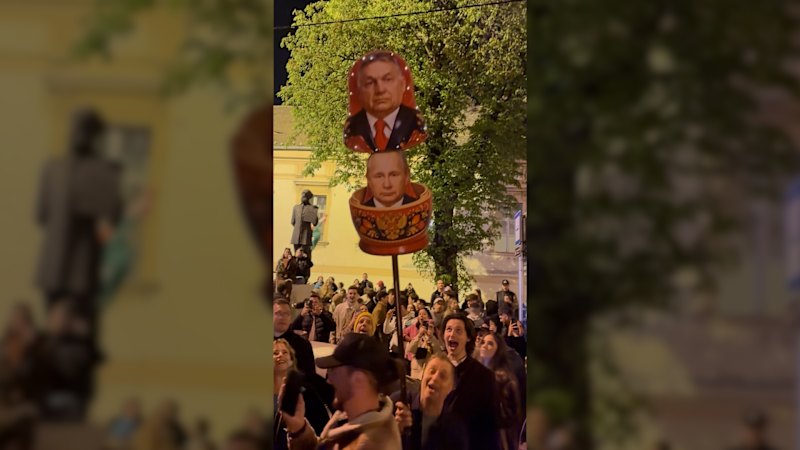
The sixteen-year reign of Viktor Orbán ended not with a whimper, but with an absolute political demolition. On April 12, 2026, the Hungarian electorate handed the Tisza Party, spearheaded by former Fidesz insider Péter Magyar, a staggering 69 percent of parliamentary seats. This was not a narrow victory or a shift in coalition dynamics. It was a nationwide rejection of an entrenched power structure that, until days before the final tally, insisted its control was absolute.
Analysts spent years describing the Hungarian electoral system as a fortified bunker, built with gerrymandering, media consolidation, and state-funded patronage. They were correct about the design. They were wrong about its durability against a mobilized, angry population. The landslide victory of Tisza signals that when a populace reaches a breaking point, administrative hurdles and institutional bias become insufficient barriers.
The Myth of Rural Invincibility
For over a decade, the core tenet of Orbán’s dominance was the rural firewall. Fidesz cultivated a massive, reliable voting bloc in smaller towns and villages by positioning the party as the sole guardian of traditional values and national sovereignty against the perceived encroachment of Brussels. The logic was simple: keep the countryside loyal through a mix of state subsidies, fear-based messaging regarding foreign influence, and a dominant media apparatus that ensured competing narratives never reached the dinner table.
The 2026 data shatters this premise. Fidesz did not merely lose the cities; the party suffered historic declines across the entire national geography. Support plummeted in regions that were once considered the bedrock of the regime. This erosion suggests that the cost-of-living crisis, stagnant economic mobility, and a growing disconnect between government rhetoric and the daily reality of struggling households eventually overwhelmed the party's ideological shielding. People in these regions prioritized their immediate financial stability over the abstract narratives of the regime.
Accountability as a Radical Demand
Péter Magyar did not win by reinventing political philosophy. He won by exposing the machinery of the state. Having operated within the inner circles of Fidesz, Magyar possessed the rare credibility to dismantle the narrative of the ruling party from the inside. He shifted the conversation away from the culture wars that defined the last decade and toward the gritty details of public administration, corruption, and the erosion of essential services.
By framing his platform around transparency and competence, he turned the regime’s greatest strength—its total control over national institutions—into its greatest liability. Every instance of nepotism or administrative failure became a tangible argument for change. The Tisza campaign was aggressive in its ground operation, deploying 50,000 volunteers to ensure that their message penetrated even the most insulated local polling districts. They moved past the digital shouting matches and engaged in direct, localized organizing, proving that mass mobilization can still bypass state-controlled media channels.
The Fragility of Populist Hegemony
The most significant takeaway from this shift is the danger of unchecked consolidation. By capturing almost every lever of the state, the Fidesz government left itself no room for error. When the economy faltered and the promises of the 2022 campaign cycle failed to manifest, the party had no buffer. The narrative of stability was replaced by the reality of a country that felt, to a significant majority of its citizens, fundamentally broken.
The challenge now shifts to the victors. The Tisza Party has secured a two-thirds majority, theoretically giving them the power to rewrite the constitution and overhaul the legal framework that cemented their predecessors in power. There is a profound irony in this outcome. The same institutional architecture designed to ensure permanent rule for one party is now available to another. A massive concentration of power remains, and the temptation to utilize those same mechanisms to bypass opposition or cement a new hegemony will be immense.
A New Era of Uncertainty
The transition will be fraught with difficulty. The departing administration leaves behind a complex web of appointments, regulatory capture, and state-dependent business interests. Dismantling this structure without causing complete administrative paralysis will require a degree of surgical precision that is rarely seen in volatile political climates.
Hungary stands at a crossroad. The democratic institutions that were weakened over sixteen years are now fragile and prone to further abuse by whichever faction holds the keys to the parliament. A return to standard democratic practice is not guaranteed simply because the incumbents have been voted out. The path forward requires more than just replacing the people in power; it demands the reconstruction of a neutral playing field where no party can ever again gain the unchecked dominance that characterized the last decade.
The voters have expressed a clear desire for change, but the mechanisms of the state remain deep in the hands of entrenched interests. The real struggle for Hungary’s future begins not with the victory, but with the day-to-day work of restoring institutional integrity while managing a restless public that expects immediate, tangible improvements in their lives. The era of one-party control is over, yet the structural legacy of that era remains the most pressing hurdle to lasting stability.