The mainstream foreign policy establishment is celebrating a phantom victory. Current headlines confidently broadcast American claims that a grand bargain is imminent: economic blockades will vanish, the Strait of Hormuz will guarantee unhindered global trade, and Iran’s nuclear ambitions will quietly wind down. It is a neat, comfortable narrative designed for press briefings and market reassurance.
It is also completely disconnected from geopolitical and economic reality.
The assumption that lifting sanctions will magically secure the world's most critical maritime choke point and permanently halt a state’s strategic defense program relies on a fundamental misunderstanding of leverage. Washington believes economic pressure is a volume knob you can turn up and down to choreograph regional peace. In reality, the architecture of modern sanctions has created a permanent resistance economy in Tehran, rendering the traditional "carrots and sticks" approach obsolete.
The deal being sold to the public is not a resolution. It is a temporary pause in a structural conflict that cannot be papered over with standard diplomatic trade-offs.
The Myth of the Hormuz Off-Switch
Every major energy analyst panics whenever tensions rise near the Persian Gulf. They look at the Strait of Hormuz—a narrow waterway handling roughly a fifth of the world’s petroleum liquids—and treat it as a hostage held at gunpoint. The conventional wisdom states that Iran uses the threat of closing the Strait purely as a bargaining chip to force sanctions relief. Therefore, if the United States removes the blockades, the threat vanishes.
This logic is flawed from the jump.
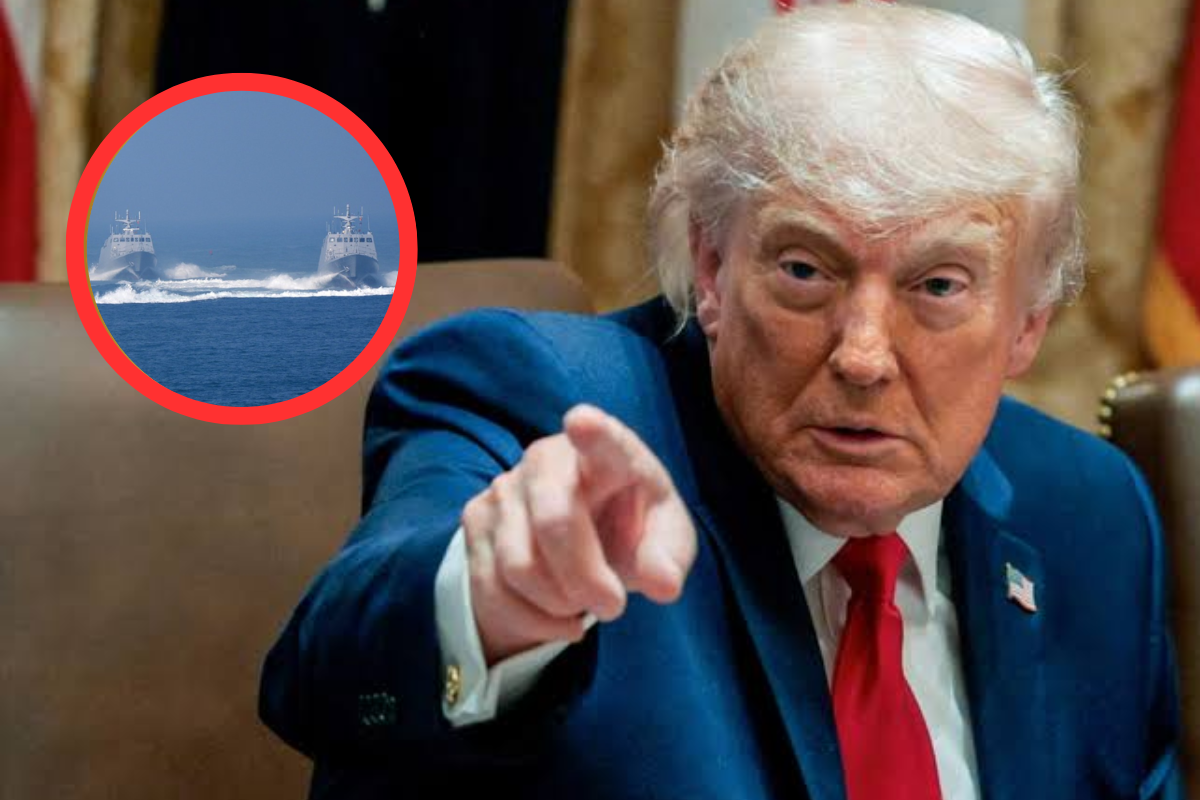
Iran's influence over the Strait of Hormuz is not a temporary leverage point to be traded away for temporary economic breathing room. It is a core pillar of its asymmetric military strategy. For decades, the Islamic Revolutionary Guard Corps (IRGC) has developed naval capabilities specifically designed to counter superior Western conventional forces through fast-attack craft, anti-ship missiles, and marine mines.
I have analyzed regional security frameworks for years, and one thing is clear: nation-states do not dismantle their primary defensive deterrents just because a foreign superpower promises to let them sell oil legally again.
If Washington lifts sanctions tomorrow, Iran does not lose its capability to disrupt shipping, nor does it lose the strategic incentive to maintain that threat. The control over Hormuz is insurance. Trading insurance for a promise of good behavior from a changing American administration is a gamble no serious regime would take. The threat to the Strait remains active because the underlying geopolitical rivalry remains unchanged.
Why the Nuclear Program Is Not for Sale
The second pillar of the current media consensus is even more naive: the idea that sanctions relief will finally end Iran’s nuclear program.
Let us look at the actual mechanics of state survival. The history of the 21st century has taught middle powers a brutal lesson. Countries that abandon their advanced weapons programs or deterrent capabilities—think Libya or Ukraine—frequently face existential crises later. Countries that achieve or maintain a credible deterrent threat get negotiated with on equal terms.
The Iranian leadership does not view its nuclear infrastructure as a commercial asset to be bartered for GDP growth. They view it as an existential shield.
The Western press covers the nuclear issue as if it is an accounting problem. They calculate the cost of centrifuges, the purity of enriched uranium-235, and the precise financial damage inflicted by SWIFT banking bans. They conclude that because the economic pain is severe, the target must be willing to liquidate its assets to stop the bleeding.
What they miss is the concept of sunk costs and institutional momentum. The domestic political capital spent building this infrastructure over three decades is massive. More importantly, the sanctions themselves forced Iran to diversify its supply chains, establish illicit financial networks, and build deep economic ties with buyers who operate outside the Western financial system, most notably independent refineries in China.
Tehran has learned to survive under a blockade. Expecting them to completely dismantle a multi-billion-dollar, deeply entrenched strategic program in exchange for access to a dollar-dominated financial system that can be weaponized against them again after the next US election cycle is peak diplomatic arrogance.
The Sanctions Trap: The Illusion of Western Control
To understand why this big claim will fail, you have to look at how sanctions actually work over time. The United States treats financial blockades like a temporary fever. You apply the medicine, the patient suffers, the patient complies, and then you remove the medicine.
But long-term sanctions do not cure; they mutate the host.
When a country is isolated from Western markets for a prolonged period, its economy undergoes a structural shift. Smuggling networks stop being criminal enterprises and become official state infrastructure. Internal industries rise to replace imports. Alternative payment mechanisms are established.
- The Grey Market Capitalization: Billions of dollars in oil revenue now flow through shadow banks and front companies across Asia and the Middle East. This capital is entirely outside the reach of the US Treasury.
- The Sovereign Realignment: Iran’s inclusion in the BRICS bloc and the Shanghai Cooperation Organisation proves that the diplomatic isolation central to Western strategy is fracturing.
When you offer to lift sanctions on an economy that has already adapted to them, your leverage is significantly weaker than you think. The target nation looks at the offer and calculates the risk. If they accept the deal, they must open up their facilities to intrusive international inspections and freeze their strategic leverage. In return, they get access to global markets that can be cut off again by a single executive order from a future president.
It is an unstable value proposition. The contrarian truth is that the constant imposition and threat of sanctions have permanently eroded the value of sanctions relief as a diplomatic tool. You cannot buy long-term compliance with currency that you can arbitrarily declare worthless at any moment.
Dismantling the Consensus
Let us address the questions driving the current media optimism. The public asks: "Will the removal of blockades stabilize global oil prices?"
The honest answer is: temporarily, perhaps, but structurally, no. A surge of Iranian crude might offer short-term relief to global markets, but it does not fix the fundamental geopolitical risk embedded in the geography of the Middle East. The underlying tension between regional powers will continue to dictate oil market volatility, regardless of whether tankers are flying Iranian flags or not.
The next common question is: "Can a new treaty permanently prevent regional conflict?"
This question assumes that conflict is born out of a misunderstanding or a lack of diplomatic engagement. It is not. It is born out of a direct collision of national interests. Washington wants a status quo that preserves its dominance and protects its regional allies. Tehran wants a regional order where Western influence is minimized. No document signed in Geneva or Vienna changes that fundamental arithmetic.
The Hidden Costs of the Grand Bargain
If you want to see the real danger of this proposed strategy, look at the unintended consequences. Every policy choice has a dark side, and this one is glaring.
If the United States proceeds with this plan, it will signal to every other middle-tier power that the path to diplomatic leverage involves aggressively developing strategic weapons and threatening global trade routes. It creates an optimization loop for defiance. If you build enough centrifuges and threaten a vital shipping lane, the West will eventually come to the table with billions of dollars in relief.
Furthermore, lifting the blockades injects immediate liquidity into an economy whose primary regional export is asymmetric influence. The funds unlocked by sanctions relief will not just go to infrastructure and domestic welfare; a significant portion will inevitably find its way to regional proxies throughout Yemen, Lebanon, Iraq, and Syria.
By attempting to secure the Strait of Hormuz through a financial transaction, the West risks funding the very networks that make the wider region unstable. It is a classic case of solving a localized symptom while accelerating the systemic disease.
The Reality Check
Stop buying into the narrative of a neat diplomatic victory. The headlines promising a cleared Strait and a halted nuclear program are selling a fantasy of Western omnipotence that no longer matches the distribution of global power.
The Iranian nuclear program cannot be bought off because it is an existential insurance policy, not a commercial enterprise. The Strait of Hormuz will never be completely secure because its volatility is the ultimate guarantee against foreign intervention. The resistance economy built under decades of blockades has diminished the value of Western market access.
Washington is playing a game of short-term economic chess while its rivals are playing a multi-generational game of regional survival. Expecting a sudden era of peace and open waters based on an American policy shift is not just overly optimistic—it is a dangerous misreading of history. The blockades may shift, papers may be signed, and politicians will definitely take victory laps, but the structural fault lines of the Middle East remain exactly where they have always been.