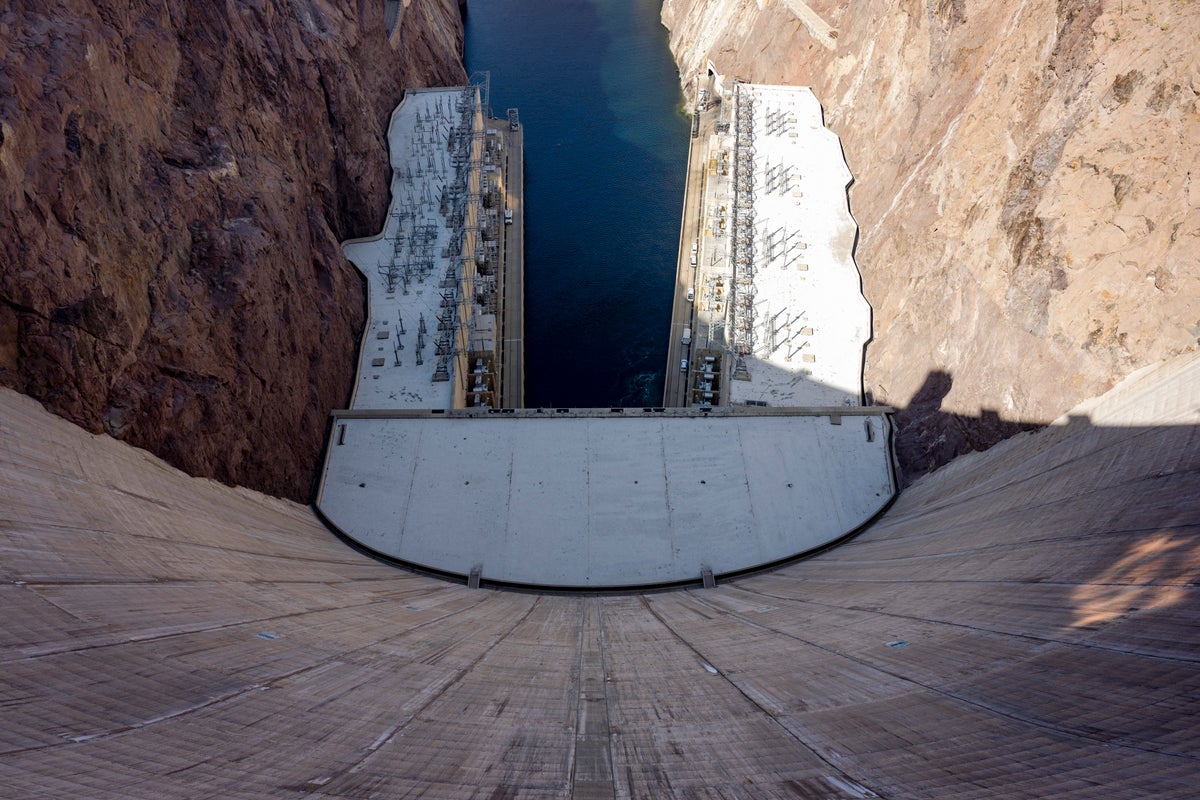
Hoover Dam is facing a brutal reality check. If you live in the Southwest, your electricity is about to get a lot more complicated—and probably more expensive. The Bureau of Reclamation just dropped a bombshell plan that could slash the dam’s power output by a staggering 40 percent as early as this fall.
This isn't just another "dry year" warning. We’re looking at a historic failure of the Rockies' snowpack that has left the Colorado River system gasping.
The math is simple but terrifying. Less water means less pressure. Less pressure means the massive turbines inside the dam can't spin fast enough to meet the demand of millions of homes in Arizona, Nevada, and California. While we’ve spent years talking about "bathtub rings," we’re now talking about the actual physical limits of 1930s engineering.
The 2026 Snowpack Disaster
I've watched the Colorado River hydrology for years, and 2026 is officially the year the wheels came off. By mid-April, 130 monitoring stations across Colorado were reading zero stored snow water. That’s not a typo. The "frozen reservoir" in the mountains basically evaporated or soaked into parched soil before it ever hit the stream.
Runoff forecasts are sitting at a dismal 27% of normal. In some spots like the South Platte River Basin, snowpack is at 7% of its typical level. It’s the worst on record in 40 years.
When the snow doesn't melt and flow into Lake Powell and Lake Mead, the federal government has to play a desperate game of water Tetris. The current strategy involves robbing Peter to pay Paul—or in this case, robbing Lake Mead to save Glen Canyon Dam.
The Sacrifice Play
On April 17, 2026, the Bureau of Reclamation announced they’re cutting the amount of water sent from Lake Powell to Lake Mead. They’re dropping the annual release from 7.48 million acre-feet to just 6 million.
The goal? Keep Glen Canyon Dam’s turbines from hitting the "minimum power pool" of 3,490 feet. If Lake Powell drops below that, the lights go out for a massive chunk of the West.
But there’s a catch. Every drop kept in Lake Powell is a drop that doesn't reach Hoover Dam. By holding water back upstream to save one dam, the government is effectively tanking the power generation at the other. Lake Mead is already sitting at roughly 1,061 feet—just 33% of its capacity. This new plan will accelerate its decline toward the 1,050-foot mark, a critical threshold that triggers even more severe Tier 2 water shortage cuts.
Why 40 Percent Matters to You
You might think a drop in power output is just a headache for grid operators. It’s not. It’s a direct hit to your wallet.
Hoover Dam provides some of the cheapest electricity in the country. When that supply drops by 40 percent, utilities don't just ask people to turn off their lights. They go to the open market to buy "replacement power." Market-rate electricity is significantly more expensive than the hydropower generated by the Colorado River.
We’re already seeing the fallout. Heber Light & Power in Utah recently jacked up rates by 13% because they had to replace declining federal hydropower with expensive market purchases. If Hoover Dam’s output craters this fall, expect similar "adjustment fees" to start appearing on bills from Las Vegas to Los Angeles.
The Threshold Ladder
The engineering at Hoover Dam is built on head pressure. The higher the water level in Lake Mead, the more force it applies to the turbines.
- At 1,050 feet: We hit a Tier 2 shortage.
- At 1,035 feet: Engineering risks like cavitation—where air bubbles form and implode, pitting the metal of the turbines—become a major threat.
- At 950 feet: We hit the "minimum power pool." The turbines stop. Hoover Dam becomes a very expensive concrete wall.
Grid Instability and the Summer Heat
The timing couldn't be worse. We’re heading into a summer where the Southwest grid is already stretched thin. Lower hydropower output means there’s less "peaking power."
Hydropower is great because you can turn it on and off almost instantly to meet spikes in demand, like when everyone in Phoenix cranks their AC at 4:00 PM. Solar and wind can't always do that. Without that 40 percent of Hoover’s capacity, the risk of rolling brownouts during extreme heat waves climbs significantly.
What Happens Now
The states—Arizona, California, and Nevada—are locked in a legal and political cage match. The current water-sharing deals expire at the end of 2026, and nobody can agree on who should take the biggest cuts. The Bureau of Reclamation has set an October 1st deadline for a new agreement. If the states don't play ball, the feds will step in and dictate the terms.
Honestly, waiting for a political miracle isn't a strategy. If you’re a homeowner or a business owner in the Southwest, you need to start acting like the cheap power era is over.
- Audit your energy use now. If your AC unit is ten years old, it’s going to cost you a fortune this summer.
- Invest in local resilience. Solar with battery storage isn't just about being green anymore; it's about not being dependent on a dam that's running out of "fuel."
- Watch the 24-month study. The Bureau of Reclamation releases a report every month. If the "Most Probable" line starts dipping toward 1,030 feet, expect emergency surcharges from your utility provider.
We’ve treated the Colorado River like an infinite resource for a century. The 2026 snowpack failure is the river finally saying "no." Hoover Dam isn't going to break, but the days of it being the reliable, cheap battery of the West are fading fast. Prepare for a much more expensive autumn.