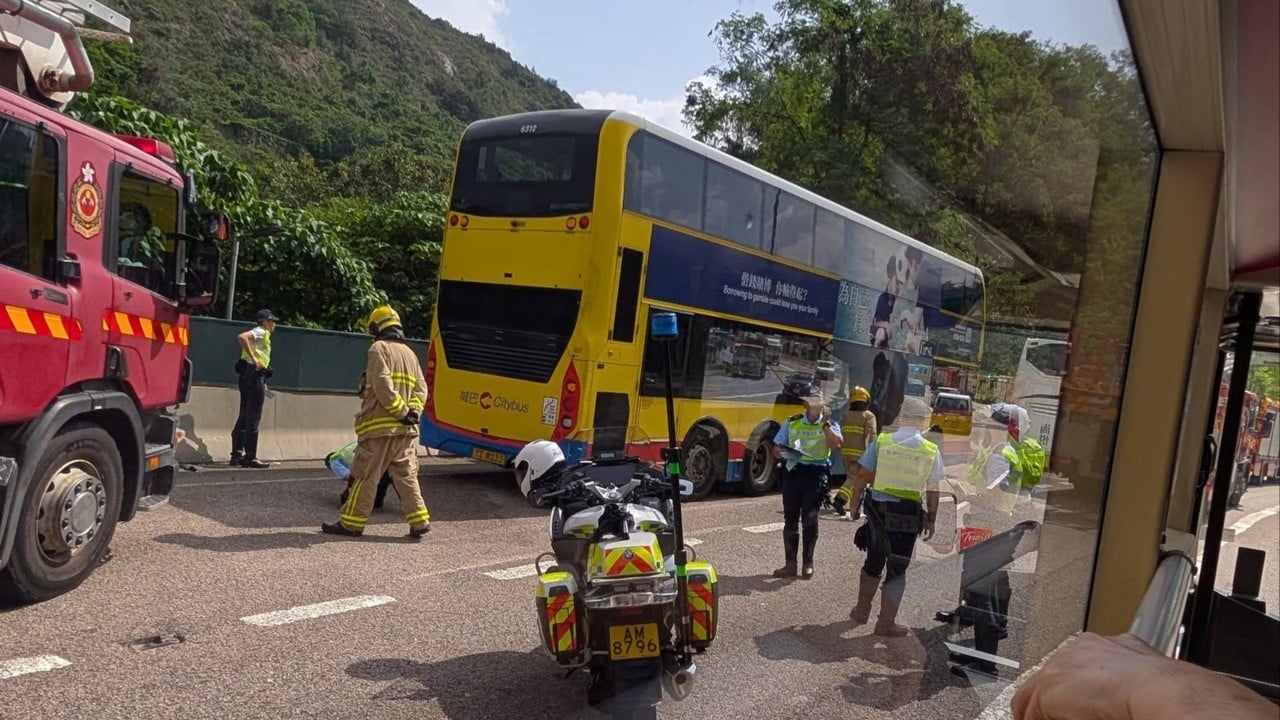
Whenever a double-decker bus clips a roadside barrier in Hong Kong, local media outlets immediately sprint into a familiar frenzy. They publish sensationalized headlines detailing every scrape, count every minor injury, and instinctively demand stricter driver speed limits or immediate infrastructure overhauls.
It is a reactionary, lazy consensus.
Focusing on isolated vehicular crashes mistakes localized mechanical and human error for systematic transit failure. Hong Kong boasts one of the safest, most efficient public transport systems on earth, carrying millions of daily commuters with an extraordinary safety record. When ten people sustain minor injuries in a low-speed collision with a physical barrier, the barrier actually did its job. Crash attenuators and roadside guardrails exist precisely to absorb kinetic energy and prevent vehicles from careening into pedestrian walkways or off elevated roads.
The immediate outrage following these incidents reflects a fundamental misunderstanding of structural risk management.
The Illusion of Zero-Risk Transit
Public outrage demands absolute perfection from a complex system operating at scale. That is a statistical impossibility. When millions of passenger kilometers are logged every single day across dense urban corridors, physical contact between vehicles and infrastructure will occur.
I have spent years analyzing urban transport metrics, and the pattern is always identical. A minor collision occurs. Sensational coverage triggers immediate demands for draconian policy changes, such as forcing buses into lower speeds that choke urban flow. Yet, decreasing transit speed increases congestion, causes route delays, and pushes commuters toward far less regulated private transport options, which carry significantly higher fatality rates per kilometer.
Imagine a city that caps every public transit vehicle at twenty kilometers per hour to guarantee zero collisions. The resulting gridlock completely paralyzes the economy, while motorcycle and private vehicle usage spikes to offset the delay, driving overall traffic casualties through the roof.
By hyper-fixating on routine collision reports, media narrative actively misdirects public attention away from actual structural challenges: driver fatigue caused by rigid shift scheduling, aging mechanical supply chains, and rising operational costs in a dense economy.
The Real Metrics That Matter
A transit system's safety should never be judged by the complete absence of minor fender-benders. It must be evaluated on casualty prevention mechanics and systemic resilience.
- Energy Dissipation: Modern road barriers are engineered to yield and redirect momentum. A damaged barrier and a damaged bumper mean the safety engineering worked.
- Occupant Protection: Modern double-decker frames absorb structural shock, keeping cabin integrity intact during low-speed impacts.
- System Risk Distortions: Over-reacting to bus incidents diverts capital away from critical maintenance budgets and funnels it into performative, high-visibility political gestures.
Every dollar wasted on knee-jerk regulatory reviews following a minor incident is a dollar pulled away from preventive fleet maintenance and driver wellness programs.
Rethinking Urban Mobility Safety
Instead of panicking every time a bumper hits a metal rail, urban planners and the public need to reframe how they evaluate transit incidents. Stop treating engineered safety features doing their job as catastrophic system failures.
Demand transparency on driver shift rotations and long-term mechanical maintenance schedules instead of calling for lower speed limits every time a barrier gets dented.
The true metric of a world-class transit system isn't that crashes never happen. It's that when they do, everybody walks away with minor injuries. Stop panicking over the engineering systems that just saved ten lives.