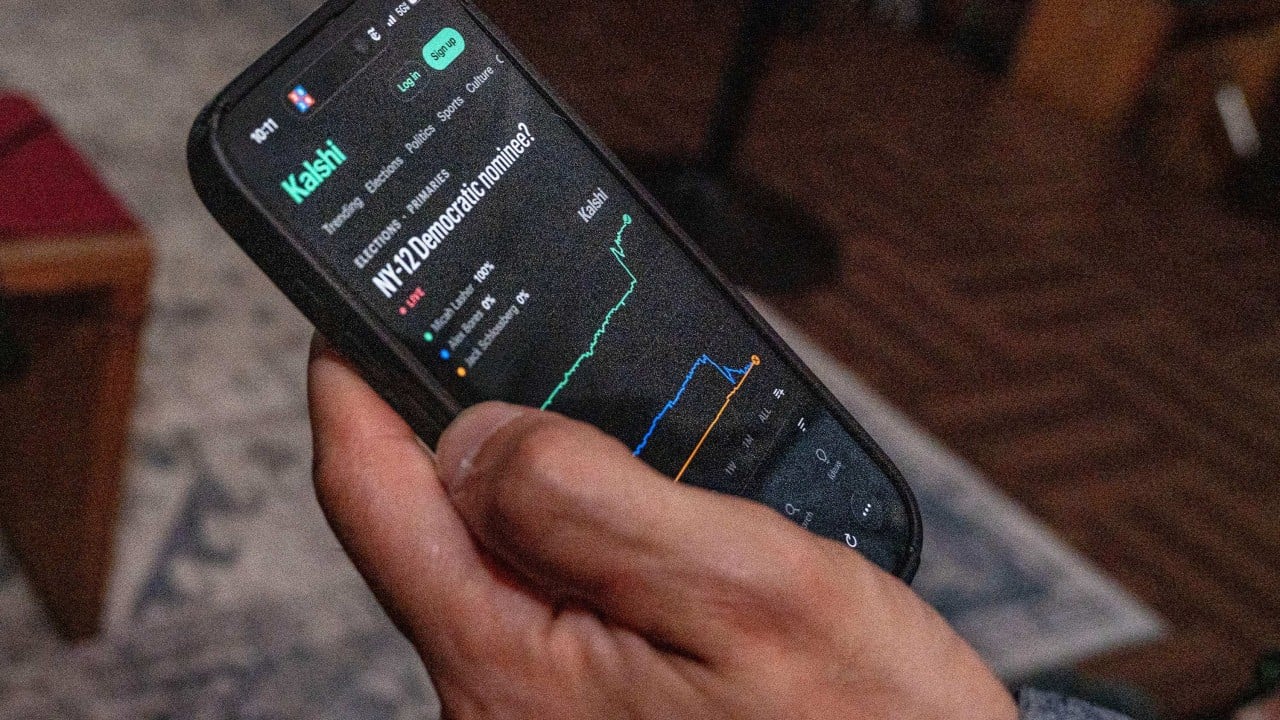
You can bet on anything now. Whether a specific day will be the hottest of the year, who wins the World Cup, or if a tech giant drops a new device next month. Platforms like Polymarket and Kalshi have turned world events into tradable assets, with global transaction volumes hitting 64 billion USD last year.
But if you're sitting in Hong Kong, pulling up these platforms on your phone isn't just financial speculation. It's likely a criminal offense.
The Hong Kong government just made its stance incredibly clear by putting the brakes on its own plans. In April 2026, officials abruptly halted the planned rollout of legal basketball betting under the Hong Kong Jockey Club. Why? Because the Home and Youth Affairs Bureau openly admitted that expanding legal sports betting might normalize the surging, unregulated prediction markets and fuel illegal gambling.
This isn't a minor regulatory hiccup. It's an outright clash between decentralized global finance and one of the strictest gambling frameworks in the world.
The Blunt Warning From Financial Regulators
For a long time, users assumed that because prediction markets look like derivative trading, they fall under financial rules. Hong Kong regulators just blew that theory out of the water.
The Investor and Financial Education Council (IFEC), which operates under the Securities and Futures Commission (SFC), issued a harsh reality check. They stated plainly that prediction market contracts are not investment products.
Real investing means buying into something with intrinsic value or growth potential, like stocks, bonds, or real estate. Buying a binary "Yes" or "No" contract on a future event is just placing a probabilistic wager. Because of that, the IFEC warned that trading on these platforms falls completely outside the protection of the Securities and Futures Ordinance. If a platform freezes your funds or goes bust, the SFC won't help you.
Even worse, you could face jail time. Under Section 8 of Hong Kong's Gambling Ordinance, betting with an unauthorized bookmaker is a criminal offense. The current legal view is that these platforms function as unlicensed bookmakers. For a resident placing a trade, that carries a maximum fine of 50,000 HKD and up to nine months in prison.
Why the Gambling Ordinance Has You Trapped
Hong Kong doesn't have a grey market for gambling. Everything is illegal unless it is explicitly exempted or authorized by the government. Right now, the only legal betting channels are run by the Hong Kong Jockey Club, covering horse racing, football, and the Mark Six lottery.
Prediction markets try to dodge this by calling themselves "information aggregators" or "hedging tools." But under local law, that doesn't hold water.
The Gambling Ordinance looks at three distinct things.
- Gaming: Playing games of chance for money.
- Betting: Wagering on an outcome.
- Lotteries: Competitions where success relies on guessing future events rather than substantial skill.
Prediction markets fit perfectly into the legal definition of betting and lotteries. It doesn't matter if you use a complex data model to forecast a political outcome. If you are risking money on a future contingency where the operator settles the payout, you're gambling in the eyes of the law.
The Crypto Complication and Enforcement Reality
A huge chunk of prediction market volume runs on blockchains using stablecoins. This layer of decentralization makes direct regulation almost impossible for Hong Kong authorities. Chief Executive John Lee noted that these platforms are "more than gambling," specifically pointing out the high level of speculation linked to virtual assets.
But don't mistake the government's inability to shut down a blockchain with permission to use it.
Hong Kong police are actively shifting their focus online. Ahead of major events like the 2026 FIFA World Cup, law enforcement launched dedicated operations targeting unauthorized digital betting networks. They've made it clear that using overseas servers, social media channels, or cryptocurrency to place wagers doesn't protect you. Local police data showed thousands of arrests over the last year tied to online gambling, and overseas prediction platforms are now firmly in their crosshairs.
For institutional traders or local fintech firms, this creates massive legal exposure. Moving corporate funds into these markets to hedge macroeconomic risks could easily be interpreted as corporate bookmaking or illegal wagering.
What You Need to Do Next
If you are a business operator, investor, or digital asset platform in Hong Kong, stop treating prediction markets as a regulatory grey zone. It's black and white.
First, audit your platform exposure. If your fintech app connects to, markets, or settles transactions for offshore event-contract platforms, you risk being prosecuted for operating an illegal bookmaking ring. This carries heavy fines and up to seven years in prison for directors.
Second, pull back institutional hedging. If you're using these platforms to manage corporate risk under the guise of an "alternative derivative," get a formal legal assessment under Cap. 148 immediately.
The government's policy is highly conservative right now. By pausing the legal basketball betting regime, they proved they're willing to sacrifice local tax revenue just to starve unregulated prediction platforms of oxygen. Expect tighter capital controls on crypto on-ramps and heavier internet policing to follow.