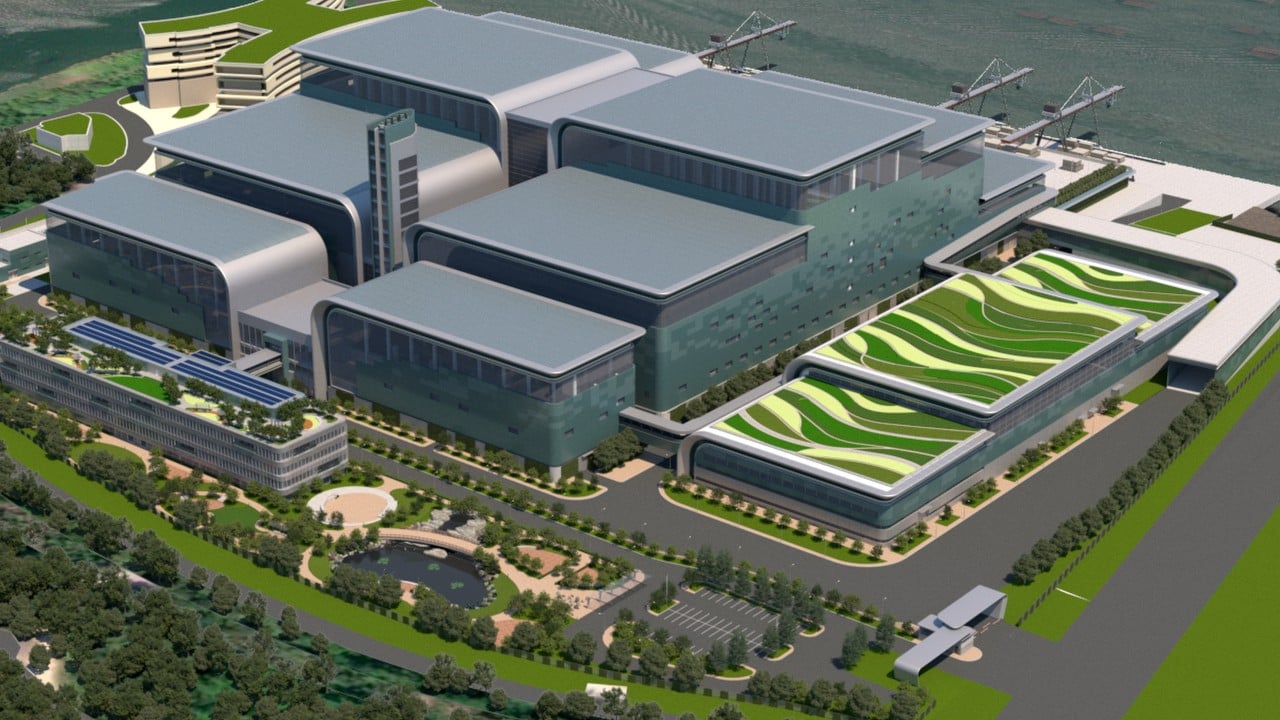
Hong Kong is sitting on a massive, state-of-the-art waste-to-energy facility that cost HK$30 billion to build. Right now, most people just call it O·PARK or T·PARK, and they think of it as a place where trash goes to disappear. That’s a huge mistake. We're looking at a world-class architectural marvel and a massive environmental engine that's being treated like a backyard shed.
If you’ve never seen the Integrated Waste Management Facilities (IWMF) rising from the coast of Shek Kwu Chau, you're missing out on what might be the most expensive piece of infrastructure the city has ever green-lit. It isn't just about burning bags of rubbish to keep the lights on. It’s about whether Hong Kong has the guts to turn a "not in my backyard" eyesore into a global destination for eco-tourism and education.
The current calls to transform this site into a legitimate tourism hub aren't just idealistic fluff. They're practical. When you spend 30 billion of taxpayers' money, you don't just build a furnace. You build a landmark.
The waste facility that looks like a resort
Let's be real. Most people hear "waste treatment plant" and they think of smell, smoke, and industrial grit. This facility flips that script. It’s built on a reclaimed island with a design that rivals the best museums in West Kowloon. It’s got the potential to house high-end spas, educational galleries, and observation decks that offer views of the South China Sea you can’t get anywhere else.
Building this thing was a feat of engineering. The artificial island alone required massive sea walls and complex reclamation techniques to protect the local finless porpoises. That story—the struggle between development and conservation—is exactly what tourists and students want to hear. People aren't looking for "sanitized" tours anymore. They want to see the guts of how a city survives.
If the government keeps it as a restricted industrial zone, they’re throwing away a chance to educate the next generation. We need kids to see where their plastic bottles go. Not in a textbook, but by standing ten feet away from a high-tech incinerator that's turning that plastic into electricity for their PlayStation.
Moving past the incineration stigma
The biggest hurdle isn't the technology. It’s the vibe. For decades, "incineration" was a dirty word in Hong Kong. Protesters blocked these projects because they feared dioxins and toxic air. But the IWMF uses advanced moving grate technology and flue gas treatment that meets the tightest European emission standards.
It’s cleaner than the buses idling in Central.
By opening this facility to the public as a "Green Hub," the government can finally kill the myth that waste-to-energy is dangerous. You can't tell people it’s safe; you have to show them. When you let families have a picnic or a soak in a heat-recovery pool right next to the treatment plant, the fear vanishes. This isn't a new idea. Denmark did it with CopenHill—a waste plant that doubles as a dry ski slope.
Hong Kong doesn't need a ski slope. We need a marine park and an education center that explains why our landfills are overflowing. We need to stop pretending that our trash just "goes away."
Why the education angle is a goldmine
The city is desperate for "experiential learning" sites. Right now, school trips are often predictable. A trip to the IWMF could be a whole different animal. Imagine a high-tech gallery that tracks the journey of a discarded milk carton in real-time.
- Real-world physics: Students can see how thermal energy is converted to steam, then to kinetic energy, and finally into the grid.
- Marine biology: The surrounding waters are home to diverse life. The facility can act as a base for studying how artificial reefs affect local biodiversity.
- Circular economy: Seeing the bottom ash from the incinerator get turned into construction materials is a lesson in sustainability that stays with you.
It’s about transparency. When the government hides these facilities behind high fences and "authorized personnel only" signs, they breed suspicion. Opening the doors creates trust.
Tourism is the missing piece of the ROI
Hong Kong's tourism industry is looking for something beyond shopping malls and the Peak. We keep talking about "green tourism" and "island hopping," yet we have this massive asset sitting right there in the middle of the water.
The IWMF is located near Lantau and Cheung Chau. It’s a natural stop for a ferry route. You could spend the morning hiking in South Lantau and the afternoon learning about the future of energy at the facility. It adds a layer of "purpose" to a vacation. Travelers in 2026 are increasingly looking for "impact travel"—experiences that teach them something about the planet.
Some critics say it’s too expensive to add tourist facilities to an industrial site. Honestly, that's nonsense. When you’ve already dropped HK$30 billion, adding a few hundred million for a world-class visitor center and safe walking trails is a rounding error. It’s the difference between a functional utility and a national pride point.
Making the transition happen
Changing a waste plant into a hub isn't just about putting a gift shop in the lobby. It requires a shift in management. You can't have engineers running a tourism site. You need a partnership between the Environmental Protection Department and the Tourism Board.
The site needs a dedicated ferry pier. It needs staff who can explain complex carbon-capture tech to a seven-year-old. It needs to be integrated into the wider "Greater Bay Area" tourism map.
The facility is expected to handle 3,000 tonnes of municipal solid waste every day. That’s a staggering amount. It will reduce the volume of waste by 90%. Those numbers are impressive on a spreadsheet, but they're life-changing when you see the scale of the operation in person.
Don't let this become another "invisible" utility. We should be proud of the tech we've built to save our city from its own garbage.
If you're a teacher, start badgering the Education Bureau for site visit permits now. If you're a local resident, demand that the government opens up the "green zones" promised in the original pitch. This isn't just a trash plant. It’s a 30-billion-dollar lesson in how we’re going to survive the next century. Make sure you're there to see it.