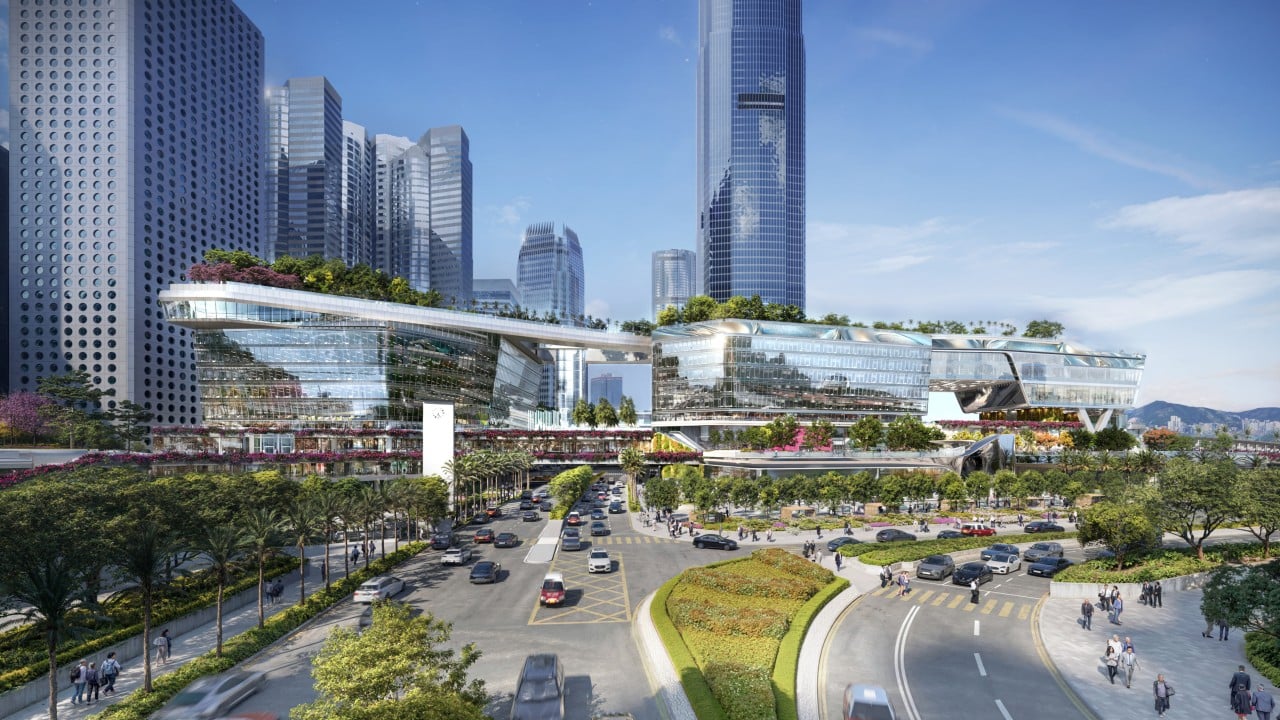
Hong Kong just saw its first biodiversity-linked loan, and honestly, it’s about time. Henderson Land Development recently secured a HK$500 million facility from HSBC, specifically tied to the ecological performance of its Central Yards project. If you've lived in this city for more than a week, you know the "concrete jungle" label isn't just a metaphor. It’s the literal truth. Most developers here talk about green buildings, but they're usually just talking about energy-saving elevators or double-glazed windows. This is different. This is about bugs, birds, and soil.
The Central Yards project, located at the Oil Street site in North Point, is the testing ground for this financial experiment. For years, the industry focused on carbon. While carbon is important, it’s a single metric. Biodiversity is messy. It’s hard to measure. That’s probably why it took this long for a major bank to put its money where the greenery is. This loan doesn't just give Henderson some cheap cash; it forces them to prove that their urban landscaping actually supports local life.
Why Central Yards isn't just another park
We’ve all seen those "green spaces" in shopping malls that consist of three plastic-looking ferns and a dying palm tree. Central Yards wants to avoid that. The project includes over 20,000 square feet of open space. That sounds like a lot for North Point, but the real value lies in the "urban forest" concept they're pushing.
The biodiversity loan is tied to specific Performance Targets (SPTs). This isn't a "vibe check." Henderson has to hit actual benchmarks regarding native plant species and habitat quality. By planting species that belong in Hong Kong—not just what looks pretty in a brochure—they’re trying to create a stepping stone for local wildlife. Think of it as a rest stop for birds migrating through the dense urban corridor of Hong Kong Island.
The native species gamble
In the past, developers loved exotic plants because they grew fast and looked uniform. But local butterflies and bees can't eat them. They’re basically ecological deserts. Henderson is committing to a high percentage of native flora. This is harder than it looks. Native plants can be finicky. They don't always behave. If the plants die or the "ecological value" of the site drops, the interest rate on that HK$500 million loan could go up. That's a real financial sting for a developer.
The mechanics of the biodiversity loan
You’re probably wondering how a bank like HSBC actually measures "nature." It’s a valid question. They aren't just sending a banker out with a butterfly net. These loans rely on the Taskforce on Nature-related Financial Disclosures (TNFD) framework. It’s the new gold standard for how companies report their impact on the natural world.
The interest rate for this loan is "stepped." If Henderson hits their biodiversity targets, the rate drops. If they fail, it stays high or increases. This turns the environment into a line item on a balance sheet. It makes nature a risk factor. For a long time, nature was treated as an "externality"—something that didn't cost anything to destroy. This loan flips that logic.
Measuring what matters
The monitoring involves third-party ecological consultants. They look at:
- Species richness: How many different types of plants and animals are present.
- Pollinator support: Whether the space actually attracts bees and butterflies.
- Micro-climate cooling: How much the greenery reduces the "heat island" effect in North Point.
Moving beyond the greenwash
Let's be real for a second. Is HK$500 million a lot for Henderson Land? Not really. They’re a multi-billion dollar empire. But the size of the loan matters less than the precedent it sets. This is a pilot. If it works, biodiversity targets will become standard in every construction loan in the city.
The skeptics say this is just more greenwashing. I don't buy that entirely. Greenwashing usually happens when there are no consequences. When you tie the cost of debt to the survival of a specific type of local shrub, you’ve created a consequence. Money talks in Hong Kong louder than anywhere else on earth. If the CFO is breathing down the neck of the landscape architect because the native ferns are wilting, that’s progress.
The North Point context
North Point is one of the most densely populated places on the planet. It’s almost entirely paved over. By inserting a high-quality ecological patch here, Henderson is testing whether "urban acupuncture" works. Can a single 20,000-square-foot plot actually make a difference?
Biologists speak about "habitat fragmentation." Hong Kong’s wild spaces are cut off from each other by roads and skyscrapers. Small patches like Central Yards act as bridges. They allow populations of insects and small birds to move between the hills of Hong Kong Park and the greenery of the eastern districts. Without these bridges, local species eventually die out from inbreeding or lack of resources.
What this means for the Hong Kong property market
If you’re an investor or someone working in real estate, pay attention. The Hong Kong Monetary Authority (HKMA) is pushing hard for the city to become a "green finance hub." They want every major transaction to have an ESG (Environmental, Social, and Governance) component.
We’re moving away from generic "sustainability" towards "nature-positive" development. This means it’s no longer enough to just do "less harm." You have to show you’re actually making things better. Henderson is the first to jump, but Sun Hung Kai, New World, and Swire won't be far behind. They can't afford to be left out of these cheaper "green" credit lines.
The hidden risks for developers
Tying loans to biology is risky. If a freak typhoon wipes out the Central Yards garden, does Henderson lose their interest rate discount? If a new pest kills the native trees, does the loan get more expensive? Developers are used to controlling every variable. Nature is the one variable you can’t control. This introduces a new kind of volatility into project financing that most developers aren't prepared for yet.
How to track the success of biodiversity projects
If you want to see if this is actually working, don't look at the press releases. Look at the data. Henderson will have to publish their TNFD-aligned reports. You can check these against independent ecological surveys.
True success looks like:
- Seeing more than just sparrows and pigeons in the courtyard.
- A measurable drop in ground-level temperature compared to the surrounding streets.
- High survival rates for native tree species after the first three years.
You should also watch the secondary market. If these "nature-linked" bonds and loans become popular, we'll see a surge in demand for ecologists in Hong Kong. Right now, there aren't enough qualified professionals to audit these projects. That’s a bottleneck nobody is talking about.
Start shifting your strategy now
If you're involved in urban planning or finance, stop treating biodiversity as an afterthought for the "landscaping" department. It's now a core financial instrument.
Begin by auditing your own projects using the TNFD framework. You don't need a loan to start measuring your impact. Look at your current sites. Are you planting for aesthetics or for the ecosystem? Switch your nursery orders to native species like the Lithocarpus or Machilus varieties. They’re tougher, they require less water once established, and they might just save you half a percent on your next billion-dollar loan.
Keep an eye on the Central Yards completion. It’s going to be the blueprint for the next decade of Hong Kong development. If Henderson pulls this off, the "concrete jungle" might finally get a bit more jungle and a bit less concrete.