The room in the West Wing always smells faintly of old paper and high-stakes anxiety. On days when the Middle East teeters on the edge of a knife, that smell intensifies, sharpened by the ozone of dozens of television screens flashing breaking news alerts in silent, synchronized panic. Diplomats and intelligence analysts sit in these rooms, tracking the movement of uranium centrifuges, mapping missile trajectories, and calculating the exact human cost of a single miscalculated step.
Then, a phrase slips out. A verbal stumble occurs at the highest level of global power, and for a surreal moment, the entire machinery of international relations grinds to a halt. Meanwhile, you can read similar events here: Structural Fragility in Coxs Bazar: The Geotechnical and Logistics Failure Behind Refugee Camp Slope Collapses.
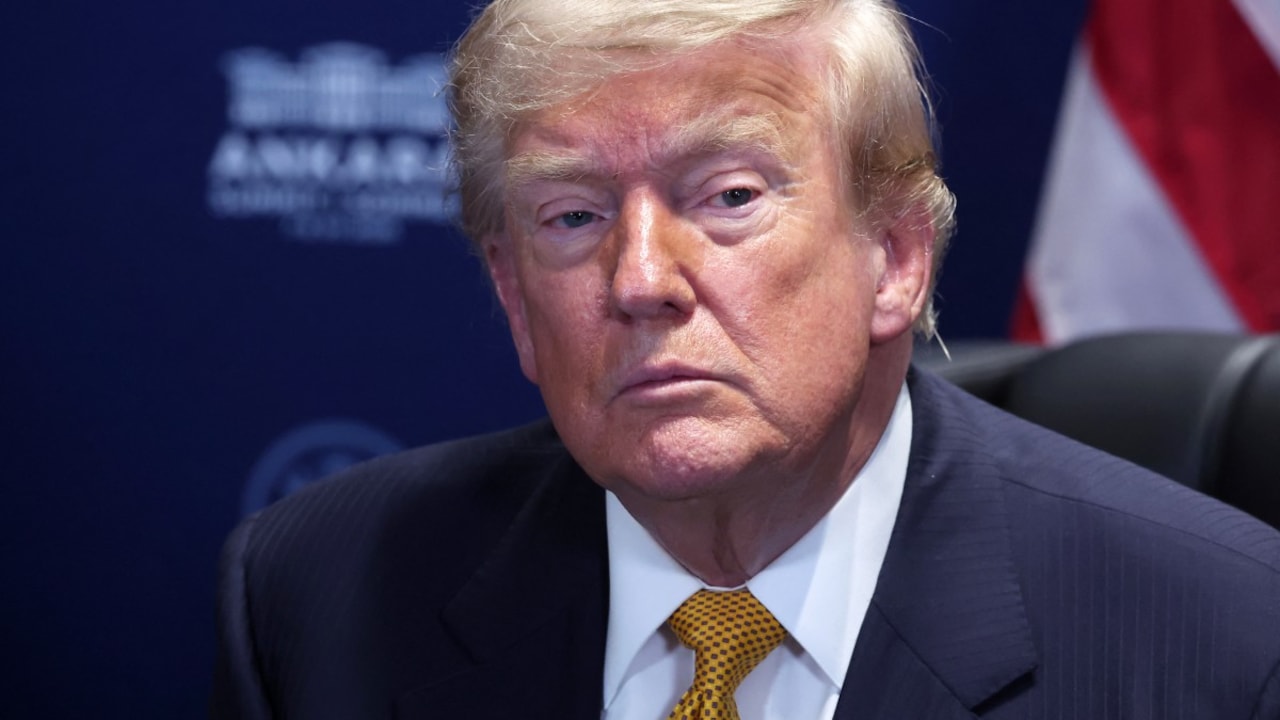
When Donald Trump stood before reporters and uttered the phrase "the Islamic Republic of Japan," it was easy for late-night comedians to mock. It was simple for critics to dismiss it as just another late-stage manifestation of a hyper-distracted political era. But for the people whose lives depend on the precise, razor-sharp execution of foreign policy, that verbal crossover wasn't funny. It was a terrifying glimpse into how easily the thread of global stability can fray when the language of war becomes sloppy.
Words in diplomacy are not just communication. They are architecture. They build alliances, construct deterrents, and erect barriers against catastrophic conflict. When those words crumble, the structural integrity of peace goes with them. To explore the bigger picture, we recommend the excellent analysis by TIME.
The Friction of the Slip
To understand why a simple mix-up between Iran and Japan matters, we have to look at the people who inhabit the quiet spaces where policy is actually executed. Let us consider a hypothetical diplomat named Sarah. She has spent fifteen years studying Persian history, analyzing the factional dynamics of Tehran, and decoding the subtext of statements issued by the Supreme Leader. Her entire professional existence is dedicated to precision. She knows that a single mistranslated adjective in a diplomatic note can stall negotiations for months or, worse, signal an unintended green light for military action.
Imagine Sarah sitting at her desk, nursing a cold cup of coffee, watching the commander-in-chief conflate one of America’s most vital, pacifist East Asian allies with its most volatile Middle Eastern adversary.
It creates an instant, invisible crisis.
The immediate fallout of such a public error is not a declaration of war, but a sudden, debilitating fog. In Tokyo, foreign ministry officials are forced to hold emergency meetings, whispering to one another about what this signals. Is it a sign of deep presidential disinterest? Does the American administration view its Asian alliances through the same lens of hostility it applies to the Persian Gulf? In Tehran, hardliners seize upon the slip as proof of American incompetence and disregard, using it to fuel their domestic propaganda machine.
This is the hidden tax of political carelessness. It forces hundreds of brilliant, exhausted civil servants to waste precious hours cleaning up a linguistic mess, reassuring allies, and clarifying intent, all while the actual crisis continues to simmer in the background.
When the Drums Keep Beating
The tension between Washington and Iran has never been an abstract intellectual exercise. It is a reality measured in naval deployments in the Strait of Hormuz, cyberattacks targeting critical infrastructure, and the constant, haunting shadow of proxy violence across the region.
During the peak moments of the maximum pressure campaign, the margin for error was non-existent. A single drone shot down or an oil tanker seized could set off a chain reaction that neither side truly desired but neither side could stop. In this environment, the language emanating from the White House needed to be a precision instrument. It required the focus of a laser, designed to communicate absolute resolve without inadvertently triggering a preemptive strike born of sheer panic.
Instead, the public received a jumble.
When the leader of the free world accidentally invents a geopolitical entity like the "Islamic Republic of Japan," it signals to the world that the complex, multi-layered realities of these nations are being flattened into a generic, blurry image of "the adversary." It suggests that the deep historical nuances of Japan—a nation that has spent decades maintaining a delicate, independent diplomatic relationship with Iran to secure its energy needs—are entirely invisible to the American executive branch.
This matters because misperception is the primary driver of accidental wars. History is littered with the graves of soldiers who died because one government misread the intentions, the focus, or the competence of another. When the rhetoric becomes surreal, the risk of miscalculation skyrockets.
The Quiet Cost of Chasing Headlines
We live in a culture that treats political gaffes as disposable entertainment. A clip goes viral, a thousand memes are generated, and by the next morning, the collective consciousness has moved on to the next outrage or absurdity.
But the institutions that preserve global order do not have the luxury of a short memory.
Every time a major foreign policy statement is undercut by a bizarre factual error, a tiny fraction of American credibility evaporates. Trust is a currency that is incredibly difficult to mint but remarkably easy to spend. When European allies, already skeptical of Washington's erratic shift away from the Iran nuclear deal, witness these public displays of confusion, their willingness to follow America's lead diminishes. They begin to quietly make their own arrangements, build their own hedges, and pull away from a partnership that feels increasingly unpredictable.
Consider the perspective of an ordinary citizen in a country like Japan or Iran. For a Tokyo resident, their nation's constitutionally mandated pacifism and its long, careful post-war diplomatic tradition are points of profound national identity. To hear their democracy casually linguistic-flipped into an Islamic republic is an insult that lingers long after the news cycle dies. For an ordinary Iranian, struggling under the crushing weight of economic sanctions, the realization that the person holding the power to destroy their economy—or launch a missile strike—cannot keep their country straight from an island nation thousands of miles away is profoundly terrifying.
This is not about elitist demands for perfect grammar or polished teleprompter delivery. It is about the fundamental responsibility of handling immense power with appropriate reverence.
Moving Beyond the Noise
The real lesson of the "Islamic Republic of Japan" faux pas is not about Donald Trump's personal speaking style. It is about the systemic danger of a political culture that prizes performance over substance, speed over accuracy, and instinct over expertise.
When we reduce foreign policy to a series of applause lines and off-the-cuff remarks, we alienate the very experts who keep us safe. We signal to our adversaries that we are distracted, and we signal to our friends that we are unreliable. The machinery of peace requires constant, meticulous maintenance. It demands leaders who understand that their words carry the weight of lives, economies, and the fate of nations.
The next time a bizarre phrase echoes out of a press briefing, we should resist the urge to merely laugh or tweet about it. We need to look past the immediate absurdity and think of the people in the quiet rooms, working frantically through the night to steady a world that a single careless phrase just threatened to unbalance.