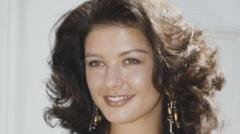
Imagine looking into a screen and seeing your own face look back at you. Your eyes, your skin, the precise way your mouth moves when you speak. But the words coming out of that mouth are not yours. They are the exact opposite of everything you believe, everything you have stood for, and everything you have spent a lifetime defending.
This is no longer a psychological thriller plot. It is the reality of modern American politics, where the human identity has become just another piece of data to be harvested, repurposed, and weaponized.
The latest escalation in this strange war features an artificial version of comedian Rosie O’Donnell sitting in a simulated doctor’s office. Her digital double looks weary, delivering a somber confession to the camera.
"I have been suffering for over a decade," the fabricated version of O'Donnell says, her voice sounding hauntingly authentic. "And after listening to Dr. Trump, I can see some results. Man, I’ve been suffering for years."
The video, a ninety-second digital parody uploaded directly by Donald Trump to his Truth Social and X accounts, presents the American president in a pristine white lab coat and stethoscope. Dubbing himself "Dr. Trump," the deepfake avatar offers a satirical "treatment plan" for "Trump Derangement Syndrome," a term long used by his camp to dismiss critics. Alongside O'Donnell, a roster of prominent Hollywood detractors—including Robert De Niro, Whoopi Goldberg, Julia Roberts, Edward Norton, and John Leguizamo—appear as submissive, repentant patients.
"I couldn't eat, I couldn't sleep, constantly angry," the digital ghost of Robert De Niro mutters over moody, elevator-style background music.
The real Rosie O’Donnell was not amused. Her feud with Trump spans nearly two decades, a bitter public rivalry born long before reality television collided with executive power. When confronted with this automated funhouse mirror of herself, she bypassed the humor entirely, cutting straight to the bone.
"He's quite ill—and getting worse daily," O’Donnell stated flatly, pointing directly toward constitutional remedies. "The 25th amendment exists for exactly this reason. Remove. Impeach. Convict."
But the true conflict here runs far deeper than a twenty-year celebrity grudge. It exposes a chilling shift in how we communicate, how we lie, and how we perceive truth itself.
The Death of Consent in the Sandbox
For generations, political satire relied on caricature. We had political cartoons with exaggerated noses, late-night impressionists donning oversized wigs, and sketch comedy shows mocking presidential mannerisms. Those parodies carried an unwritten contract: everyone, from the audience to the subject, knew it was a performance.
Generational technology has torn up that contract.
When a sitting president can command software to hijack the physical likenesses of his living critics and force them to recant their political stances, we have crossed an invisible boundary. It is a psychological soft-power play disguised as a joke. The message is clear: Your face belongs to anyone with the processing power to steal it.
Consider the perspective of a viewer stumbling across this clip. To a hyper-online audience, the video is an obvious spoof, bookended by glossy White House promotional clips and a celebratory look at a newly acquired presidential aircraft. The fake Trump smiles at the camera, offering a cure consisting of turning off the news, saying prayers, and drinking Diet Coke.
But as deepfake algorithms grow exponentially more sophisticated, the line between satire and psychological gaslighting begins to blur. The technology relies on neural networks that analyze thousands of hours of real footage, mapping every micro-expression, every vocal cadence, and every blink of an eye. The result is a synthetic human being that possesses all the warmth of life but none of the soul.
White House spokesperson Davis Ingle defended the post as a standard exercise of political messaging, dismissing the uproar by doubling down on the premise of the joke.
"Trump Derangement Syndrome is a crippling disease that has unfortunately rotted the brains of many people," Ingle stated.
Officials did not comment on whether anyone had bothered to ask O’Donnell or De Niro for permission to use their human identities for the president's morning social media feed. They didn't have to. In the wild west of modern copyright and digital privacy laws, public figures are largely defenseless against being transformed into political puppets.
A Pattern of Synthetic Mythologies
This is not an isolated digital experiment. It is part of a deliberate, escalating aesthetic strategy. Over the past year, the executive social media feeds have transformed into an surreal art gallery of algorithmic self-deification and targeted degradation.
We have seen the presidency filtered through a lens of digital mythology. There was the fake Time magazine cover depicting the commander-in-chief as a crowned monarch with the caption, "Long live the king!" There was the bizarre feud with Pope Leo XIV, which saw the deletion of a deepfake image showing the president alongside the pontiff, only for it to be replaced by another synthetic creation of the two men embracing against the backdrop of an American flag. Earlier, a highly controversial AI-generated video targeted Barack and Michelle Obama with racist imagery, triggering intense public backlash before being quietly scrubbed without an apology.
When questioned previously about an image that appeared to depict him as a divine entity healing the sick, Trump rejected the interpretation with a characteristic blend of literalism and misdirection.
"It’s supposed to be me as a doctor," he claimed during a video interview, reframing the graphic as an homage to Red Cross workers. "Making people better. And I do make people better."
This psychological pattern matters because it signals a fundamental shift in political communication. Leaders no longer need to argue with their opponents; they can simply rewrite them. If a critic becomes too loud, a computer program can make them quiet. If a public figure becomes too troublesome, an algorithm can make them apologize.
The Human Fragility of Truth
It is easy to look at a ninety-second video featuring celebrity deepfakes and dismiss it as harmless internet noise. We tell ourselves that we are too smart to be fooled. We believe our eyes can tell the difference between a real human being and a collection of rendering pixels.
But that confidence is a luxury that is rapidly expiring.
The danger of this digital landscape is not just that people will believe the lies. The real danger is that eventually, no one will believe the truth. When everything can be faked, any real piece of evidence, any genuine recording of misconduct, and any authentic statement can be dismissed as a simulation. The truth becomes a matter of opinion, and whoever owns the loudest platform wins.
Rosie O’Donnell’s fury does not stem from a lack of humor. It comes from the terrifying realization that her own identity has been decoupled from her physical self. She is trapped in a world where her image can be drafted into the service of a political ideology she despises, leaving her with nothing but her real voice to scream back into the void.
We are watching the slow erosion of the human element in public life. In its place, we are building a world of digital ghosts, where the living are hollowed out to serve as props, and the screens we watch reflect only the illusions we want to see.
The video ends on a lighthearted note, with the digital doctor flashing a practiced smile, advising his patients to take a sip of soda and watch their anxieties fade away. But after the screen goes black, the reflection left behind is entirely our own—staring into the dark, wondering if we can still tell the difference between the world outside and the machine within.