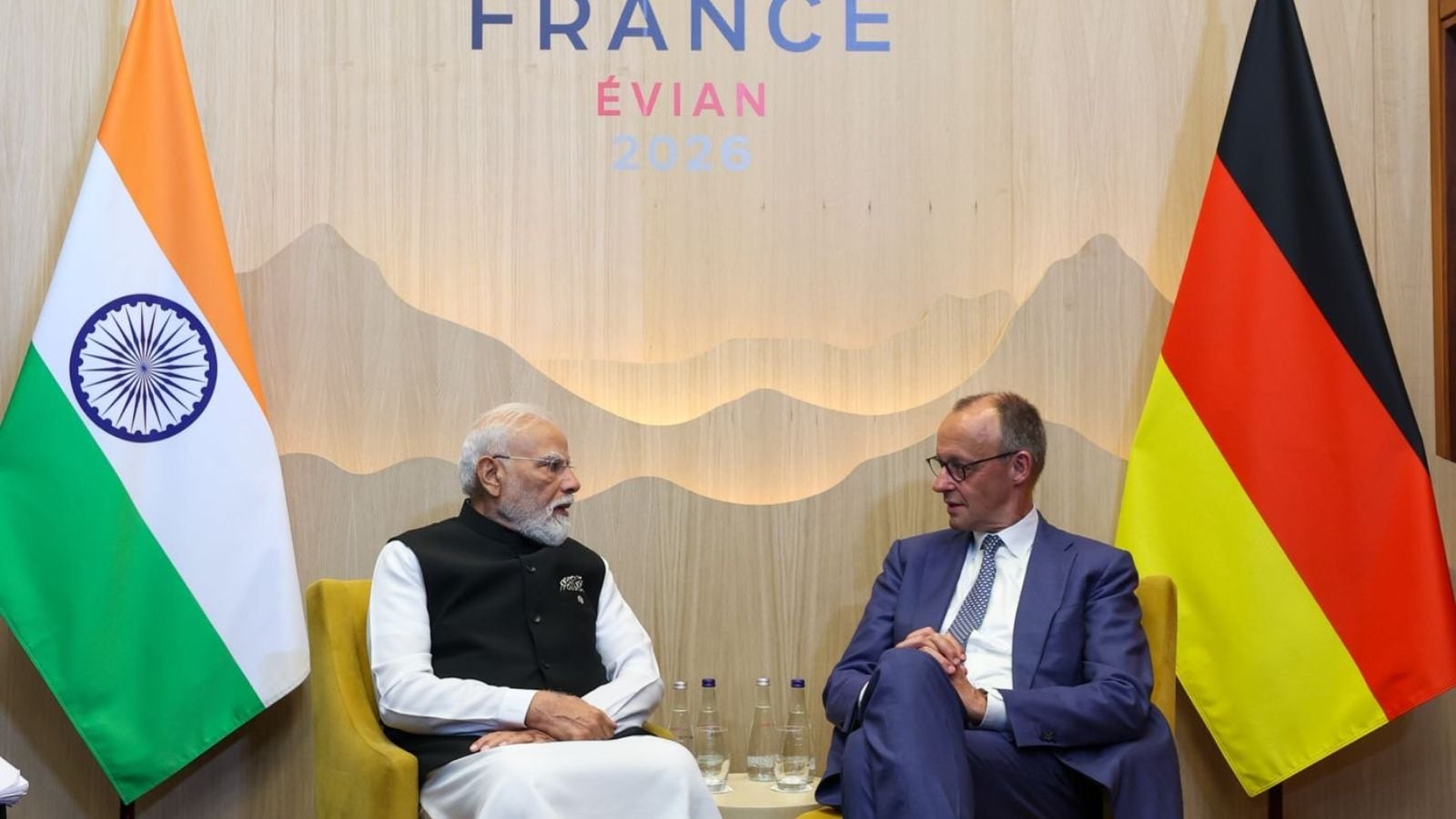
The ink on a diplomatic invitation does not just represent statecraft. It carries the weight of factory floors in Stuttgart, the ambitions of software engineers in Bengaluru, and the silent, shifting tectonic plates of global power.
When the German Chancellor extended a formal invitation to Indian Prime Minister Narendra Modi for the 8th Inter-Governmental Consultations, the announcement arrived with the standard, sterile vocabulary of international relations. Words like bilateral cooperation, strategic partnership, and framework agreements filled the official press releases. They are safe words. They are cold.
But step away from the podiums and look at the map.
Consider a hypothetical engineer named Ananya, working late in a tech hub in Hyderabad. She is developing an algorithm to optimize green hydrogen grids. Thousands of miles away, a mid-level executive named Klaus stands on a chilly shop floor in Baden-Württemberg, watching a precision milling machine and wondering where he will find the highly skilled labor to keep his production line running by the end of the decade.
They do not know each other. They have never spoken. Yet, their entire professional futures are bound up in a high-stakes diplomatic ritual scheduled for later this year.
The Weight of the Protocol
To understand why this specific meeting matters, one must first understand the sheer anomaly of the format. Governments do not routinely pack up their entire cabinets and fly them across oceans just to sit in a room together. The Inter-Governmental Consultations (IGC) are a rare mechanism. Germany reserves this level of engagement for a select few nations—those it deems absolutely critical to its own survival and trajectory.
The structure is intense. It is not a brief photo-op between two leaders. Instead, it functions as a massive, parallel brain storming session. Ministers of defense, environment, finance, and technology from both capitals sit down simultaneously in pairs. They argue. They negotiate. They align.
For India and Germany, this process has been quietly building since 2011. But the upcoming eighth edition carries an entirely different level of urgency. The world that existed during the last consultations has fractured.
The European economic engine, long reliant on cheap energy and stable eastern trade routes, is forcing itself to reinvent how it operates. Germany needs new markets, reliable supply chains, and, above all, human capital. India, currently navigating a massive demographic dividend with millions of young, educated professionals entering the workforce, needs investment, technology transfers, and deep industrial partnerships.
It is a jigsaw puzzle where the pieces are finally beginning to match, driven not by sudden affection, but by cold, hard necessity.
Behind the Closed Doors of Berlin
What actually happens when these two massive systems collide in a conference room?
The conversation invariably turns to the quiet crisis of demographics. Europe is aging. Berlin knows that to maintain its industrial edge, it requires an influx of global talent. India possesses that talent in abundance. During previous rounds, the two nations signed a migration and mobility partnership, a document that sounded bureaucratic but translated into something deeply human: a clearer, faster pathway for Indian academics, IT specialists, and workers to live and work in Germany.
The upcoming talks will stress-test that pathway. It is a delicate dance. Germany must navigate its internal political conversations around migration, while India seeks to ensure its citizens are treated with dignity and offered genuine upward mobility abroad.
Then there is the green transition.
Imagine the sheer scale of moving two of the world's major economies away from fossil fuels. It cannot be done through speeches. It requires trillions of dollars in capital and unprecedented technological sharing. The Green and Sustainable Development Partnership, established in earlier talks, serves as the foundation. Germany pledged billions in concessional loans and technical assistance to help India scale up its renewable energy infrastructure.
When the ministers sit down later this year, they will not be debating whether climate change is real. They will be haggling over the price of solar components, the intellectual property rights of wind turbine tech, and the creation of standardized global markets for green hydrogen.
The Unspoken Friction
It would be a mistake to view this relationship through a purely utopian lens. True partnership requires friction.
The two nations do not always see the world through the same telescope. Berlin views global security primarily through a European lens, deeply preoccupied with the stability of its immediate borders and the preservation of post-war international norms. New Delhi, conversely, operates in a complex, volatile neighborhood in Asia, balancing its own immediate security threats while fiercely guarding its strategic autonomy.
There are moments of profound disconnect. German commentators sometimes express frustration at India's fiercely independent foreign policy choices. Indian diplomats, hardened by decades of navigating a complex regional landscape, view Western critiques as lacking historical context and realism.
Yet, the magic of the IGC format is that it forces both sides to look past the rhetorical grandstanding. When you are sitting across a table from a minister trying to figure out how to secure a supply chain for critical semiconductors, abstract ideological debates tend to recede. The shared economic reality takes over. Both nations recognize that dependency on any single global superpower is a vulnerability. Diversification is the only logical shield.
From Cotton to Clean Tech
The relationship is anchored in a deep historical arc that predates the modern concept of global supply chains. For centuries, the connection between the two regions was intellectual and cultural. German scholars immersed themselves in Sanskrit texts; Indian thinkers studied German philosophy and engineering.
When India began its push toward industrialization after independence, German engineering played a foundational role. The Rourkela steel plant, built with German collaboration in the 1950s, stood as a massive monument of concrete and iron to this cooperation.
Today, the monuments are digital and molecular.
The focus has shifted from heavy steel beams to sub-atomic particles and lines of code. German automotive giants are setting up massive research and development centers in Indian cities, tapping into local tech ecosystems not just to cut costs, but to innovate. Concurrently, Indian enterprises are expanding their footprint across Europe, acquiring traditional German mid-sized companies—the famous Mittelstand—and breathing new life into them with digital capabilities.
This is the real substance of the invitation extended to New Delhi. It is an acknowledgment that the old hierarchy of global technology transfer—where the West invents and the East assembles—is dead. The future is being co-created.
The Gathering Storm
The upcoming consultations will take place against a backdrop of global economic turbulence. Inflation, shifting trade alliances, and the rapid rise of artificial intelligence are rewriting the rules of global commerce every single week.
When the two leaders finally meet, the cameras will capture the smiles, the flags, and the ceremonial handshakes. The joint statements will be meticulously parsed by analysts for subtle shifts in adjectives and commas.
But the true measure of the 8th Inter-Governmental Consultations will not be found in the text of the communiqués. It will be found in the months and years that follow. It will be measured in the ease with which a startup in Munich can collaborate with a lab in Bengaluru. It will be measured in the volume of green energy flowing through modernized grids, and the security of trade routes that keep store shelves filled and factories running.
The invitation has been sent, and it has been accepted. The stage is set in Berlin. Two distinct cultures, separated by thousands of miles and vastly different historical realities, are preparing to sit down once again to hammer out a shared survival strategy for an unpredictable century.
A lone cargo ship leaves a port in Hamburg, carrying industrial machinery destined for Chennai, while a server in a Delhi suburb processes data bound for a logistics firm in Frankfurt. The ties are already there, invisible but resilient, waiting for the politicians to catch up to the reality on the ground.