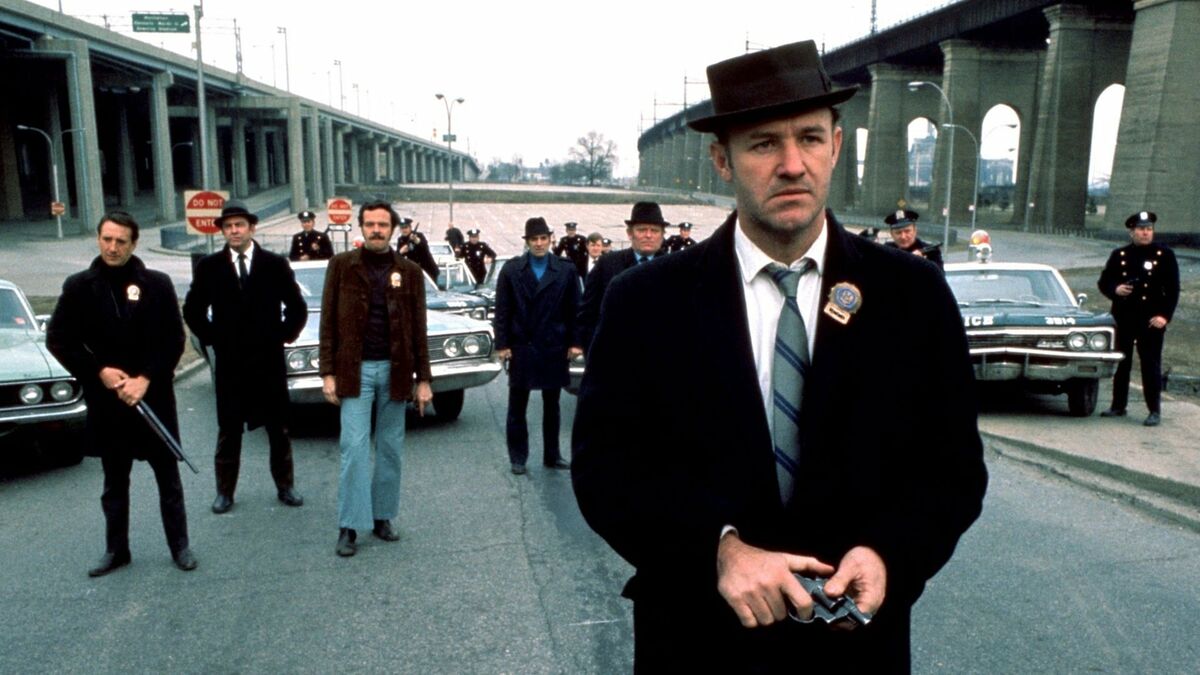
The air in the South Bronx didn't just smell like exhaust and wet asphalt in July of 1977. It smelled like adrenaline and desperation. New York City was a pressure cooker with a broken valve. The lights went out on July 13, and for twenty-five hours, the city ate itself. Fires licked at the sky, storefronts were hollowed out like pumpkins, and the social fabric didn't just tear—it disintegrated.
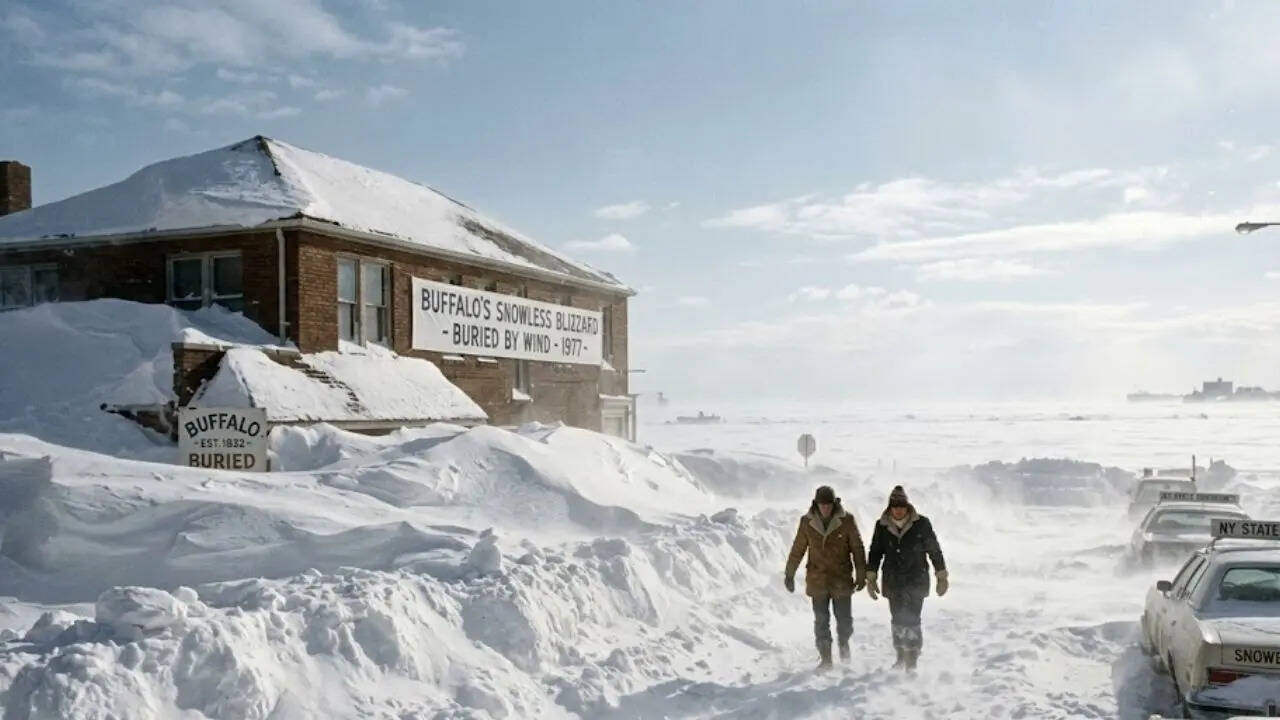
Yet, when people talk about the "Great Snow" of that year, the one that supposedly buried the city under fifteen feet of powder that never fell from a cloud, they aren't talking about the weather. They are talking about a ghost. They are talking about a collective hallucination born from a city that had reached its absolute breaking point.
To understand how a city can disappear under snow that isn't there, you have to understand what it feels like when the world stops making sense.
The Heat That Created the Cold
By the time the sun rose on July 14, the blackout had left over 1,600 stores looted and 1,000 fires burning. The city was broke. The Yankees were winning, but the streets were losing. There was a sensory overload so intense that the human brain, in its infinite capacity for self-preservation, began to look for an exit.
Imagine a man named Elias. He’s hypothetical, but he represents thousands of shopkeepers who stood on the sidewalk that morning looking at shattered glass. To Elias, the heat was no longer just a temperature; it was a physical weight. The humidity felt like wool. When the brain is pushed to the edge of trauma, it seeks contrast. It seeks the opposite of the fire.
The "Snow of '77" started as a rumor in the basement bars of Queens and the police precincts of Brooklyn. It wasn't a weather report. It was a metaphor that became a localized myth. People began to describe the ash from the fires—white, flaky, and relentless—as "The Snow."
It wasn't ice. It was the incinerated remains of the city's economy falling back down to earth.
The Physics of a Cultural Mirage
There is a psychological phenomenon where a population under extreme stress will adopt a shared delusion to cope with a reality that is too grim to face. In 1977, New York was effectively a war zone. The fiscal crisis had gutted public services. The "Son of Sam" was still stalking the shadows of the outer boroughs.
When the ash from the burning blocks of Bushwick began to settle, it coated the charred cars in a layer of grey-white silt. If you squinted, it looked like a winter morning. If you were tired enough, you could almost feel the chill.
This is the "Snow that never fell from the clouds." It fell from the buildings.
It was a chemical winter. The "flakes" were composed of pulverized drywall, scorched paper, and the carbonized remains of a thousand dreams. Because the city’s sanitation services were hamstrung by budget cuts, this debris wasn't cleared. It sat. It drifted into the gutters. It blew into the faces of commuters.
The Stake in the Heart of Reality
Why does this matter now? Because we are still prone to these "dry storms."
We live in an era where facts are often secondary to the "vibe" of a crisis. In 1977, the "snow" was a way for New Yorkers to communicate that they were frozen in place. They couldn't move forward because the city had no money, and they couldn't move back because the past was on fire.
Consider the logistical reality: New York did have a harsh winter in early '77, one of the coldest on record. By the time the July blackout hit, the memory of that bone-deep cold was the only thing people could use to describe the silence of a city without electricity. The silence of a blackout is heavy. It’s muffled. It feels exactly like the aftermath of a blizzard.
The myth grew because it was easier to tell your children that the city was buried in snow than to tell them their neighbors had spent the night stealing their livelihood. The snow was a white lie.
When the Mind Rejects the Thermometer
The human element of this story lies in our desperate need for a narrative that fits our internal state. If you feel cold inside—shivering with fear or the uncertainty of where your next meal is coming from—your skin will eventually agree with you.
Doctors in Bellevue reported a spike in "phantom chills" during the height of the July heatwave. Patients were brought in suffering from heatstroke, yet they were shaking, demanding blankets, claiming they had been caught in a drift. This wasn't a medical mystery; it was a mass psychosomatic response to the collapse of a civilization.
They weren't crazy. They were just reacting to the fact that the world they knew had vanished overnight.
The Invisible Stakes of the Myth
If we look at the statistics of 1977, the numbers are chilling enough without the metaphor. The city was facing a $1 billion deficit. The population was shrinking as anyone with a car and a savings account fled for the suburbs.
The "Snow" was the city’s way of disappearing.
When a journalist at the time asked a looter why he was taking a television when he had no power to turn it on, the man famously replied, "I'm just clearing the walk." He was participating in the fiction. He was "shoveling" his way out.
This is the hidden cost of a crumbling infrastructure: the loss of a shared reality. When the lights go out, the stories we tell ourselves are the only things left to light the room. In 1977, New Yorkers chose a story of a blizzard because a blizzard is an act of God. A riot is an act of man. It is much easier to forgive the sky than it is to forgive your neighbor.
The snow didn't fall from the clouds because it didn't have to. It rose from the streets, born from the friction of a society rubbing two sticks together just to see a spark, only to realize they had accidentally set the whole house on fire.
The Drift That Never Melted
The most haunting part of the 1977 "Snow" is that for many who lived through it, the "thaw" never really happened. The city eventually recovered, the "I Love NY" campaign was launched to paper over the cracks, and the disco era blurred into the neon excess of the eighties.
But talk to the people who were in the Bronx or Bedford-Stuyvesant during those nights. Ask them about the "white stuff" on the ground the next morning. They won't talk about ash. They won't talk about trash or debris.
They will look you in the eye and tell you how cold it was. They will describe the way the "snow" muffled the sounds of the sirens. They will tell you how they had to dig their way out of their own front doors.
Logic tells us the temperature was 93 degrees Fahrenheit. History tells us the city was gripped by a tropical heatwave.
But truth is a different beast entirely.
The truth is that New York disappeared in 1977 because the people living there could no longer see the city for what it was. They saw a wilderness. They saw a frozen wasteland. They saw a place where the sun had no power and the only thing falling from the heavens was the weight of a world that had forgotten they existed.
We think we are immune to this kind of collective haunting. We think that with our smartphones and our 24-hour news cycles, we would see the ash for what it is. But every time a community feels abandoned, every time the systems we trust fail to keep the lights on, the "snow" begins to fall again.
It starts as a chill in the conversation. It grows into a drift of misinformation. Before you know it, you are standing in the middle of a sweltering July afternoon, shivering, wondering why no one else is wearing a coat.
The snow of seventy-seven wasn't a weather event. It was a warning. It was the sound of eight million people holding their breath at the same time, waiting for a winter that had already arrived in their hearts.
Even now, if you walk down certain blocks in the South Bronx when the sun is too bright and the air is too still, you can see it. A flicker of white in the corner of your eye. A cold wind that doesn't move the leaves on the trees. The city is still there, beneath the layers of time and gentrification, but so is the ghost of the blizzard that never was.
The most dangerous storms aren't the ones you can see on a satellite map. They are the ones that fall silently, coating the mind in a layer of white until everything familiar is gone, leaving you alone in a landscape that only you can see.