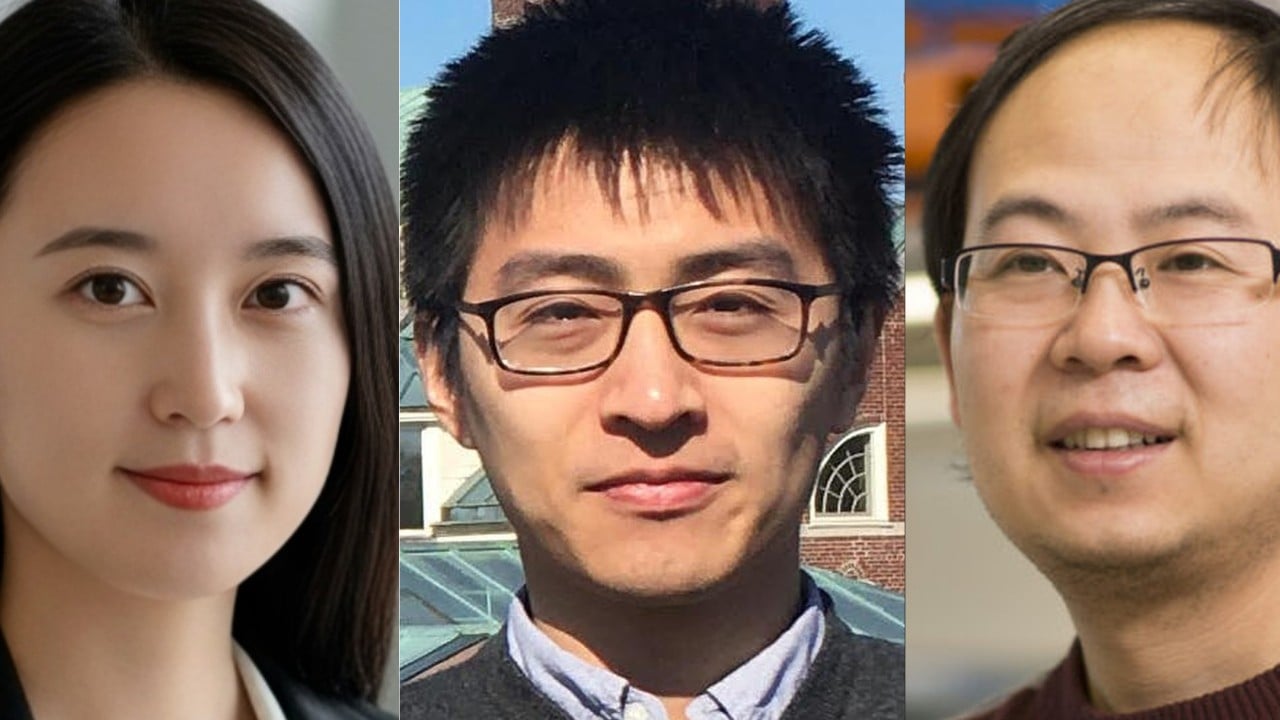
A quiet, systematic exodus is shifting the global scientific balance of power. Over the first half of 2026, dozens of top-tier researchers from prestigious American and British institutions packed their bags and relocated to China. This is not a standard academic rotation. It is a structural hemorrhage driven by Western funding freezes, political hyper-surveillance, and an aggressive, multi-billion-dollar recruitment campaign by Beijing.
The list of recent departures reads like a who’s who of elite science. It includes Nobel laureate chemist Omar Yaghi from UC Berkeley, Yale cellular structural biologist Zhang Kai, and MIT semiconductor prodigy Jiang Jianfeng. For decades, Western universities operated on the assumption that the world's finest minds would always tolerate bureaucratic friction and political pressure for the prestige of an Ivy League or Russell Group laboratory. That assumption has shattered. China is capitalizing on Western self-sabotage by offering immediate resources, long-term stability, and insulation from the ideological battles currently paralyzing Western academic budgets.
The Cold Front in Western Laboratories
The flight of academic talent is a direct symptom of structural rot inside American and British research agencies. Following political shifts and administrative overhauls in early 2025, federal research grants in the United States faced unprecedented delays, freezes, and outright cancellations. The National Institutes of Health (NIH) and the National Science Foundation (NSF) have come under intense political scrutiny, with budgets squeezed and long-term projects suddenly subjected to ideological vetting.
Scientists are running out of money. In March 2025, a massive survey published by the journal Nature revealed that roughly 75% of researchers based in the United States were actively considering leaving the country due to the deterioration of the domestic research environment. This panic translated into immediate action. During the first quarter of 2025, applications from US-based scientists to institutions abroad jumped by 32% compared to the previous year.
Meanwhile, Britain offers no refuge. British academia has seen its global prestige eroded by years of shrinking research budgets and post-Brexit funding uncertainties. Early-career researchers find themselves trapped in a cycle of short-term contracts, low pay, and hyper-competitive grant cycles where the odds of securing funding are minuscule. When a Chinese university steps in with a multi-million-dollar endowment, a custom-built laboratory, and a tenured position, the choice becomes pragmatic rather than political.
Inside the Beijing Pipeline
Beijing has engineered an environment explicitly designed to exploit Western vulnerability. This strategy relies on speed, immense capital deployment, and the elimination of administrative red tape.
Consider the case of Jiang Jianfeng, a rising star chip scientist at MIT. In the traditional Western system, an academic taking a PhD typically spends eight to ten years navigating postdocs and assistant professorships before they are permitted to act as a doctoral supervisor. Jiang moved to Peking University in 2026 and achieved that status in just 18 months. China is offering young, ambitious scientists immediate autonomy. They are given the keys to their own operations while their peers in the West are still filling out compliance forms and begging for microscopic seed grants.
This institutional velocity is backed by a major policy overhaul. In late 2025, China introduced the "K visa," a specialized immigration pathway designed specifically for international science, technology, engineering, and mathematics (STEM) graduates.
Unlike Western talent visas—which have become increasingly restrictive, expensive, and buried under multi-year backlogs—the K visa provides fast-tracked, un-sponsored long-term residency. While Washington raised visa fees for foreign tech workers, Beijing made entry entirely friction-free.
The financial packages are staggering. Provincial governments and elite universities are pairing these visas with upfront cash bonuses, heavily subsidized luxury housing, full healthcare coverage, and guaranteed, non-dilutable research funding that bypasses the standard peer-review logjams.
The Myth of Pure Patriotism
Western hawkish political circles frequently paint these departures as a national security conspiracy, framing returning Chinese-born scientists as ideological defectors. This view completely misreads the situation. The data shows that the primary driver is structural hostility in the West, not state loyalty to Beijing.
A comprehensive study conducted by the Asian American Scholar Forum found that 72% of Chinese-American scientists did not feel safe conducting research in the United States. Furthermore, 65% expressed deep anxiety about participating in joint research initiatives with colleagues in China, fearing that routine academic collaboration could trigger federal criminal investigations. The legacy of geopolitical crackdowns has left a permanent chill. Scientists of Asian descent feel watched, suspected, and marginalized.
When prominent neurobiologist Chih-Ying Su left her position as faculty vice-chair at the University of California San Diego to join the Shenzhen Academy of Medical Sciences (SMART) in 2026, it was not an ideological defection. It was a flight toward survival. Scientists want to do science. If they are forced to spend half their time consulting lawyers and defending their ancestry to university compliance departments, they will go to an environment that lets them focus on their work.
From Implementation to Basic Science
Historically, China excelled at taking Western foundational discoveries and scaling them up for industrial application. The West comforted itself with the belief that it still held the monopoly on raw, creative, frontier innovation. That comfort is gone. The scientists moving to China in 2026 are leaders in the most abstract, fundamental disciplines—the very building blocks of future technology.
Advanced Mathematics and Quantum Physics
Mathematician Liu Jun left Harvard for Tsinghua University, while pioneering complex geometry researcher Yuan Yuan abandoned New York after two decades to join Westlake University in Hangzhou. Theoretical physicist Dai Liang, celebrated for his work hunting black holes, walked away from an elite North American fellowship to take a post in Shanghai. These fields do not yield immediate consumer products, but they form the mathematical architecture required for next-generation encryption, quantum computing, and advanced physics algorithms.
Artificial Intelligence and Hardware Architecture
Computer vision expert Liang Jie and AI pioneer Ling Haibin—the scientist behind the world’s first mobile plant identification app—both abandoned American tenured positions for full-time research roles in China in 2026. They are joining established leaders like Song-Chun Zhu, who left UCLA to head the Beijing Institute for General Artificial Intelligence. Zhu’s research explicitly rejects the data-heavy, brute-force approach of Western large language models, focusing instead on small-data, high-reasoning autonomous systems.
Chemistry and Biotechnology
The defection of Omar Yaghi to Tsinghua University to run an AI-driven molecular research center is a severe blow to American chemistry. Yaghi’s pioneering work on reticular chemistry is fundamental to modern materials science. Concurrently, memory chip architects, EV motor experts like Zhu Ziqiang, and prominent cancer researchers have completely shifted their operational bases to Chinese state labs.
The consequences of this migration are already visible in commercial output. In 2024, Chinese drug developers out-licensed roughly 94 novel molecules to global pharmaceutical firms. In 2025, that number surged to a record 157 molecules, forcing American pharmaceutical giants to buy back the very innovation they failed to fund at home.
The Permanent Realignment
Western policymakers are attempting to solve a structural talent crisis with political rhetoric. They are failing. Security crackdowns and funding restrictions have not stopped the flow of ideas; they have simply altered the destination.
The Western academic apparatus was built on a foundation of global openness, reliable federal grants, and institutional autonomy. By restricting visas, freezing budgets, and treating international collaboration as an inherent national security threat, the US and UK have dismantled their own competitive advantages.
China is not winning this talent war by deploying superior ideology. It is winning by executing basic institutional competence. It identifies top talent, provides unmitigated resources, guarantees long-term funding stability, and gets out of the way. Until Western governments realize that their premier universities cannot survive on legacy prestige alone, the intellectual drain will continue. The global center of gravity for hard science is moving east, one suitcase at a time.