In the quiet rooms of Isfahan, where the scent of saffron and ancient dust settles into the weave of expensive carpets, people listen to the hum of the world. They aren’t listening to music. They are listening for the absence of sound—the terrifying stillness that precedes a flash. This is the weight of a geopolitical ultimatum. It isn’t just a headline on a glowing screen or a notification vibrating in a pocket in D.C. It is the literal air in the lungs of millions.
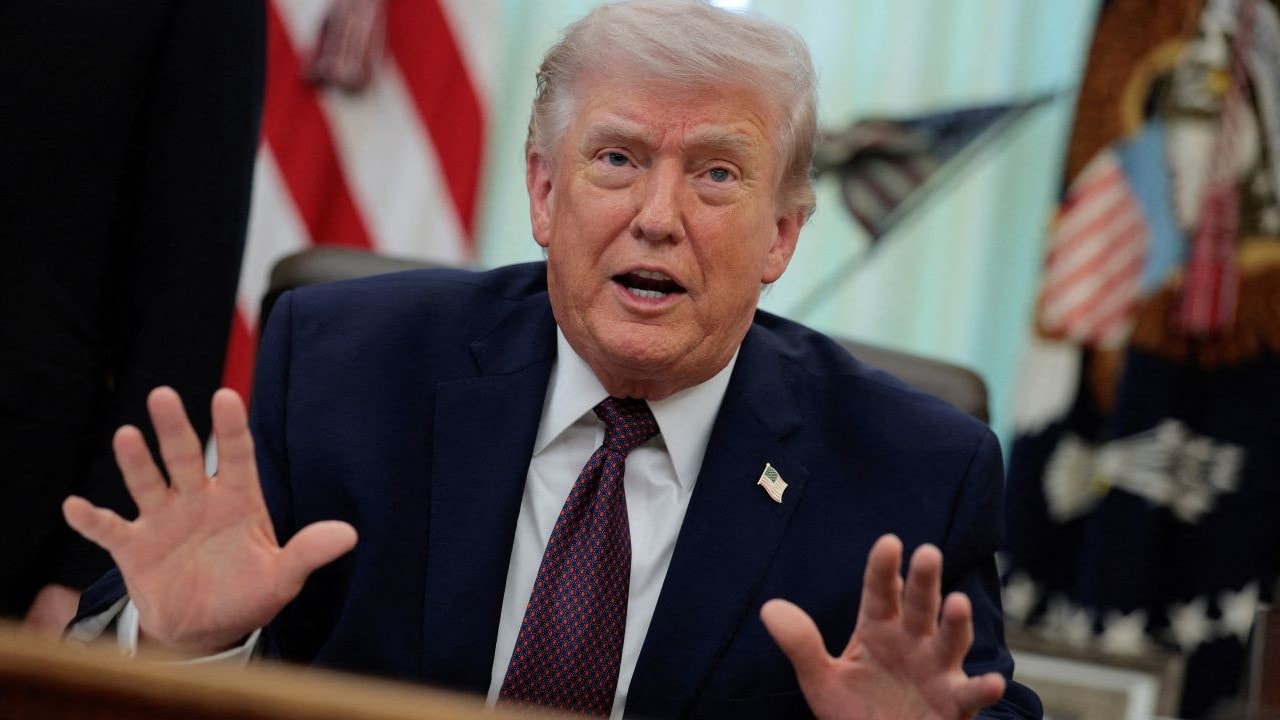
Donald Trump has never been a man of subtle transitions. His recent warning to Tehran—demanding a deal or promising a return to "higher level" bombing—is not a suggestion. It is a clock winding down. To understand the stakes, you have to look past the podium and into the mechanics of pressure. Imagine a hydraulic press. On one side, you have the Iranian economy, already strained by years of sanctions that make simple luxuries like imported medicine or car parts feel like relics of a lost civilization. On the other side, you have the sheer kinetic potential of the American military machine.
The press is tightening.
The Ledger of the Sky
When a leader speaks of "higher level" bombing, the terminology sounds clinical. It suggests a dial being turned. But the reality is measured in payloads and precision. We are talking about the shift from tactical strikes to strategic dismantling. If the previous rounds of engagement were surgical, the promise here is an overhaul.
Consider the infrastructure of a nation. Power grids. Refineries. The heavy concrete veins that keep a modern society pulsing. When those are targeted at a "higher level," the consequence isn't just a military loss. It is a regression. A city without power in the height of summer or the depth of winter is a city where the elderly die in silent apartments and the water pumps stop humming. That is the leverage being applied. It is the threat of turning the lights out, permanently, unless a signature appears on a piece of paper.
Trump’s strategy relies on a specific psychological gambit. He believes that the Iranian leadership, when faced with the total erasure of their industrial progress, will choose survival over sovereignty. It is a high-stakes poker game played with B-52s instead of chips.
The Ghost of 2015
The shadow of the Joint Comprehensive Plan of Action (JCPOA) looms over every word of this new warning. To the current administration, that old deal was a leaking bucket. To the negotiators in Tehran, it was a hard-won reprieve that was snatched away. This history matters because it dictates the level of trust—or rather, the total vacuum of it.
If you are a merchant in a Tehran bazaar, you remember the brief window after 2015 when the world seemed to open up. You remember the hope that your currency might actually hold its value for more than a week. Then came the "Maximum Pressure" campaign. Now, the threat of renewed and intensified bombing feels less like a new policy and more like the final act of a long-running tragedy.
Why now? The timing isn't accidental. The global energy market is a chaotic sea, and Iran sits on one of its most vital valves. By forcing a deal through the threat of escalating violence, the U.S. is attempting to stabilize a world order that feels increasingly brittle. But stability bought through the barrel of a gun—or the belly of a bomber—is a heavy, shivering thing.
The Invisible Casualties
There is a hypothetical student named Saman. He is twenty-two, studying engineering at Sharif University. He doesn't care about the intricacies of uranium enrichment levels or the specific range of ballistic missiles. He cares that his father’s pension is now worth the price of a loaf of bread. He cares that the sky above his city might soon be filled with the roar of engines he cannot see.
Saman represents the human element often lost in "dry" reporting. When we talk about "bombing at a higher level," we are talking about Saman’s future being put into a blender. The psychological toll of living under a constant "or else" is a form of warfare in itself. It erodes the social fabric. It makes people desperate. And desperate people rarely make the rational, cool-headed decisions that diplomats dream of.
The U.S. stance is built on the belief that this desperation will boil over into a domestic mandate for a deal. If the people fear the bombs more than they fear their own government, the logic goes, the government will be forced to bend. It is a cold, mathematical approach to human suffering.
The Architecture of the "Higher Level"
What does a "higher level" actually look like? In military terms, it means moving beyond the outskirts. It means targeting the hardened sites, the places buried deep under mountains that require "bunker buster" munitions—the GBU-57 Massive Ordnance Penetrator. These aren't just bombs; they are man-made earthquakes.
To deploy these is to cross a Rubicon. Once you start hitting the deep sites, you aren't just signaling; you are destroying. You are removing the opponent's ability to even negotiate from a position of strength. Trump’s warning is an attempt to win the war before the first sortie is even launched. He wants the surrender without the smoke.
But the risk of a "higher level" is that it leaves the opponent with nothing left to lose. If the threat is total destruction, the response is often total defiance. We have seen this pattern throughout history. From the blitz of London to the hills of North Vietnam, increased pressure doesn't always lead to a crack. Sometimes, it turns the target into diamond.
The Sound of the Pen
The real drama isn't happening in the cockpits of stealth fighters. It is happening in the silence between the words of the Iranian Supreme Leader and the Twitter-ready pronouncements of the American President.
A deal requires more than just a lack of bombing. It requires a framework where both sides can claim a win. Trump’s "higher level" threat removes the middle ground. It is a binary choice. Deal. Or fire.
In this landscape, the diplomats are the most terrified people in the world. They know that if they fail, the kinetic reality takes over. They are working in the shadow of the wing, trying to find a sequence of words that can outweigh a thousand-pound bomb.
It is a terrifying thing to realize that the fate of millions rests on whether two very different cultures can find a shared language of survival. One side sees a bully; the other sees a rogue state that must be tamed. Between them lies a narrow, crumbling bridge.
The sun sets over the Persian Gulf, casting long, orange shadows over the warships and the tankers. The sailors on both sides watch the horizon. They know that a "higher level" isn't just a phrase. It is a sound. It is the sound of the wind rushing past a falling object. It is the sound of a world changing in a heartbeat.
We wait for the pen to move. We wait to see if the ink can stop the fire. Because if the ink runs dry, the sky will not stay silent for long. The gravity of that silence is pulling us all toward a center that cannot hold, where the only thing higher than the level of bombing will be the cost of the aftermath.