The air in the industrial pockets of the New Territories doesn’t smell like the salty breeze of Victoria Harbour. It smells of heavy sulfur and desperate margins. Somewhere near Fanling, a modified container truck idles behind a corrugated metal fence. It isn't there for a legal pickup. It is there to drink.
This is the hidden circulatory system of Hong Kong’s shadow economy. While the city’s skyline gleams with the transparency of global finance, a gritty, high-stakes game of cat and mouse plays out in the mud-slicked yards of the north. The "red oil" trade—the illicit use and sale of marked or untaxed fuel—has long been a persistent thorn in the side of the Customs and Excise Department. But now, the stakes are changing. The government is moving to sharpen its knives, preparing a legislative hammer to drop on those who profit from the fumes of tax evasion.
Consider a man we’ll call Ah-Keung. He isn’t a criminal mastermind. He is a logistics driver with a mortgage that feels like a noose and a diesel bill that eats forty percent of his monthly take-home pay. For Keung, a "black station"—an unlicensed fueling point hidden inside a repurposed shipping container—isn't a den of iniquity. It’s a lifeline. When he pulls his rig into that yard, he is looking for the "Euro V" diesel that hasn't cleared the proper fiscal hurdles, saving him a few dollars per liter.
Those dollars add up. They pay for school uniforms. They cover the rent.
But there is a hidden cost to this cheap energy, one that Keung feels every time he looks at the smog-choked horizon or hears about a flash fire in a residential neighborhood. Illicit fuel isn't just about lost tax revenue for the government; it’s about a deregulated, dangerous underworld that operates without fire safety, without environmental standards, and without a soul.
The Economics of the Underworld
The math is brutal. Hong Kong’s fuel taxes are designed to discourage carbon emissions and fund the very infrastructure these trucks rely on. However, when the price gap between legal pump prices and industrial "marked oil" (meant for fishing boats or construction machinery) becomes wide enough, the temptation to "launder" that oil for road use becomes irresistible.
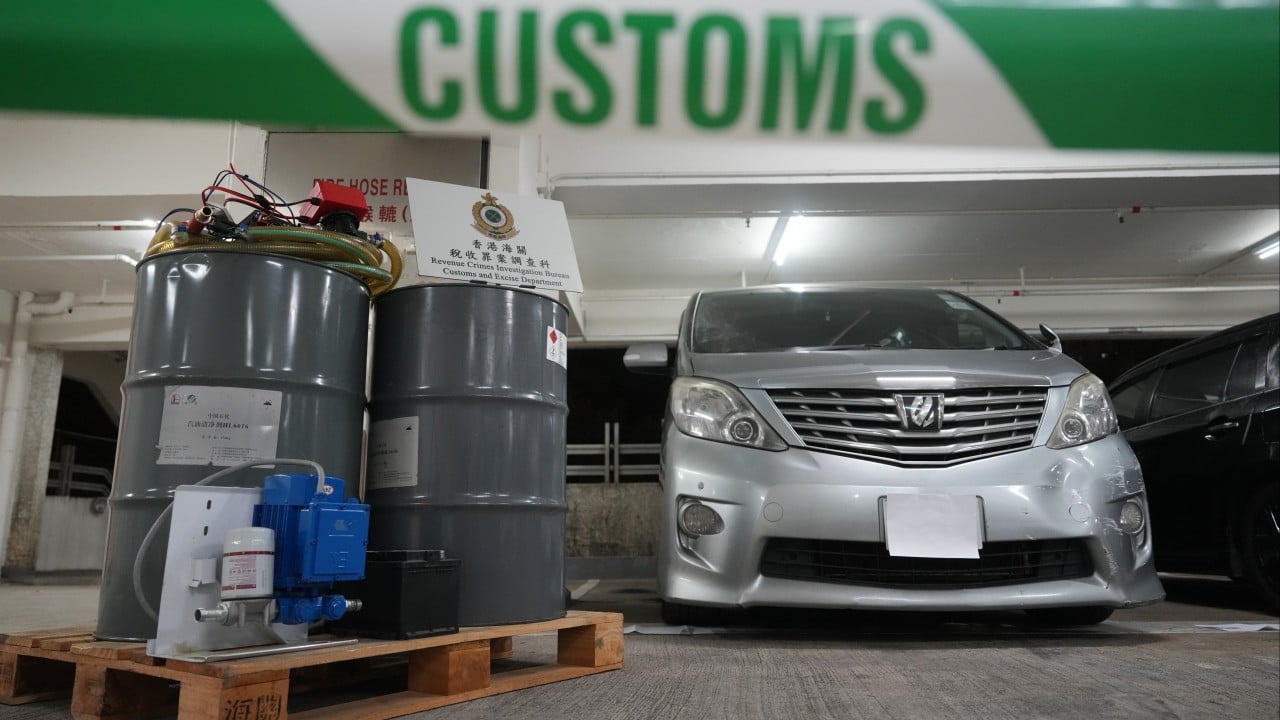
Laundering isn't a metaphor here. It is a chemical process. Syndicates use sulfuric acid and activated carbon to strip the red dye from industrial fuel, attempting to make it look like the clear, road-legal variety. The byproduct of this process is a toxic sludge that often ends up dumped in the mangroves or the city’s drainage system.
The government’s current stance is that the existing fines are merely a cost of doing business for these syndicates. If a raid nets a few thousand liters and a fine that amounts to a week’s profit, the "ghost stations" simply move three blocks over and reopen under a different name the next morning.
The proposed legislative changes aim to shatter that cycle. We are looking at a shift from "slap on the wrist" penalties to life-altering consequences. Sources within the administration suggest that the new penalties will target not just the operators of the pumps, but the landlords who turn a blind eye to what’s happening on their property.
The strategy is simple: make the risk outweigh the reward for everyone in the chain.
A Fire in the Dark
The danger isn't theoretical. Two years ago, a makeshift fueling depot caught fire in a remote corner of Yuen Long. The explosions were heard kilometers away. Because the site was illegal, there were no fire extinguishers, no safety valves, and no records of how much fuel was actually stored there. Firefighters had to approach the inferno blind, risking their lives to contain a blaze that should never have existed.
This is where the human narrative of illicit fuel turns dark. When we talk about "curbing trade," we are really talking about preventing the next catastrophe. The syndicates operating these stations aren't invested in the safety of the New Territories. They don't care if a leak seeps into the groundwater of a nearby farm. They don't care if the modified fuel injectors in a truck like Keung’s eventually fail, causing a pile-up on the Tuen Mun Road.
The legislation being drafted isn't just a tax grab. It is an attempt to reclaim the rule of law in the city’s gray zones. By increasing the maximum prison sentences and hiking fines into the millions, the government is trying to signal that the era of the "wild north" is over.
The Invisible Stakes
Why does the average person living in a Mid-Levels high-rise care about the price of illegal diesel in a Fanling scrapyard? Because the shadow economy is a parasite. When billions in tax revenue are siphoned off by fuel syndicates, that is money that doesn't go into the public hospital system or the expansion of the MTR.
Moreover, the "red oil" trade is often a gateway. The logistics networks established to move illegal fuel are the same ones used for smuggling electronics, frozen meat, and more recently, luxury goods across the border. By crippling the fuel trade, the authorities are effectively cutting the fuel lines of organized crime at large.
The challenge, however, remains the enforcement. Hong Kong’s topography—a mix of dense urban clusters and rugged, inaccessible hills—is a smuggler’s dream. A drone can spot a tank, but it can’t always prove what’s inside it.
The new laws will grant broader powers for inspectors to seize equipment on-site and freeze assets linked to fuel fraud. It’s a shift toward a "follow the money" philosophy. If you can’t catch every truck, you can at least make sure that the profit from that truck has nowhere to hide.
The Human Friction
For people like Keung, the tightening of the noose brings a different kind of anxiety. He knows the "black stations" are wrong. He knows they are dangerous. But he also knows that when they disappear, his overhead will skyrocket.
The government’s move to curb the trade must, therefore, be met with a broader conversation about the cost of logistics in one of the world's most expensive cities. If we remove the shadow economy's "subsidy," we have to reckon with the reality of the people who were leaning on it to survive.
Transitioning toward a cleaner, more regulated future is a noble goal, but it is a path paved with friction. The legislation is the first step. The second is ensuring that the crackdown doesn't just crush the small-time driver while the syndicate leaders retreat to their villas.
True success won't be measured in the number of liters seized or the total amount of fines collected. It will be seen in the restoration of the New Territories—where the air eventually loses that sharp, acidic tang of laundered diesel, and the "ghost trucks" finally park for good.
The fence in Fanling still stands today. The truck is still idling. But for the men behind the gate, the sound of the engine is starting to be drowned out by the approaching footsteps of a city that has decided it has finally had enough.