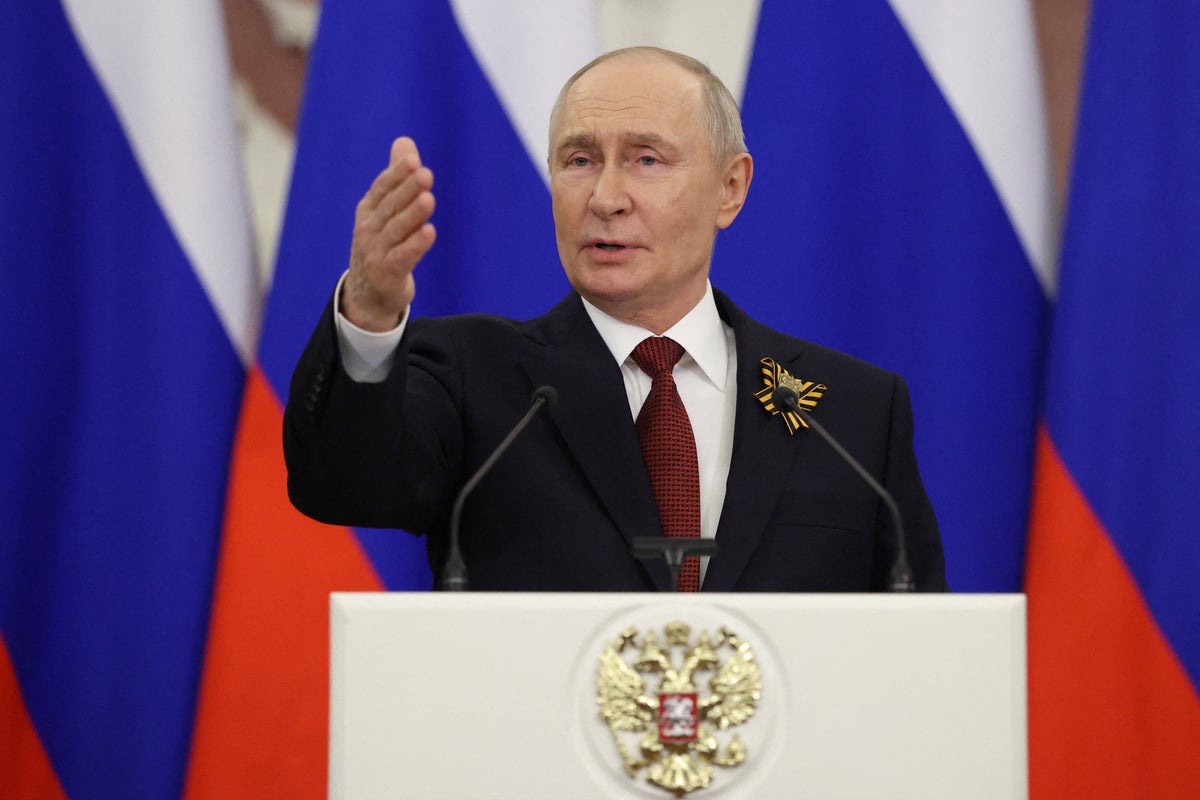
The air in Moscow and Kyiv doesn't smell of ink and parchment. It smells of diesel, wet wool, and the metallic tang of cold earth. While the headlines hum with the clinical language of "mediators" and "diplomatic frameworks," the reality is written in the mud of the Donbas. Recently, Vladimir Putin suggested the end might be in sight. It was a statement delivered with the practiced ease of a man who knows the world is exhausted. But peace is not a light switch. It is a grueling, ugly process of deciding who gets to keep their soul and who has to sign it away.
Into this exhaustion steps a name from the past: Gerhard Schröder.
To the casual observer, the former German Chancellor is a relic of a different era, a ghost of the early 2000s when European energy was cheap and Russian relations were "strategic." To others, he is the ultimate "Russlandversteher"—a Russia-understander—whose personal ties to Putin are either a bridge or a betrayal.
The Weight of a Handshake
Imagine a dinner table in a quiet, high-security room. There are no cameras. On one side sits a man who has spent decades navigating the corridors of Western power. On the other, a leader who has fundamentally reshaped the global order through fire. This is the hypothetical theater where Schröder operates. The stakes aren't just borders on a map. They are the lives of twenty-year-olds currently huddling in trenches that look hauntingly like the photographs from 1917.
The debate over Schröder as a mediator is polarizing because it forces us to confront a brutal question. Do you want a mediator who is morally pure, or do you want one who actually has the other person's phone number?
Schröder’s history is thick with the scent of natural gas and boardrooms. His long-standing friendship with Putin is well-documented, as is his work for Nord Stream and Rosneft. In the West, this makes him a pariah. In the pragmatic, often cynical world of back-channel diplomacy, it makes him a unique asset. He is a man who speaks the language of the Kremlin not just linguistically, but culturally.
But can a friend truly be a judge?
The Anatomy of a Claim
When Putin says the war is "coming to an end," the words carry a specific gravity. They aren't an admission of defeat, nor are they a plea for mercy. They are a signal. This is the psychological warfare of the peace process. By signaling an openness to finish the conflict, the Kremlin puts the burden of "warmongering" on the West. It is a move designed to fray the edges of international support for Ukraine.
Consider the ripple effect in a small village outside Kharkiv. A mother hears the news on a battery-powered radio. To her, "the end" doesn't mean a signed treaty in a gold-leafed hall in Istanbul. It means the sky stops screaming. It means her son comes home. When leaders play with the rhetoric of peace, they are gambling with the hope of millions.
The reality on the ground, however, remains stubbornly violent. Grounded facts tell us that while the talk of mediation grows, the machinery of war is still grinding. Logistics hubs are being struck. Reserves are being moved. The "end" Putin speaks of likely involves a version of reality that many in Kyiv find impossible to swallow: a frozen conflict where the lines of control become permanent scars.
The Mediator’s Dilemma
Mediation is often misunderstood as an act of friendship. It isn't. It is an act of surgical tension. A successful mediator must be able to walk into a room and make both sides feel equally uncomfortable while offering them a way to save face.
The argument for Schröder rests on the idea of "access." If the goal is to get Putin to listen, you send the man he doesn't immediately hang up on. The counter-argument is one of "legitimacy." If the West uses a mediator who has been on the Russian payroll, does it signal that the invasion has been rewarded?
This isn't a game of checkers. It’s a game of nerves played with lives.
The world is currently watching a strange dance. On one hand, we have the formal peace summits, the ones with the blue flags and the press releases. On the other, we have the "Schröder option"—the murky, unofficial channel that operates in the shadows of personal relationships. History is full of these backdoors. Often, the real work is done in the dark because the light of public opinion makes compromise look like cowardice.
The Invisible Cost of Waiting
Every day the debate over mediators continues is a day paid for in blood. This is the human element the "dry" articles miss. They talk about "geopolitical shifts" and "energy security." They don't talk about the sound of a shovel hitting frozen dirt for the hundredth time that week.
The urgency of finding a mediator—whether it is Schröder, a representative from the Global South, or a neutral European entity—is driven by the reality of attrition. Both sides are bleeding. Not just in terms of soldiers, but in terms of national futures. Ukraine's infrastructure is a patchwork of repairs. Russia's economy is a pressurized vessel.
The debate over who sits at the table is actually a debate over what the world will look like for the next fifty years. If a mediator like Schröder is used, it suggests a return to "Realpolitik," where interests trump ideals. If he is rejected in favor of a more adversarial process, it suggests a long, cold winter for global diplomacy.
The Silence After the Storm
There is a specific kind of silence that happens when the shelling stops. It isn't peaceful. It’s heavy. It’s the silence of a house with no roof and a street with no children.
When we discuss "peace mediators," we are really discussing the architects of that silence. We are asking who has the authority to tell a soldier to stop shooting. We are asking who can guarantee that the silence won't be broken again in six months.
The skepticism surrounding Schröder is a reflection of our own fear. We fear that any peace brokered through personal ties and old-school power dynamics is a fragile one. We want a peace that feels just. But in the history of war, "just" is a luxury, while "finished" is a necessity.
The "coming to an end" narrative is a lure. It’s a fishing line cast into a sea of tired people. Whether it leads to a genuine resolution or is simply a tactic to regroup depends entirely on the hands that hold the pen at the end.
Schröder remains in the wings, a polarizing figure who embodies the West's internal conflict. He is the reminder of a time when we thought we could integrate Russia into the fold through commerce. That dream is dead. Now, we are left with the remains of that intimacy, wondering if it can be used to stop the killing, or if the bridge he represents is simply too broken to cross.
The mud in the Donbas is still wet. The diesel is still burning. And the ghost of diplomacy is still searching for a chair at a table that hasn't been built yet.