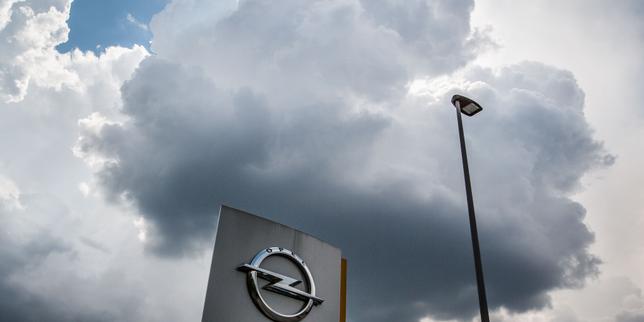
Hans-Dieter doesn’t look like a man whose job is about to evaporate. He sits in a brightly lit office in Rüsselsheim, the historic seat of Opel, surrounded by the quiet hum of German precision. For twenty years, his life has been measured in the tolerances of internal combustion engines and the elegant geometry of chassis engineering. But the air in the hallways has changed. It’s thinner now.
The news arrived not with a bang, but with a spreadsheet. Stellantis, the sprawling automotive titan that swallowed Opel, Peugeot, and Fiat whole, has announced the suppression of 650 engineering positions at the Rüsselsheim site. To the bean-counters in Paris and Detroit, this is a "voluntary departure plan." To the people on the floor, it is the sound of a library being emptied, book by book.
Engineering isn't just about math. It’s about muscle memory. When you remove 650 veteran minds, you aren’t just cutting costs. You are losing the collective intuition of how a car should feel when it meets a wet curve at eighty kilometers per hour.
The Cost of a Clean Conscience
We are told this is the price of progress. The internal combustion engine, that greasy, roaring heart of the 20th century, is being sent to the scrap heap. In its place comes the silent, sterile efficiency of the electric motor. But the transition to EVs is a hungry beast. It eats capital. It eats legacy. And most of all, it eats the very people who built the industry's reputation.
Stellantis CEO Carlos Tavares has been blunt about the math. Electric vehicles cost 40% more to manufacture than their fossil-fuel ancestors. To keep cars affordable for the middle class—and to keep profit margins from collapsing—the company has to find that 40% somewhere. Usually, that "somewhere" is the human beings who work there.
The tragedy for the Rüsselsheim engineers is that they are too good at a craft that the world has decided it no longer wants. Imagine being a master watchmaker in the age of the smartphone. Your skill is undeniable, your dedication is absolute, but the market has moved the goalposts. The "voluntary" nature of these cuts is a polite fiction. It is the corporate version of being told the ship is sinking, but being offered a very nice life vest if you jump now.
A Tale of Two Cities
While the lights grow dim in the engineering bays of Hesse, they are burning bright across the border in France. This is the duality of the modern industrial machine. As one limb is pruned, another is grafted on.
Sochaux is the spiritual home of Peugeot. It is a town that breathes diesel and oil. For decades, it has been the bedrock of French manufacturing. Now, it is being reimagined as the flagship of the electric revolution. Stellantis isn't just maintaining Sochaux; they are pouring hundreds of millions of Euros into it. They are transforming it into the "Sochaux 2022" project—a high-tech, streamlined hub designed to churn out the next generation of electric SUVs, like the Peugeot e-3008.
The contrast is jarring. In Germany, the conversation is about "suppression" and "departure." In France, the buzzwords are "investment" and "platform."
This isn't a simple case of national favoritism, though the French unions and government would certainly like to think so. It is a cold, Darwinian calculation of logistics. The new STLA Medium platform—the "brain" and "skeleton" of the company’s future fleet—needs a home. Sochaux won the lottery because it could be stripped down and rebuilt faster and cheaper than the legacy structures in Germany.
Business is rarely about loyalty. It is about the path of least resistance to a profit margin.
The Invisible Stakes of the "Soft" Car
The move away from German engineering isn't just about where the cars are bolted together. It’s about what a car is.
In the old world, the engineer was king. The way a piston moved, the heat treatment of a gear, the tension of a suspension spring—these were the things that defined a brand. You bought an Opel because of how it was engineered. You bought a Peugeot because of how it was designed.
In the new world, the car is a "software-defined vehicle." It is essentially a giant smartphone on wheels. The hardware—the metal, the seats, the wheels—is becoming a commodity. The real value is in the code. This shift is why 650 engineers in Rüsselsheim are suddenly "redundant." Their expertise is in the physical, but the industry's future is in the digital.
Consider a hypothetical engineer named Elena. She has spent fifteen years perfecting the acoustics of a cabin to mask the sound of a turbocharger. In an electric car, there is no turbocharger. There is only the high-pitched whine of an inverter and the roar of wind. Her life’s work, her hyper-specialized knowledge of sound dampening for vibrations that no longer exist, is suddenly a relic.
She is being offered a "voluntary" exit because the company needs to hire three software developers in India or Poland for the price of one Elena in Germany. It is efficient. It is logical. It is heartbreaking.
The Ghost in the Machine
The danger of this great culling is the loss of what we might call the "mechanical soul." When you replace veteran engineers with software-centric systems, the product changes in ways that aren't always visible on a spec sheet.
German engineering was always about the feeling of solidity. The "thunk" of a door closing. The weighted resistance of a steering wheel. These are the things that 650 people in Rüsselsheim knew how to bake into a car’s DNA. As Stellantis consolidates its power and strips away these legacy departments, there is a risk that all their cars—whether they wear a Vauxhall, Opel, Peugeot, or Citroën badge—will start to feel exactly the same.
A homogenized future is a boring one. If every car uses the same "STLA" platform, the same battery modules, and the same outsourced software, why does it matter which one you buy?
The investment in Sochaux is meant to solve this by creating "efficiency at scale." By concentrating production and engineering in fewer, more massive hubs, Stellantis can survive the brutal transition to electric. But in doing so, they are cutting the ties to the very heritage that made these brands worth buying in the first place.
The Human Spreadsheet
We often talk about the "automotive industry" as if it’s a monolithic entity, a giant robot moving across a map. It isn’t. It’s a collection of towns like Rüsselsheim and Sochaux. It’s families whose last names have been on the payroll for three generations.
When a company announces 650 job cuts, they are announcing the end of 650 daily rhythms. They are announcing 650 conversations at kitchen tables about whether the mortgage can still be paid or if the kids can still go to that specific university.
The investment in Sochaux is a lifeline for one community, but it is also a reminder of how quickly the ground can shift. Today, Sochaux is the favorite child. But as technology continues to evolve—as solid-state batteries replace lithium-ion, or as autonomous driving removes the need for driver-centric cockpits—how long will it be before Sochaux, too, is told that its skills are "legacy"?
The reality of the modern economy is a permanent state of flux. There is no such thing as a "safe" industry. There is only the next pivot.
The engineers at Opel are the latest casualties of a war they didn't start. They built the cars that moved Europe for a century, but they are being told that the future has no room for their specific kind of magic. They are being replaced by code, by platforms, and by a relentless drive for a 10% margin in a world that is running out of cheap energy.
Hans-Dieter packs his desk. He takes his calipers, a small model of an engine block, and a photo of his team from 2012. He isn't angry, exactly. He's just tired. He understands the math. He knows about the 40% cost gap. He knows about the "voluntary" plan.
But as he walks out to the parking lot, he listens to the sound of his own car starting. It’s an internal combustion engine. It rumbles. It has a heartbeat. He knows that soon, the streets will be silent, filled with cars that are perfectly efficient and utterly soulless. He wonders if the people in Sochaux realize that they aren't just building the future; they are building the cage that will eventually trap them, too.
The factory gates at Rüsselsheim swing shut, not for the last time, but with a finality that feels heavier than usual. The ghost of German engineering is leaving the building, and it doesn't have a forwarding address.