The glow of a cheap monitor in a cramped Manila apartment illuminates an unsettling truth: power is no longer anchored by stone pillars or protected by concrete barricades.
Late at night, while the capital slept under a heavy blanket of tropical humidity, a few keystrokes shattered the digital facade of the highest legislative body in the land. When the official website of the Senate of the Philippines flickered back to life in the dark hours, it didn't display the usual bureaucratic updates, draft bills, or polished press releases. Instead, it bore a stark, uncompromising manifesto from a homegrown hacktivist collective known as Nullsec Philippines.
"The Filipino people entrusted you with power, responsibility, and the duty to serve the nation," the digital graffiti read. "Not personal interests, political dynasties, or corrupt networks."
To the casual observer scrolling through a smartphone in the morning commuter traffic, it might have looked like a routine nuisance. A minor IT headache. A temporary maintenance page quickly thrown up to hide the scar. But on the ground, inside the halls of a fractured government, the defacement felt less like a prank and more like a fracture. It was an online echo of an offline earthquake that had been rattling the country for weeks.
Consider the timing of the breach. The physical Senate had already spent a month spiraling into absolute chaos. A bitter leadership tussle had splintered the chamber into warring factions, leaving a razor-thin majority trying to maintain a semblance of order. Nearby, the House of Representatives was aggressively pushing forward with a high-stakes, historically volatile impeachment process against Vice President Sara Duterte. The political landscape was a tinderbox.
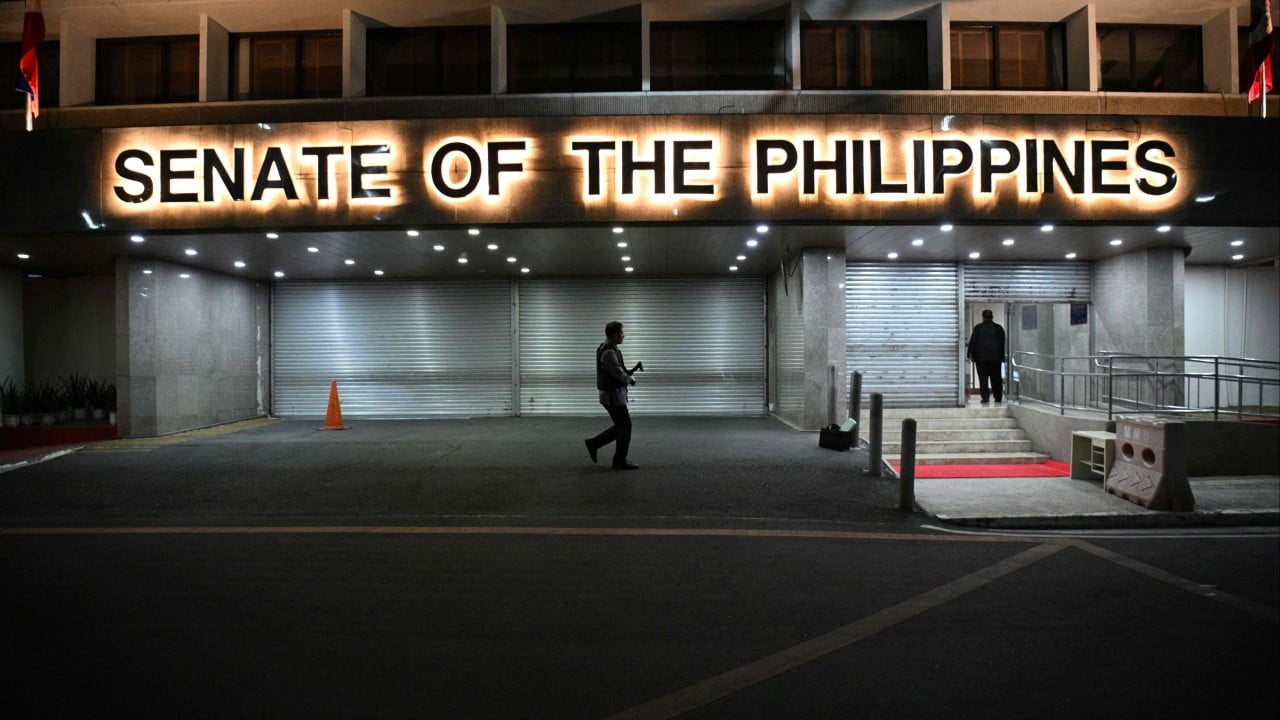
Then came the warnings. Just forty-eight hours before the hackers struck online, the National Bureau of Investigation sent a chill through the legislature with intelligence reports of an imminent, physical security threat to the Senate premises. Senate President Pro Tempore Sherwin Gatchalian took the extraordinary step of locking the heavy gates along Diosdado Macapagal Boulevard, ordering an immediate work-from-home arrangement for staff, and summoning the Philippine National Police to fortify the perimeter.
Imagine being an ordinary legislative aide or a tech worker tasked with maintaining those systems. You are ordered to stay home because the physical building might be unsafe. You log into your remote workstation from your kitchen table, only to watch the digital infrastructure of your institution get hollowed out from the inside.
The technical bureaus were quick to issue soothing assurances. They stood at the podiums to declare that no sensitive data was compromised, that the breach was contained, and that the stolen logs were merely public documents.
But this defense misses the psychological reality of modern warfare. When an activist group or an adversarial state actor breaches a government portal, they aren't always looking to steal state secrets. Often, they are looking to steal confidence.
Cybersecurity is an exercise in faith. We trust that the institutions governing our lives possess the baseline competence to protect their own front doors. When that door is kicked open with casual ease, the illusion of stability vanishes. The defacement was a symbolic decapitation of government authority at a moment when the public was already losing faith in the political elite.
The instability goes far deeper than a single hacker group seeking transparency. The entire archipelago is currently caught in a silent, cross-continental digital crossfire. Following massive political shifts and high-profile arrests, the Department of Information and Communications Technology tracked an unprecedented surge of eighty thousand malicious cyber attempts in a single week.
Some are local actors throwing digital stones. Others are sophisticated, state-sponsored entities quietly riding the wave of domestic chaos to slip into critical databases undetected. While politicians trade insults on television, invisible hands are probing the digital soft underbelly of the nation's coast guard, its law enforcement agencies, and its executive offices.
The real casualty in this environment isn't a crashed server or a defaced homepage. It is truth itself.
On the airwaves, Malacañang Palace officials plead with the public to ignore the "quagmire of repeated lies" circulating on social media, accusing rival political factions of deliberately altering narratives to paint themselves as victims. Meanwhile, professional vloggers are hauled before congressional committees, offering weeping apologies for weaponizing deepfakes and spreading fabricated news reports designed to incite public rage.
When citizens can no longer trust what they see on an official government portal, and they cannot trust what they see on their social feeds, the fabric of a democracy begins to unravel.
The Senate website eventually went blank, replaced by a sanitized "under maintenance" graphic. The police officers guarding the concrete barriers outside the building checked their watches, waiting out their shifts under the scorching sun. The immediate crisis seemed to pass.
But the silence left behind is deceptive. The crack in the wall remains open, a quiet reminder that in the modern era, a nation can crumble just as easily from a line of malicious code as it can from a political coup. The digital ghost has already been inside the assembly, and it left a warning that lingers long after the screens go dark.