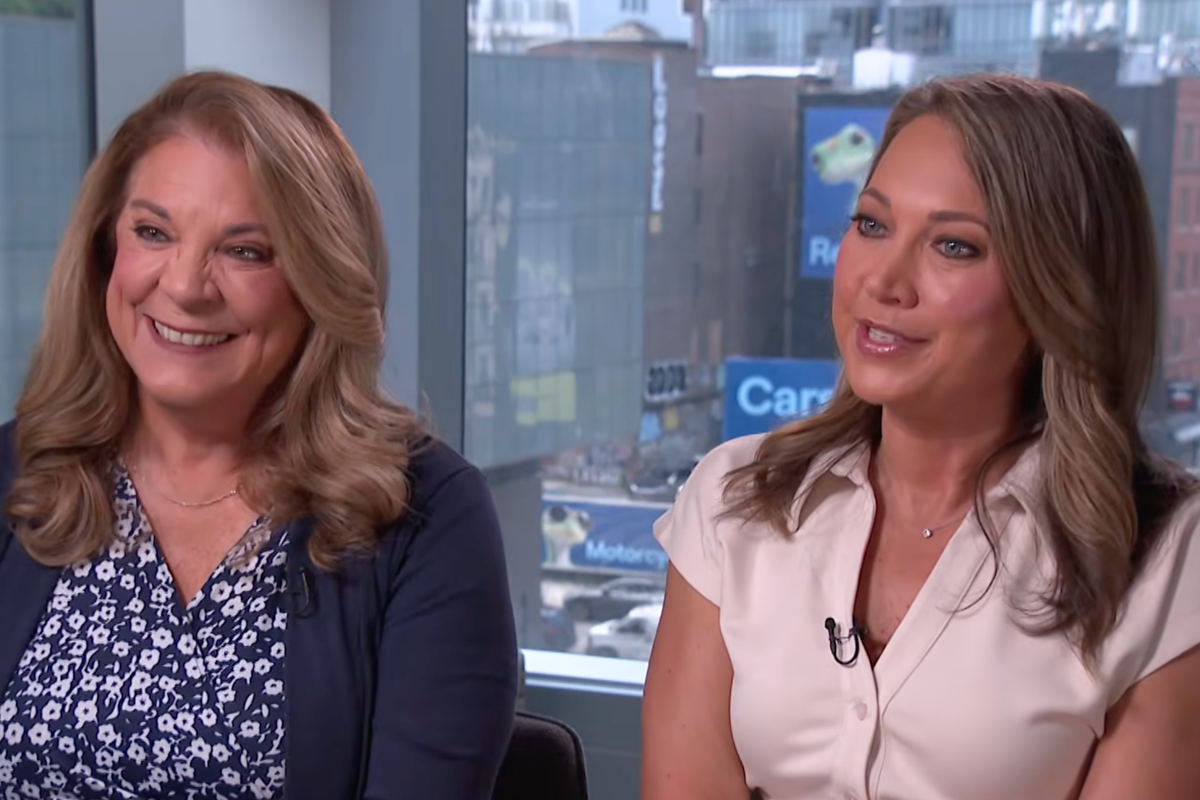
While most 72-year-olds are navigating the complexities of Medicare and retirement portfolios, one woman is preparing for the grueling reality of a residency program. The story of a mother of four graduating from medical school at an age when her peers are settling into assisted living is more than a feel-good human interest piece. It is a direct challenge to the institutional inertia of the American healthcare system. This isn't just about a personal achievement. It is a data point in a much larger, more uncomfortable conversation about who gets to practice medicine and why we have spent decades ignoring the potential of older candidates.
Medical education has long been a young person’s game. The unofficial but rigid path dictates that you finish your undergraduate degree at 22, your MD by 26, and your residency before your 30th birthday. Deviation from this timeline is often viewed with suspicion by admissions committees who worry about the "return on investment" for a student who may only have a decade or two of practice left. Yet, as the United States faces a projected shortage of up to 86,000 physicians by 2036, the gatekeepers are being forced to rethink their math.
The Cognitive Myth of the Aging Brain
The most common argument against older medical students is the perceived decline in cognitive plasticity. There is a prevailing belief that the sheer volume of rote memorization required in the first two years of medical school—the "firehose" of biochemistry, anatomy, and pharmacology—is impossible for a brain seven decades into its life cycle.
Science suggests otherwise. While processing speed may slow with age, crystallized intelligence—the ability to use skills, knowledge, and experience—often peaks much later in life.
For a 72-year-old student, the challenge isn't the capacity to learn, but the endurance to study. The stamina required to sit through 14-hour days of clinical rotations and 24-hour on-call shifts is the primary physical hurdle. However, older students frequently offset these physical demands with superior executive function and emotional regulation. They don't panic when a patient’s vitals drop. They’ve seen life happen. They’ve raised children, managed households, and perhaps buried friends. That life experience provides a level of psychological resilience that a 24-year-old simply hasn't had time to develop.
Why Experience Outperforms Youth in Primary Care
The healthcare industry is currently obsessed with "patient-centered care," yet it continues to churn out doctors who are young enough to be the grandchildren of the patients they treat. This creates a massive cultural and experiential gap. A 72-year-old medical graduate brings an immediate, intrinsic understanding of the aging process that cannot be taught in a lecture hall.
Consider the nuance of a geriatric physical.
A younger doctor might see a set of symptoms and labs to be managed. An older doctor sees a peer. They understand the social isolation, the subtle fear of losing independence, and the polypharmacy risks that come with old age because they live in that same world. They aren't just reading a chart; they are looking in a mirror. This empathy isn't a soft skill. It is a diagnostic tool that leads to better compliance and more accurate patient histories.
The Financial Suicide of Late Stage Medical School
We cannot talk about a 72-year-old medical student without talking about the predatory nature of tuition. The average medical student graduates with over $200,000 in debt. For a 26-year-old, this is a mortgage-sized burden that can be paid off over a thirty-year career. For someone starting at 70, it is a financial death sentence.
Unless the student is independently wealthy, the math doesn't work. The federal government and private lenders are often hesitant to extend massive loans to individuals whose life expectancy is shorter than the loan term. This creates a class barrier. Currently, pursuing medicine in your senior years is a luxury reserved for the affluent. If we want to truly diversify the age of our workforce to meet the needs of an aging population, we need a radical shift in how we fund medical education for non-traditional students. We need targeted grants for older students who commit to high-need areas like geriatric primary care or rural medicine.
Resistance from the Residency Pipeline
Getting the degree is the easy part. The real bottleneck is the Match—the National Resident Matching Program. Residency directors are notoriously biased toward younger candidates. They want "malleable" residents who can be worked to the bone and who will stay within the hospital system for decades.
A 72-year-old intern is a logistical nightmare for a traditional residency director. There are concerns about physical stamina, long-term health, and the hierarchy of a 30-year-old attending physician giving orders to a 72-year-old subordinate. This ego-driven friction is a silent killer of non-traditional medical careers.
Breaking the Hierarchy
The traditional medical hierarchy is a relic of the early 20th century. It is built on a military-style command structure that values seniority by rank, not by life. When a grandmother enters the ward as the lowliest person in the room, it upends the social order. Smart hospitals are beginning to realize this is a benefit, not a drawback. These older residents often act as mediators and mentors to their younger peers, stabilizing the high-stress environment of the residency lounge.
The Shortfall of the Return on Investment Argument
Critics argue that training a 72-year-old is a waste of a medical school seat. They claim that because this person will only practice for 5 or 10 years, the "social investment" is wasted compared to a student who will practice for 40 years.
This is a flawed, purely transactional view of human capital.
First, the burnout rate for young doctors is at an all-time high. Many 26-year-old graduates leave clinical practice within a decade to work for insurance companies or tech startups. A 72-year-old who fought through medical school isn't looking for a corporate exit. They are there because they have a singular, focused mission to treat patients. Five years of dedicated, high-quality care from a seasoned, empathetic physician is arguably more valuable to a community than fifteen years of care from a burnt-out doctor who views patients as data points.
Second, the "seat" isn't a zero-sum game. The solution isn't to bar older students; it is to expand the number of medical school seats and residency slots which have been artificially capped for decades by the Balanced Budget Act of 1997.
The Physical Toll of the White Coat
We must be honest about the biology of 72. No amount of grit can change the fact that the human body at that age requires more recovery time.
Medical schools and residency programs are not designed for flexibility. They are designed for 80-hour work weeks. For an older student, the risk of a career-ending injury or a sudden health crisis is statistically higher. This doesn't mean they shouldn't be there, but it does mean the system must adapt. We need "part-time" residency tracks—a concept that is currently almost non-existent in the US but common in other parts of the world. By allowing a 72-year-old to complete a three-year residency over five or six years, we preserve their health and maximize their utility to the healthcare system.
The Imposter Syndrome of the Silver Graduate
The psychological weight of being the oldest person in the room cannot be overstated. While the media loves the "inspiring" narrative, the daily reality is one of isolation. You are not invited to the happy hours. You don't understand the cultural references of your classmates. You are often treated with a patronizing kind of "auntie" or "grandma" affection that undermines your professional standing.
To survive, these students have to develop a thick skin. They have to prove themselves twice as hard as the person half their age. Every mistake they make is attributed to their age, while the mistakes of their younger peers are attributed to "learning."
The Future of the Second-Act Doctor
The story of the 72-year-old graduate is a harbinger. As life expectancy increases and the "linear life" (learn, work, retire) dissolves, we will see more people seeking high-stakes second and third careers.
Medicine is uniquely suited for this. It is a field that requires judgment, and judgment is the one thing that truly improves with age. We are currently facing a crisis of trust in the medical profession. Patients feel rushed, ignored, and commodified. Bringing in a wave of older physicians—people who have lived through the complexities of the human condition—might be the only way to restore the soul of the practice.
The industry needs to stop treating these graduates as anomalies to be celebrated in a 30-second news segment. They should be treated as a viable, untapped resource. We need to streamline the path for late-career switchers, offer mid-life tuition incentives, and mandate age-blind residency interviews.
The woman graduating at 72 isn't a miracle. She is a wake-up call to an industry that has become far too comfortable with its own biases. If she can master the Krebs cycle and survive the grueling hours of a surgical rotation at an age when most people are taking up pickleball, then the medical establishment has no more excuses for its narrow-minded recruitment.
The barrier to entry for medicine has never been about the difficulty of the science. It has always been about the rigidity of the culture. It is time to stop asking if a 70-year-old can handle medical school and start asking why we made the system so inaccessible that it took her 50 years to get there.
Demand that your local teaching hospital look at the person, not the birth year on the application.