George Santos just exposed the biggest structural flaw in the booming prediction market economy.
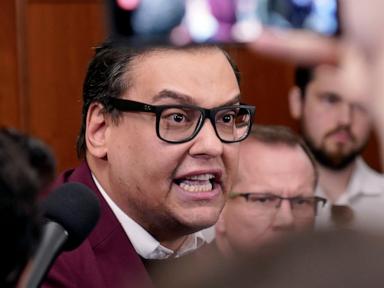
You honestly couldn't script this better. The former congressman, who was booted from the House and served 84 days in federal prison before receiving presidential clemency, just lost his paid influencer gig with crypto-betting giant Polymarket. Why? Because he allegedly used a rival platform, Kalshi, to bet on his own life choices. Specifically, he bet that he wouldn't show up to the State of the Union address.
Then, shocker, he didn't show up.
This isn't just another funny story about a politician who can't stay out of trouble. It's a massive headache for an industry trying to prove it's a legitimate financial sector rather than an unregulated wild west casino. If you think prediction markets are just harmless fun for political nerds, you're missing the bigger picture. The Commodity Futures Trading Commission (CFTC) is now breathing down the industry's neck, and the legal fallout will change how these platforms operate forever.
The Ultimate Conflict of Interest
Here's how the scheme basically went down. Leading up to the February 24 State of the Union speech, Santos loudly broadcasted his plans to attend. Because of his high profile and fresh clemency, Kalshi users actively traded on his attendance. On the eve of the speech, the market gave him a 75% chance of showing up.
Behind the scenes, Kalshi detected a series of suspicious trades. It turns out someone was aggressively betting against Santos attending. Minutes into the speech, Santos posted on social media that a delayed flight kept him away.
He pocketed the money. Kalshi smelled a rat and immediately reported him to federal prosecutors and the CFTC.
At the same time, Santos was pocketing checks from Polymarket to serve as a brand influencer. Think about that. He was getting paid by one platform to drive retail hype while allegedly using a competitor's platform to manipulate a market where he controlled the outcome. Polymarket quickly moved to cut ties and terminate his contract this week. Santos called the allegations "preposterous" on social media, but the damage is done.
Is It Insider Trading If You Are the Event
This scandal shines a harsh light on a massive legal gray area. Federal regulators are calling it a probe into possible insider trading. But legal experts aren't so sure the label fits perfectly.
David Miller, the enforcement director at the CFTC, recently stated at New York Law School that insider trading laws absolutely apply to prediction markets. He pointed to a recent case where a Google engineer used unreleased "Year in Search" data to place winning wagers on Polymarket. That's classic insider trading: stealing proprietary data for financial gain.
But Santos didn't steal information. He just knew his own schedule.
Legal analysts like Todd Phillips from Klaros Group point out that what Santos did looks way more like market manipulation than insider trading. Santos created artificial demand by telling everyone he was going, drove up the price of "Yes" contracts, bought the cheap "No" contracts, and then intentionally missed the event.
Until recently, nobody was trading contracts on the daily movements of individual people. The industry simply doesn't have a deep playbook for handling users who can single-handedly alter reality to cash a check.
The Political Tug of War
This regulator crackdown is happening during an intense political battle over the legality of these platforms. The current administration has generally supported prediction markets. Donald Trump Jr. is a strategic advisor for Kalshi and an investor in Polymarket through his venture capital firm. The White House has actively sued states trying to ban political betting.
Yet, the CFTC is still pushing hard against market abuse. The Senate even approved a bipartisan resolution earlier this year to block its own members from using these platforms.
The platforms know they are on thin ice. That's why Kalshi didn't hesitate to burn Santos and hand his trade data over to the feds. They want to protect their broader business. If they look like they are covering for rogue actors, regulators will shut down the whole party.
What Happens to the Markets Now
If you use platforms like Polymarket or Kalshi, expect the user experience to get much more restrictive very soon. The wild days of betting on hyper-specific personal details are likely numbered.
Stepped-Up KYC Requirements
Know Your Customer (KYC) rules are going to get much stricter. Platforms will need to ensure that individuals tied to specific public outcomes aren't holding accounts that can trade on those specific markets.
Shifting Away From Personal Contracts
Markets based on the behavior of a single, unpredictable individual are a compliance nightmare. Platforms will likely scale back on niche pop-culture or personal attendance contracts, focusing instead on macro data like economic indicators, election outcomes, and corporate earnings where a single person can't easily rig the game.
Increased Oversight Cooperation
Polymarket and Kalshi have both shown they will cooperate with federal investigators to preserve their corporate lives. If you think your trading activity on a decentralized or centralized prediction platform is completely anonymous or shielded from government eyes, think again.
Don't bet on markets where a single influencer or politician holds all the cards. Stick to high-liquidity, data-driven markets where individual manipulation is mathematically impossible. The CFTC is rewriting the rules of engagement right now, and the casual bettor needs to tighten up their risk management before the hammer drops.