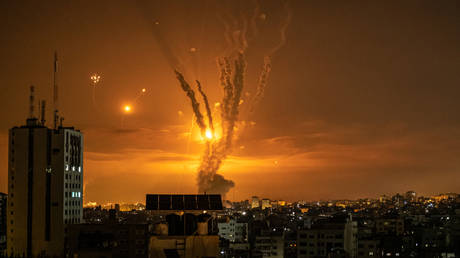
The stability of the Indian state rests on the caloric security of 1.4 billion people, a metric currently tethered to a fragile trans-continental supply chain for mineral fertilizers. When regional conflicts—specifically the escalation between Iran and its regional adversaries—disrupt the Persian Gulf’s logistical arteries, the impact is not merely a price spike; it is a systemic threat to the nitrogenous and phosphatic input requirements of the Indian soil. The current panic among the farming community is a rational response to a breakdown in the Just-in-Time procurement model that India has utilized to manage its domestic agricultural subsidies.
The Tri-Component Dependency Framework
India’s agricultural output is governed by the $NPK$ ratio (Nitrogen, Phosphorus, and Potassium). While the nation has achieved significant self-reliance in Urea (Nitrogen) production through domestic natural gas-based plants, it remains chronically dependent on imports for the raw materials and finished products of the $P$ and $K$ components. Discover more on a similar topic: this related article.
- The Nitrogen (N) Bottleneck: Urea production requires natural gas as a feedstock. India imports approximately 30% of its finished Urea and nearly 50% of the natural gas required for domestic production. A conflict involving Iran threatens the LNG (Liquefied Natural Gas) tankers transiting the Strait of Hormuz, effectively creating a secondary energy crisis within the agricultural sector.
- The Phosphatic (P) Deficit: India is the world’s largest importer of Diammonium Phosphate (DAP). Morocco, Jordan, and Saudi Arabia are key suppliers, but the logistical routes through the Red Sea and the Gulf of Oman are now high-risk zones.
- The Potassium (K) Zero-Base: With negligible domestic potash reserves, India imports 100% of its Muriate of Potash (MOP). The exclusion of Belarusian and Russian supplies due to previous sanctions already tightened this market; any further disruption in Middle Eastern transshipment hubs leaves no margin for error.
The Cost Function of Subsidized Equilibrium
The Indian government operates a Maximum Retail Price (MRP) system for urea and a Nutrient Based Subsidy (NBS) for non-urea fertilizers. This creates a fiscal feedback loop: as global prices rise due to Persian Gulf instability, the government’s subsidy bill expands exponentially to prevent that cost from reaching the farmer.
The fiscal risk is defined by the equation:
$$Total_Subsidy = (Import_Parity_Price - Controlled_MRP) \times Consumption_Volume$$ Further journalism by Forbes explores comparable perspectives on this issue.
When the Import Parity Price (IPP) surges due to war risk premiums and increased freight insurance (P&I club rates), the sovereign balance sheet absorbs the shock. However, there is a physical limit to this absorption. If the physical supply is not present in the ports of Kandla or Mundra, no amount of fiscal subsidy can plant a crop. The "panic" observed in rural belts is an acknowledgment that the physical availability of DAP for the Rabi (winter) sowing season is decoupled from the government's ability to pay for it.
Logistical Choke Points and the Strait of Hormuz
The Strait of Hormuz handles approximately 20% of the world’s LNG and a significant portion of the sulfur and petrochemical bypasses used in fertilizer manufacturing. An Iranian conflict introduces three specific failure modes for Indian agriculture:
- Insurance Escalation: War risk premiums can increase the landed cost of cargo by 15-25% overnight. For low-margin commodities like rock phosphate or phosphoric acid, this renders long-term contracts economically unviable for private importers.
- Vessel Diversion: If the Gulf becomes a "no-go" zone, shipments must be rerouted or sourced from the Western Hemisphere (e.g., Florida or Brazil). The transit time from the US Gulf Coast to India is roughly 35-40 days, compared to 4-7 days from the Persian Gulf. This 30-day lag during a peak sowing window is the difference between a harvest and a fallow field.
- Feedstock Interruption: Iran is a major provider of sulfur, a critical byproduct used to create sulfuric acid, which in turn processes rock phosphate into DAP. The loss of Iranian sulfur forced Indian manufacturers to seek spot-market alternatives at significantly higher premiums.
The Mechanism of Soil Degradation through Imbalance
Shortages do not lead to a total cessation of farming; they lead to nutrient imbalance. When DAP and MOP are unavailable or too expensive, farmers overcompensate by applying excess Urea, which is more readily available due to domestic production mandates.
The consequences of this "Urea-heavy" strategy are structural:
- Declining Fertilizer Response Ratio: In the 1970s, 1 kg of NPK yielded approximately 15 kg of food grain. Today, that ratio has plummeted to below 4 kg in some regions due to soil fatigue and micronutrient depletion.
- Hydrological Stress: Excessive nitrogen leaching contaminates groundwater and requires more irrigation to "flush" the salts, exacerbating India’s existing water table crisis.
- Pest Vulnerability: Crops over-fertilized with nitrogen have weaker cell walls, making them more susceptible to pest infestations, which then requires an increase in pesticide expenditure, further compressing farmer margins.
The Failure of Decentralized Buffer Stocks
The current crisis exposes the inadequacy of India’s internal distribution logic. Fertilizer stocks are often concentrated at port-side silos or large regional hubs. The "last-mile" delivery to Primary Agricultural Credit Societies (PACS) relies on a rail-to-truck network that lacks the elasticity to handle sudden surges in demand.
When a war-induced shortage is rumored, "hoarding" becomes a rational economic survival strategy for distributors. This creates an artificial scarcity on top of the actual physical deficit. The lack of a real-time, blockchain-verified inventory system across all 600,000+ villages means the Department of Fertilizers is often operating on data that is 72 to 96 hours old—a fatal lag during a geopolitical flare-up.
Strategic Realignment and Direct Action
To mitigate the immediate threat posed by Middle Eastern instability, the Indian agricultural strategy must pivot from a procurement-based model to a resource-sovereignty model.
1. Diversification of the Phosphatic Supply Chain
India must finalize "debt-for-resource" swaps or long-term joint ventures in the OCP (Office Chérifien des Phosphates) in Morocco and Ma’aden in Saudi Arabia. However, to bypass the Hormuz/Red Sea risk, aggressive investment in Senegalese and Togolese phosphate mines is required to establish a permanent Atlantic-to-Indian Ocean supply route.
2. Mandatory Nano-Urea Transition
The traditional 45kg bag of urea is inefficient, with 60% of the nitrogen lost to the atmosphere or runoff. The scaling of Nano-Urea (liquid form) reduces the logistical volume requirement by a factor of 90:1. Transitioning 30% of domestic consumption to Nano-forms would decouple a significant portion of the NPK requirement from bulk maritime shipping constraints.
3. Coal Gasification for Ammonia
Reducing the reliance on imported LNG for urea production is possible through the utilization of India’s vast domestic coal reserves. While coal gasification is more carbon-intensive, the strategic necessity of food security outweighs the immediate emission profile. Converting "high-ash" Indian coal into syngas for ammonia synthesis provides a floor for domestic production that is independent of Gulf geopolitics.
4. Implementation of Digital Rationing and Nutrient Mapping
The government must link the Soil Health Card (SHC) scheme directly to the Point of Sale (PoS) fertilizer machines. By restricting the purchase of subsidized fertilizers to the specific nutrient deficit of a farmer's plot, the state can prevent the "Urea-bombing" of soil and stretch existing buffer stocks by 15-20%.
The immediate tactical move for the Ministry of Agriculture is the activation of the "Strategic Fertilizer Reserve," similar to petroleum reserves, holding a minimum of 5 million metric tonnes of DAP/MOP in inland, non-conflict-vulnerable locations. Relying on floating inventory in the Indian Ocean during an era of drone warfare and asymmetric maritime threats is no longer a viable state policy. The transition must move from managing a shortage to engineering a redundant, multi-modal supply architecture that treats NPK as a strategic defense asset rather than a mere agricultural input.