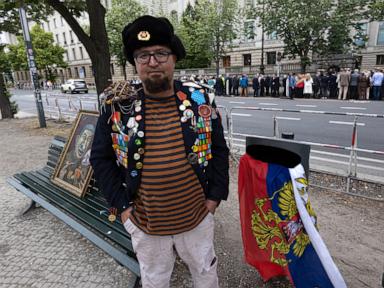
Governments love a high-profile ghost story. When an exiled Russian artist is found dead in a Warsaw apartment, the geopolitical narrative writes itself. Within hours, press secretaries are at microphones, prime ministers are issuing dark warnings about foreign reach, and cable news pundits are drawing straight lines back to the Kremlin. It is clean. It is dramatic. It satisfies the collective hunger for a cold war thriller.
It is also an incredibly lazy way to analyze global intelligence operations.
The immediate rush to label every tragic death of a dissident a state-sponsored assassination shows a profound misunderstanding of how modern espionage, security structures, and local criminal networks actually operate. By treating every high-profile death as a sophisticated political hit, Western security apparatuses and media organizations fall directly into a trap of perpetual paranoia, amplifying the perceived omnipotence of foreign adversaries while ignoring structural failures right at home.
The public consensus demands an international conspiracy. The boring, messy reality of investigative forensics suggests we look somewhere else entirely.
The Myth of the Omnipotent Hit Squad
The core argument driving the current media panic is simple: because the victim was an outspoken critic of a hostile regime, their death must be an act of political theater. This logic relies on the assumption that foreign intelligence agencies possess an unlimited, flawless capacity to execute targeted killings across borders with total impunity.
Having spent years analyzing tradecraft and cross-border security failures, I can tell you that real-world operations are rarely as smooth as a cinematic thriller. True state-sponsored assassinations—like the 2018 Salisbury poisoning or the 2006 Litvinenko murder—leave distinct, unmistakable signatures. They use rare, highly restricted materials or specific tactical methodologies designed to send a clear message to a precise audience.
When a death looks messy, chaotic, or indistinguishable from a standard domestic crime, jumping straight to a geopolitical conspiracy is a failure of investigative discipline.
Consider the logistical reality of operating in a foreign jurisdiction like Poland, which maintains a highly active counterintelligence stance against eastern neighbors. For a foreign hit squad to infiltrate, track, execute, and escape without tripping standard surveillance networks requires massive resources. Doing so for a low-level cultural figure—someone whose influence is largely symbolic rather than operational—represents a terrible return on investment for any intelligence agency.
The Disproportionate Retaliation Calculation
State actors operate on a risk-versus-reward matrix. To understand why the "assassination" narrative falls apart under scrutiny, look at what a state actually gains from such an operation versus what it stands to lose.
Killing a high-profile political defector with access to hard military intelligence or classified financial records? That carries a clear, strategic objective. It plugs a leak and deters future high-level treason.
Targeting an artist whose primary weapon is provocative imagery? The math changes completely.
- The Martyrdom Effect: Eliminating a cultural dissident does not silence their message; it broadens their audience by a factor of ten. An artist who was comfortably obscure to the general public suddenly becomes an international symbol of resistance.
- The Diplomatic Backlash: Executing an operation inside a NATO member state guarantees immediate economic sanctions, visa bans, and heightened border security.
- The Operational Drain: Field assets are expensive and difficult to position. Wasting those assets on non-military targets stretches operational capabilities thin.
Imagine a scenario where a local organized crime group handles a standard extortion or burglary gone wrong. It happens in every major European capital. But because of the victim’s passport and political alignment, the local police department gets sidelined by national intelligence agencies eager to score points in the press. The real culprits walk free while diplomats trade strongly worded letters.
Dismantling the "People Also Ask" Assumptions
Whenever these stories break, public search trends reveal deep-seated misconceptions about international security. Addressing these queries directly exposes the flaws in the mainstream narrative.
Do hostile states routinely assassinate low-level dissidents abroad?
No. The vast majority of dissident deaths attributed to foreign states are actually the result of localized criminal disputes, financial insolvency, or personal tragedies that get weaponized by the media after the fact. Intelligence agencies prefer intimidation, cyber-harassment, and character assassination. It is cheaper, safer, and highly effective. Actual physical elimination is reserved for individuals who pose an existential threat to state security or financial networks.
Why do prime ministers immediately declare these events political hits?
Because it serves a domestic political purpose. Labeling a local violent crime as a foreign hybrid warfare attack shifts accountability away from domestic law enforcement and border security. It unites the public against an external enemy and justifies increased defense spending or expanded surveillance powers. It is a classic diversionary tactic used by politicians worldwide.
How can investigators differentiate between a state hit and a common crime?
By ignoring the political noise and focusing strictly on forensic mechanics. State hits feature sophisticated logistics: untraceable toxins, clean entry and exit vectors with no local footprints, and a complete lack of standard criminal motives like robbery or domestic dispute. If a crime scene looks like a botched burglary, it is usually a botched burglary, regardless of who lived there.
The Cost of Geopolitical Paranoia
The danger of treating every tragedy as an act of war is that it creates an environment of permanent vulnerability. When Western leaders cry wolf over every incident, they actively help their adversaries. They do the work of foreign propaganda departments for them, projecting an image of an enemy that can strike anyone, anywhere, at any time.
This paranoia has real-world casualties. It distracts counterintelligence agencies from monitoring actual, high-consequence threats—like critical infrastructure cyberattacks or corporate espionage—and forces them to spend thousands of man-hours investigating standard municipal crimes. It turns police forces into political entities.
The hardest truth for the art world and the political establishment to accept is that dissidents are human beings who live real, complicated, and sometimes dangerous lives outside of their activism. They get into financial trouble. They associate with shady local characters. They face the exact same societal risks as any other resident of a major city.
Assuming an artist is too important to be a victim of ordinary urban violence is a form of elitism disguised as political solidarity.
Stop looking at the map of Europe. Stop reading the official government press releases designed to stoke fear and rally voter bases. Look at the forensic report. Look at the local police blotter. If you want to stop foreign interference, start by accurately identifying what is actually a threat and what is simply a tragic, local headline exploited for geopolitical theater.