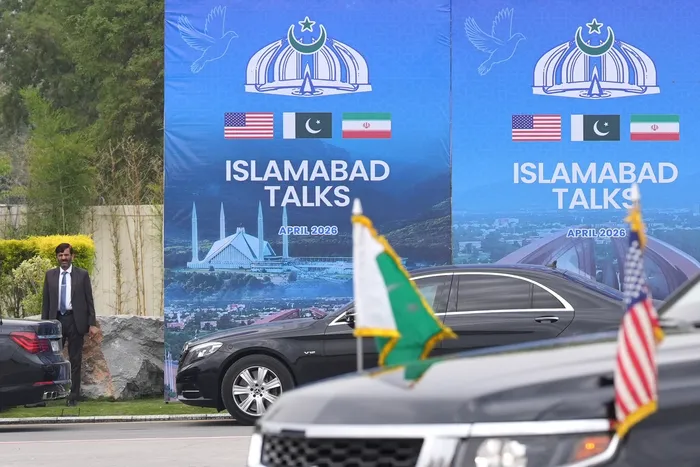
The selection of Pakistan as a physical and diplomatic venue for high-level negotiations between the United States and Iran represents a calculated shift in the regional security architecture, moving beyond the traditional backchannels of Oman or Switzerland. This maneuver functions as a multifaceted strategic hedge, designed to exploit Pakistan’s unique position as a nuclear-armed state with deep, albeit complex, ties to both the American defense establishment and the Iranian energy sector. The efficacy of this diplomatic vector depends on the alignment of three specific variables: the stabilization of the Durand Line, the internal political equilibrium within Islamabad, and the transactional limits of the "Maximum Pressure" framework.
The Tri-Node Geopolitical Framework
To understand why a mediator is necessary, one must first identify the structural breakdown in direct bilateral communication. The US-Iran relationship is currently defined by a total absence of formal diplomatic recognition, creating a high-risk environment where miscalculation is the default state. Pakistan enters this vacuum not as a passive host, but as a strategic node within a tri-node framework.
- The Intelligence Buffer: Pakistan’s Inter-Services Intelligence (ISI) possesses granular operational data on regional proxy networks that neither Washington nor Tehran can access independently. Using Pakistan as a venue allows for real-time verification of "on-the-ground" concessions, particularly regarding border security and insurgent activity in Balochistan.
- The Economic Pressure Valve: Iran views Pakistan as a critical market for energy exports, specifically through the long-delayed IP (Iran-Pakistan) gas pipeline. By engaging in talks hosted by Islamabad, Tehran seeks to incentivize Pakistan to ignore US sanctions, while Washington uses the same pipeline as a bargaining chip—offering sanctions waivers in exchange for Iranian nuclear or regional de-escalation.
- The Multipolar Pivot: For the United States, utilizing Pakistan signals a pivot away from the Middle Eastern monarchies (Qatar, UAE, Oman) which have historically dominated this role. It forces a broader regional buy-in and leverages Pakistan's status as a Chinese strategic partner, indirectly bringing Beijing’s interests to the table without a formal seat.
Mechanics of the Venue Selection
The choice of Pakistan is not a matter of convenience but a result of a rigorous cost-benefit analysis regarding "Diplomatic Friction."
Security and Sovereignty Constraints
Pakistan provides a high-security environment capable of hosting high-profile targets while maintaining a degree of distance from the immediate Mediterranean and Levantine theaters. Unlike Doha, which is frequently scrutinized for its ties to non-state actors, Islamabad offers a traditional Westphalian state-to-state platform. This environment is essential for discussing "hard" security issues—such as the proliferation of ballistic missile technology and maritime security in the Strait of Hormuz—away from the ideological noise of typical diplomatic summits.
The Balochistan Security Nexus
A critical underlying driver for these talks is the shared border between Iran and Pakistan. Both nations face a common threat from separatist movements in the Sistan-Baluchestan and Balochistan provinces. The US recognizes that any lasting peace with Iran requires a stabilization of this frontier. By hosting talks, Pakistan can synchronize its counter-insurgency efforts with the broader US-Iran de-escalation roadmap. This creates a feedback loop: regional stability facilitates the talks, and the talks provide the framework for regional stability.
The Cost Function of Mediation
Every diplomatic engagement carries an associated cost for the mediator. For Pakistan, the role of host is a high-stakes gamble with several potential failure points.
- The Saudi-Israeli Counter-Pressure: Riyadh and Jerusalem view any warming of US-Iran relations through a Pakistani lens as a threat to their specific security interests. Pakistan relies heavily on Saudi financial aid and remittances; should the talks progress toward a formal nuclear reset, Pakistan risks a capital flight from its Gulf allies.
- Domestic Political Volatility: The Pakistani military establishment and the civilian government are often at odds regarding foreign policy. If the talks are perceived by the public as "bowing to American interests," it could trigger domestic unrest, undermining the very stability required to host the negotiations.
- The Credibility Deficit: Pakistan must maintain a "strict neutrality" posture. If it leans too far toward US interests to secure IMF loans, Iran will retreat from the table. If it accommodates Iranian security demands too aggressively, the US will maintain its restrictive sanctions regime.
Strategic Logic of the Pakistan-Iran-US Triangle
The "Success Variable" in these negotiations is not the signing of a grand treaty, but the establishment of a sustainable "De-confliction Protocol." The logic follows a specific causal chain:
- Step One: Intelligence De-confliction. Use Pakistani channels to establish a "red line" map of regional proxy activities.
- Step Two: Targeted Sanctions Relief. Washington grants specific, time-bound waivers for Pakistan to engage in energy trade with Iran.
- Step Three: Formal Nuclear Transparency. Leveraging Pakistan’s own history as a nuclear power to provide technical frameworks for monitoring and compliance that are culturally and regionally palatable to the Iranian leadership.
Addressing the Credibility Gap
Critics argue that Pakistan’s own internal instabilities make it an unreliable partner for such a monumental task. However, this perspective ignores the "Necessity Driven Alignment." Pakistan is currently facing an existential economic crisis. The ability to broker a deal—or even just host the process—positions Islamabad as an indispensable global actor, potentially unlocking multilateral financial support. This economic desperation is, paradoxically, what makes Pakistan a reliable host; they cannot afford for the process to fail.
The second limitation is the "Zero-Sum" perception of US-Iran relations. If the US views any gain for Iran as a loss for the West, the venue is irrelevant. Pakistan’s role is to transform this into a "Non-Zero-Sum" game by highlighting shared interests in Afghan stability and the containment of ISIS-K, which threatens all three parties equally.
Strategic Recommendation and Forecast
The move to Karachi or Islamabad for peace talks is a signal that the US is ready to decentralize its Middle Eastern diplomacy. For the strategy to succeed, the US must decouple the talks from the broader "Global War on Terror" rhetoric and treat them as a clinical exercise in regional balance-of-power politics.
The Actionable Playbook for the Next 12 Months:
- Formalize the Venue: Transition from "negotiators traveling" to the establishment of a permanent "Neutral Zone" office in Islamabad.
- Prioritize the Energy Corridor: Use the IP pipeline as the primary carrot for Iranian compliance. If Iran reduces enrichment levels, the US must allow the completion of the pipeline.
- Multilateral Intelligence Sharing: Establish a joint counter-terrorism center in Pakistan that includes US, Iranian, and Pakistani officials. This provides a "functionalist" path to peace—working together on low-level technical threats to build the trust necessary for high-level political concessions.
Expect a period of high tactical volatility. Initial sessions will likely focus on prisoner exchanges and the unfreezing of limited assets to test the integrity of the Pakistani conduit. The success of these minor transactions will dictate the viability of a secondary, more robust nuclear framework. If the Pakistani government can maintain internal order through the third quarter, the likelihood of a significant "Islamabad Declaration" on regional security increases from a historical low to a probable 40%. The strategic priority remains the neutralization of the Sistan-Baluchestan friction point as a proof-of-concept for wider cooperation.