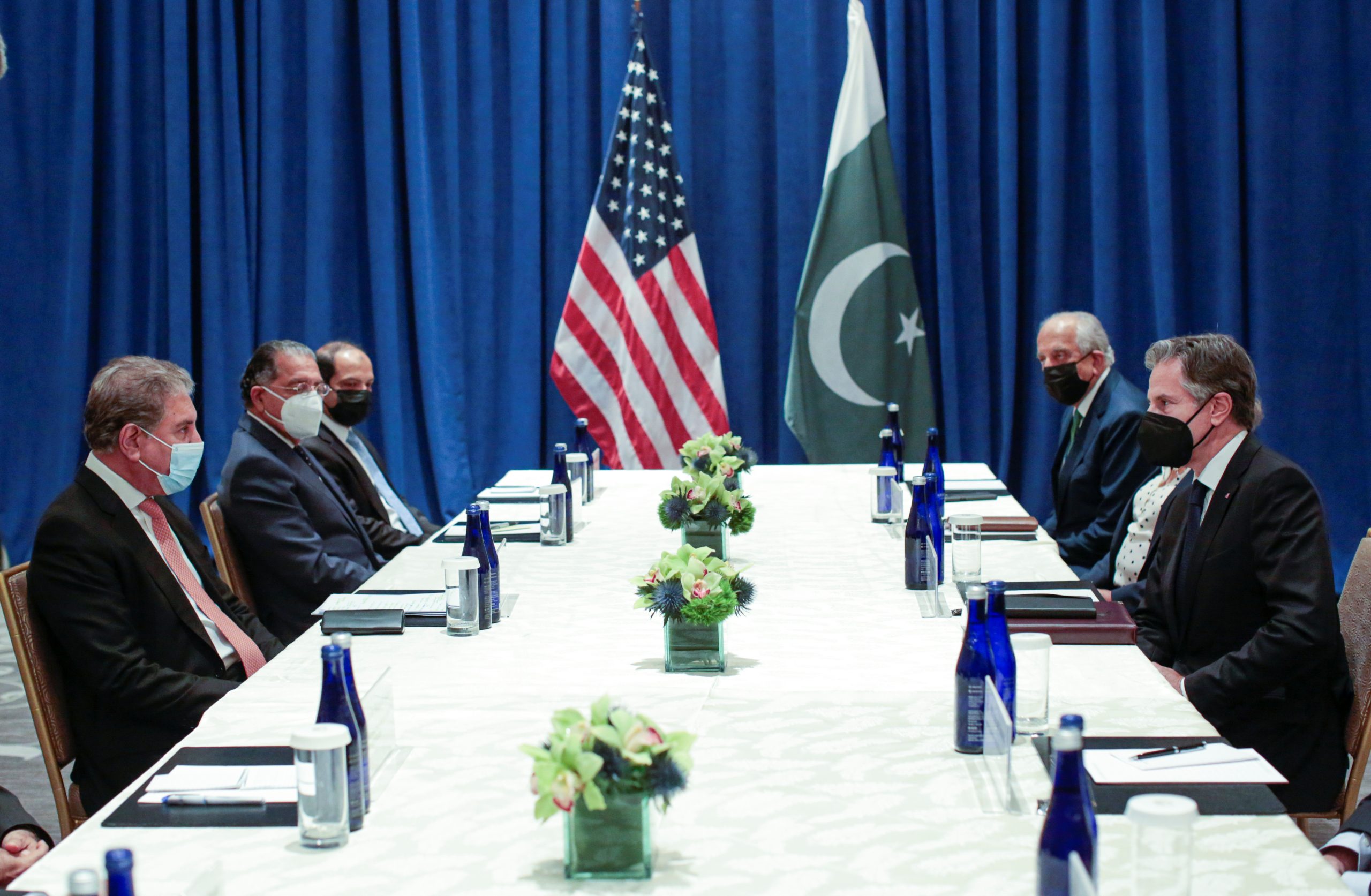
Pakistan’s current diplomatic maneuverability is not a product of shared values or historical sentiment but a calculated exploitation of institutional voids in American foreign policy. By aligning its communication strategy with the transactional preferences of the Trump administration, Islamabad has successfully pivoted from a perceived liability to a functional intermediary. This shift relies on a specific structural alignment: the convergence of Pakistan's need for economic stabilization and the White House’s preference for bilateral deal-making over multilateral bureaucratic processes.
The Transactional Framework of the Islamabad-Washington Axis
The logic governing this relationship operates on a principle of geopolitical arbitrage. Pakistan identifies areas where the U.S. faces high costs—whether political, financial, or military—and offers "discounted" solutions in exchange for financial relief or diplomatic shielding. This engagement model functions through three distinct operational pillars:
- Personalized Diplomacy: Bypassing the State Department’s career bureaucracy to engage directly with the executive branch's inner circle.
- The Mediation Premium: Utilizing residual influence in Kabul and Tehran to position Pakistan as the "sole viable broker" for regional de-escalation.
- Security for Solvency: Offering tactical counter-terrorism cooperation or logistical support in exchange for IMF leniency and debt restructuring.
Pillar I: Structural Bypassing and the Direct Access Model
Traditional diplomacy relies on a layered hierarchy where policy is vetted by regional bureaus and intelligence assessments. The Pakistani strategy intentionally ignores these layers. By recognizing that the Trump administration prioritizes personal rapport and "big picture" wins, Pakistani leadership has adopted a rhetorical style that emphasizes strength, loyalty, and immediate deliverables.
The effectiveness of this model is rooted in the "Cost of Friction" theory. In a standard bureaucratic environment, any policy shift takes months of inter-agency review. By establishing a direct line to the Oval Office, Pakistan reduces this friction, allowing for rapid pivots that catch regional rivals—specifically India—off guard. This is not about long-term alliance building; it is about short-term tactical alignment.
Pillar II: Quantifying the Mediation Premium
Pakistan’s value proposition is fundamentally tied to its proximity to conflict zones that the U.S. wishes to exit or contain. This creates a "Mediation Premium," where Pakistan’s utility to Washington increases in direct proportion to the complexity of regional instability.
- The Afghanistan Exit Strategy: While the U.S. withdrawal is complete, the vacuum left behind requires a local manager. Pakistan offers the U.S. a way to monitor extremist threats without "boots on the ground."
- The Iran-Israel Buffer: As tensions escalate in the Middle East, Pakistan’s status as a nuclear-armed Sunni state with a shared border with Iran makes it a critical pressure valve. Islamabad’s ability to communicate with Tehran, while maintaining a security partnership with Riyadh and Washington, creates a unique diplomatic niche.
This role as a broker is not without risk. The "Double-Agent Dilemma" persists: to remain valuable as a mediator, Pakistan must maintain influence over actors that the U.S. considers adversaries. If Pakistan becomes too aligned with U.S. interests, it loses its leverage with groups like the Taliban or the Iranian leadership. If it leans too far toward the adversaries, it risks U.S. sanctions. The current strategy is a high-wire act of maintaining "just enough" influence on both sides to remain indispensable to the highest bidder.
The Economic Mechanics of Geopolitical Compliance
Pakistan’s primary objective in speaking "Trump’s language" is the preservation of its balance of payments. The country’s economic health is tied to a cycle of IMF bailouts, where U.S. influence is the decisive factor in approval and conditionality.
The IMF Variable
The International Monetary Fund (IMF) does not operate in a political vacuum. While technical benchmarks—such as tax reform and energy price hikes—are mandatory, the rigor of their enforcement is often a political lever. When Pakistan provides high-value diplomatic assistance to the U.S., the pressure for immediate, painful structural reforms often experiences a "strategic softening."
This creates a moral hazard. Islamabad has learned that geopolitical utility can compensate for domestic fiscal incompetence. As long as Pakistan remains a "necessary" partner in regional security, the incentive to truly reform its rent-seeking economy is diminished by the availability of strategic rents provided by Washington and its allies.
The Chinese Counterweight
A critical error in standard analysis is the assumption that Pakistan’s outreach to Washington represents a pivot away from Beijing. In reality, it is a diversification of the portfolio. Pakistan utilizes the "China Card" to create a sense of urgency in Washington. The logic presented to U.S. negotiators is simple: "If you do not support our economic stability, we will be forced into a total dependency on the CPEC (China-Pakistan Economic Corridor) framework."
This creates a bidding war for influence. Pakistan maximizes its returns by maintaining a state of perpetual "potential alignment" with both powers, never fully committing to either, thereby ensuring that both sides continue to provide support to prevent the other from gaining a total foothold.
Deconstructing the Rhetorical Pivot
The change in Pakistan’s communication style is not merely aesthetic; it is a fundamental shift in the psychological profiling of its primary audience. The current Pakistani diplomatic corps has moved away from the "victimhood" narrative—which focused on the sacrifices made in the War on Terror—and toward a "partnership of equals" narrative.
This shift involves:
- Strength Signaling: Emphasizing Pakistan’s military capabilities and nuclear status as an asset for regional stability.
- Transactional Clarity: Explicitly stating what Pakistan wants (investment, debt relief) and what it can give (intelligence, mediation).
- Identity Alignment: Mirroring the populist, nationalist rhetoric prevalent in modern American politics to build a facade of shared ideological ground.
The Limitation of Personalist Diplomacy
The primary risk of this strategy is its lack of institutional depth. Because the relationship is built on personal rapport and high-level transactions, it is vulnerable to sudden shifts in presidential priority. If the U.S. executive branch shifts focus to a different theater—such as the South China Sea—Pakistan’s mediation premium evaporates instantly.
Furthermore, this model ignores the "Deep State" of both nations. The U.S. Department of Defense and the Pakistani military (the Establishment) have their own long-term objectives that often contradict the optics of civilian-led diplomacy. Any deal struck at the executive level must still survive the friction of these powerful internal bureaucracies.
The Indo-Pacific Equation
Pakistan’s maneuvers must be viewed through the lens of the U.S.-India partnership. Washington views New Delhi as its primary counterweight to China. This creates a ceiling for how close the U.S.-Pakistan relationship can become.
Pakistan’s strategy to overcome this is "Niche Specialization." It does not attempt to compete with India for the role of a global strategic partner. Instead, it focuses on being the "Specialist for High-Risk Theaters." By managing the problems that India cannot or will not touch—such as direct negotiations with the Taliban or backchanneling with Iran—Pakistan maintains its relevance despite the broader U.S. tilt toward India.
Structural Bottlenecks in the Strategic Relationship
Despite the current alignment, three structural bottlenecks prevent a total "reset":
- The FATF Legacy: Even with executive support, Pakistan’s history regarding terror financing remains a hurdle for international investors. The technical requirements of the Financial Action Task Force are harder to bypass through personal diplomacy than IMF loans.
- The Nuclear Narrative: The U.S. non-proliferation lobby remains fundamentally skeptical of Pakistan. No amount of transactional success can fully erase the "stability concerns" regarding Islamabad’s nuclear arsenal.
- The Domestic Legitimacy Crisis: A Pakistani government that is perceived as a "client" of Washington faces severe backlash at home. The leadership must balance U.S. demands with a domestic population that is increasingly skeptical of Western intervention.
Strategic Forecast: The Pivot to "Logistics Diplomacy"
The next phase of Pakistan’s strategy will likely involve a move toward "Logistics Diplomacy." Recognizing that the U.S. is seeking to de-risk its supply chains from China, Pakistan may attempt to position itself as a manufacturing alternative or a transit corridor for Central Asian energy.
This moves the relationship from a purely security-based exchange to a commercial one. By embedding American economic interests within Pakistani borders—through Special Economic Zones or energy infrastructure—Islamabad creates a "poison pill" for U.S. policy. If the U.S. has significant capital at risk in Pakistan, it can no longer afford to let the country fail or to apply heavy-handed sanctions.
The immediate strategic move for Islamabad is the formalization of a "Regional Security Architecture" where Pakistan acts as the primary logistical and intelligence hub for U.S. interests in the "Greater Middle East." This requires Pakistan to:
- Formalize the Backchannel: Turn informal mediation with Iran and the Taliban into a recognized, "fee-for-service" diplomatic function.
- Institutionalize the Rapport: Transition the personal connections with the Trump administration into formal bilateral working groups to ensure the relationship survives potential political shifts in Washington.
- Aggressive Debt Reprofiling: Use the current window of high diplomatic value to secure long-term debt concessions before the "Mediation Premium" declines due to shifting U.S. global priorities.
Pakistan’s success is not guaranteed, but its ability to read the current American political climate and adapt its "product offering" accordingly demonstrates a sophisticated understanding of modern, transactional geopolitics. The era of the "strategic partner" is being replaced by the era of the "strategic vendor," and Pakistan is currently the highest-performing vendor in the region.