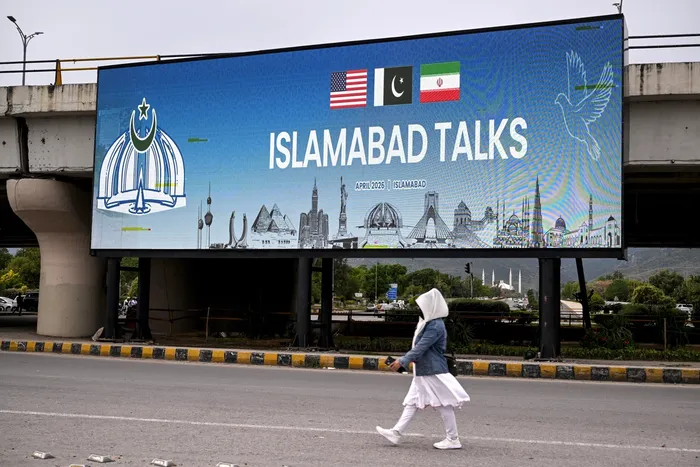
The probability of a second round of peace negotiations between Washington and Tehran hinges not on bilateral goodwill, but on the convergence of three distinct pressure vectors: internal economic degradation within Iran, the U.S. executive branch’s preference for transactional bilateralism, and the shifting security architecture of the Middle East. While media reports focus on the spectacle of high-level meetings, the structural reality is a complex calculation of leverage where the "cost of no deal" has finally exceeded the "cost of concession" for both parties.
The Tripartite Pressure Model
To understand why a second round of talks is surfacing now, one must look at the specific variables driving the Iranian decision-making matrix. The Iranian state operates under a survivalist logic, where foreign policy serves as a pressure valve for domestic instability.
- Macroeconomic Insolvency: The Iranian Rial’s devaluation against the USD is no longer a manageable fluctuation; it is a systemic threat. Inflationary pressure on basic commodities creates a baseline of domestic unrest that limits the regime's external adventurism.
- The Trumpian Transactionalism: Unlike traditional multilateral diplomacy, the current U.S. approach treats sanctions as a commodity to be traded for specific, measurable security outcomes. This reduces the diplomatic process to a series of discrete trades rather than a search for a permanent, "holistic" solution.
- Regional Isolationism: The normalization of ties between Israel and several Gulf states has altered the regional balance of power. Iran’s previous strategy of using regional proxies to gain leverage has reached a point of diminishing returns, as those proxies now face more unified counter-pressures.
The Mechanics of Maximum Pressure 2.0
The "Maximum Pressure" campaign is often characterized as a blunt instrument, yet its efficacy lies in its ability to create a "chokepoint" in the Iranian supply chain and financial systems. This is not merely about stopping oil exports; it is about the systematic removal of Iran from the SWIFT banking system and the secondary sanctions that prevent third-party nations from acting as intermediaries.
The U.S. strategy utilizes the following mechanisms:
- Financial Asymmetry: By leveraging the dominance of the US Dollar in global trade, the U.S. Treasury can effectively exile the Iranian economy.
- Secondary Sanction Elasticity: The threat of losing access to the U.S. market forces European and Asian firms to choose between Iranian oil and the American financial system. In every instance, the latter wins.
- Targeted Commodity Suppression: Beyond oil, the focus on petrochemicals and metals strips the Iranian state of its primary sources of hard currency.
This creates a bottleneck in the Iranian budget. When the state can no longer fund its internal security apparatus or its regional militias at previous levels, the incentive to return to the negotiating table shifts from a choice to a requirement for regime continuity.
Deconstructing the "Peace Talks" Framework
The term "peace talks" is a misnomer in the context of U.S.-Iran relations. The objective is not peace in the Westphalian sense, but a revised "Joint Comprehensive Plan of Action" (JCPOA) that addresses the limitations of the 2015 agreement. The logic of a second round of talks rests on fixing three specific structural flaws in the original deal.
The Sunset Clause Problem
The 2015 agreement contained expiration dates on key restrictions, particularly those regarding centrifuge R&D and enrichment levels. From a strategic consulting perspective, these sunset clauses represented a "delayed liability." Any new negotiation must convert these temporary halts into permanent structural barriers.
The Missile Range Variable
The original JCPOA focused almost exclusively on nuclear breakout capacity, ignoring the delivery systems—specifically, Iran’s ballistic missile program. For the U.S. and its regional allies, a nuclear deal that ignores the means of delivery is tactically incomplete. A second round of talks must integrate missile range and payload limits into the core agreement.
Regional Proxies as Non-Negotiables
The "Grey Zone" activities of the Islamic Revolutionary Guard Corps (IRGC) across Yemen, Iraq, Lebanon, and Syria serve as Iran’s unconventional deterrent. The U.S. seeks to link sanctions relief directly to the cessation of funding for these groups. This creates a friction point: for Iran, these proxies are essential for regional influence; for the U.S., they are the primary drivers of regional instability.
Quantifying the Negotiation Space
The "Zone of Possible Agreement" (ZOPA) is currently narrow. Iran requires immediate, verifiable sanctions relief to stabilize its currency. The U.S. requires long-term, verifiable commitments on nuclear enrichment and regional behavior.
The negotiation will likely follow a "Step-for-Step" logic:
- De-escalation Phase: Iran pauses higher-level enrichment (e.g., 60%) in exchange for the release of frozen assets in third-country banks (e.g., South Korea or Iraq).
- Verification Phase: Increased IAEA access to undeclared sites in exchange for a partial waiver on oil exports to specific Asian markets.
- Comprehensive Phase: A long-term treaty—rather than an executive agreement—that provides Iran with permanent sanctions relief in exchange for the dismantling of specific nuclear infrastructure and missile testing bans.
The Role of External Arbiters
While the talks are ostensibly bilateral, the influence of China and Russia cannot be discounted. China remains the primary purchaser of "gray market" Iranian oil. Its willingness to enforce or bypass U.S. sanctions provides Iran with a vital, albeit diminishing, lifeline. Russia, conversely, views Iran as a strategic partner in the Caucasus and the Levant. Their participation in a second round of talks is not about facilitating peace, but about ensuring that any new regional order does not exclude their interests.
The "Three-Player Game" logic applies here:
- U.S. Goal: Maximum containment with minimum military expenditure.
- Iran Goal: Regime survival and economic reintegration.
- China/Russia Goal: Strategic distraction of U.S. resources and maintenance of a multipolar regional influence.
The Bottleneck: Domestic Political Constraints
Both leaderships face internal constraints that limit their ability to compromise. For the U.S. President, any deal perceived as "weak" invites legislative pushback and political vulnerability. For the Iranian Supreme Leader, a deal that appears to be a surrender to "Arrogant Powers" undermines the ideological foundation of the Islamic Republic.
This creates a "credibility gap." Each side must frame the negotiations as a victory to their respective domestic audiences. In the U.S., the narrative will focus on "The Better Deal" and "Total Denuclearization." In Iran, the narrative will focus on "Resistance" and "The Defeat of Sanctions."
Risk Assessment of Failed Negotiations
A failure to reach a preliminary understanding during this second round of talks would trigger a specific sequence of escalatory events. The "fallback position" for the U.S. is not the status quo, but an intensification of the shadow war.
- Kinetic Sabotage: Increased cyber-attacks on Iranian infrastructure (Stuxnet-style) and targeted strikes on high-value IRGC assets.
- Total Embargo: A move toward a full naval blockade of Iranian oil tankers, significantly increasing the risk of a direct maritime conflict in the Strait of Hormuz.
- Internal Attrition: Leveraging social media and financial pressure to exacerbate internal dissent within Iran, aiming for a "managed collapse" of the current governing structure.
The strategic recommendation for observers and stakeholders is to ignore the rhetoric of "peace" and monitor the following indicators of actual progress:
- The IAEA Monitoring Gap: Watch for the reinstatement of high-frequency monitoring at the Natanz and Fordow facilities.
- The Rial Exchange Rate: A sudden stabilization of the Rial usually precedes a diplomatic breakthrough, as it indicates a "backdoor" easing of financial pressure or an anticipation of an asset thaw.
- The IRGC Deployment Patterns: Any withdrawal or reduction in funding for proxy groups in the Levant will be the primary signal that Iran is serious about the regional stability components of a new deal.
The second round of talks represents a pivot from ideological confrontation to pragmatic survival. The outcome will be determined not by the words spoken in Geneva or Muscat, but by the cold mathematics of oil volumes, enrichment percentages, and the internal stability of the Iranian state. The U.S. holds the economic leverage, but Iran holds the "spoiler" capacity in a volatile region. The negotiation is a high-stakes auction where the currency is regional security.