The strategic shift in U.S.-Iran policy represents a fundamental pivot from ideological containment to a pragmatic, maritime-first security model. By prioritizing the uninterrupted flow of the Strait of Hormuz over the protracted complexities of nuclear non-proliferation, the administration is effectively re-pricing geopolitical risk. This maneuver treats the Strait of Hormuz not merely as a geographic chokepoint, but as the primary lever of global energy inflation and the single greatest variable in the stability of the petrodollar.
The Structural Mechanics of the Hormuz Chokepoint
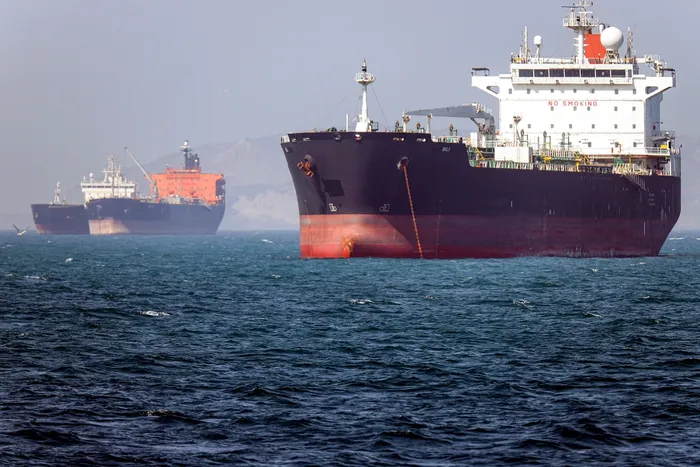
The Strait of Hormuz serves as the vascular system for 20-30% of the world’s total liquefied natural gas (LNG) and oil consumption. Unlike the nuclear issue, which is a long-term existential threat, a blockage in the Strait produces an immediate, non-linear shock to global markets.
To understand the administration's logic, one must map the Hormuz Volatility Function. This function dictates that for every 24 hours the Strait is non-operational, the global spot price of Brent Crude experiences a logarithmic spike due to the "Just-in-Time" nature of global energy refining. The administration has identified that Iran’s primary source of leverage is not the theoretical possession of a nuclear warhead, but the physical capability to mine the 21-mile-wide passage.
The Logistics of Interdiction
Iran’s asymmetric naval strategy utilizes a swarm-based approach, deploying fast-attack craft and mobile shore-to-ship missile batteries. This creates an environment where traditional carrier strike groups face diminished returns. The tactical shift toward "reopening" or "prioritizing" the Strait involves three operational layers:
- Kinetic Deterrence Mapping: Identifying and pre-targeting mobile launch sites along the Iranian coastline to reduce the time-to-strike for U.S. assets.
- Multilateral Insurance Subsidization: Working with global shipping insurers to stabilize premiums for tankers, which currently skyrocket at the first sign of regional friction.
- Automated Escort Protocols: Deploying unmanned surface vessels (USVs) to act as minesweepers and early-warning sensors, effectively lowering the cost of naval presence.
De-prioritizing the Joint Comprehensive Plan of Action (JCPOA)
The traditional focus on nuclear enrichment levels (the 60% vs. 90% purity debate) is being treated as a secondary concern because the "Breakout Time"—the time required to produce enough fissile material for a weapon—has reached a point of diminishing diplomatic returns. From a data-driven perspective, the administration views the JCPOA not as a solution, but as a sunk cost.
The opportunity cost of chasing a nuclear deal is the neglect of immediate regional destabilization. By focusing on the Strait, the U.S. shifts the burden of proof onto Tehran. If Iran threatens the Strait, they alienate their primary remaining customers in East Asia, specifically China. This creates a strategic pincer: the U.S. provides the security, while Iran’s own economic survival depends on not using the very weapon they use to threaten the West.
The Economic Calculation of the Nuclear Pivot
The nuclear program is a domestic prestige project for Iran; the Strait of Hormuz is an international utility. Targeting the utility allows the U.S. to build a broader coalition. Nations like India, Japan, and South Korea have vastly different views on Iranian nuclearization but identical views on the necessity of oil flow. This "Universal Utility" strategy allows the U.S. to bypass the polarizing nature of nuclear diplomacy and move into a high-ground position of global economic stewardship.
The Three Pillars of Maritime Supremacy
To execute this pivot, the administration utilizes a tripartite framework designed to isolate Iranian maritime influence without requiring a full-scale ground invasion.
Pillar I: Tactical Transparency
The use of high-resolution satellite imagery and real-time transponder tracking removes the "grey zone" in which Iran’s Islamic Revolutionary Guard Corps (IRGC) operates. By making every Iranian naval movement public and verifiable, the U.S. prevents Tehran from using plausible deniability during "limpet mine" attacks or tanker seizures.
Pillar II: Regional Asset Reallocation
Resources previously dedicated to monitoring enrichment sites via intelligence assets are being redirected to CENTCOM’s naval oversight. This includes the deployment of advanced Aegis-class destroyers capable of intercepting short-range ballistic missiles (SRBMs) that Iran might use to target desalination plants or oil terminals in the UAE and Saudi Arabia.
Pillar III: Energy Supply-Chain Redundancy
The administration is incentivizing the expansion of the East-West Pipeline in Saudi Arabia and the Habshan–Fujairah pipeline in the UAE. These pipelines allow oil to bypass the Strait of Hormuz entirely, reaching the Red Sea or the Gulf of Oman. As the capacity of these bypasses increases, the strategic value of the Strait—and thus Iran’s primary bargaining chip—decreases.
Friction Points and Operational Limits
No strategy is without a failure state. The primary risk of the maritime-first pivot is the "Escalation Ladder." If the U.S. increases its naval footprint to ensure the Strait remains open, it provides more targets for Iranian asymmetric warfare.
- The Saturation Attack Risk: Even the most advanced missile defense systems can be overwhelmed by sheer volume. If Iran launches hundreds of low-cost drones and missiles simultaneously, the cost-per-kill ratio favors the aggressor.
- The Proxy Variable: Iran can respond to maritime pressure by activating proxies in Lebanon, Yemen, or Iraq. A secure Strait of Hormuz is of little value if the inland refineries in the Eastern Province of Saudi Arabia are under constant drone fire.
- The Sino-Iranian Pact: China’s 25-year cooperation agreement with Iran provides a financial floor for the Iranian economy. If the U.S. secures the Strait, it effectively subsidizes the safe passage of Iranian oil to China, inadvertently strengthening a global competitor.
Quantification of Global Energy Impact
The "Fear Premium" added to oil prices during times of tension in the Strait typically ranges from $5 to $15 per barrel. By signaling a "Strait First" policy, the administration aims to compress this premium. For the U.S. economy, a $10 reduction in the price of oil translates to an estimated 0.2% to 0.3% increase in GDP growth over a twelve-month period due to lowered logistics and manufacturing costs.
The pivot also recognizes the changing nature of U.S. energy independence. As a net exporter of crude, the U.S. is less vulnerable to the physical shortage of oil than it is to the global price shock. Therefore, the priority is not "getting the oil to the U.S.," but "maintaining a global price equilibrium."
The Logic of Reopening vs. Containing
The term "reopening" in the context of the administration's rhetoric suggests a proactive rather than reactive stance. Containment is a static posture; reopening is a dynamic one. This implies a willingness to engage in "Pre-emptive De-mining" and "Freedom of Navigation Operations" (FONOPs) that are more aggressive than those seen in the previous decade.
The administration is betting that Iran’s internal economic pressures—inflation exceeding 40% and a depreciating Rial—make the regime unwilling to engage in a sustained maritime conflict that would result in the total destruction of its naval assets. This is a "Rational Actor" gamble, assuming that the IRGC values its survival over its ability to disrupt global trade.
Strategic Action Plan for Market Participants
The shift from nuclear-centric to maritime-centric policy requires a recalibration of risk assessment for global investors and energy firms.
- Monitor VLCC (Very Large Crude Carrier) Insurance Rates: These rates are the most accurate real-time indicator of the strategy’s success. If rates stabilize despite aggressive rhetoric, the market is pricing in a successful U.S. deterrence model.
- Track Pipeline Throughput: The viability of the "Hormuz Bypass" depends on the operational capacity of Saudi and Emirati land-based routes. Increased investment here signals a permanent shift in the regional power balance.
- Analyze USV Deployment: The density of unmanned systems in the Persian Gulf will serve as a lead indicator for the U.S. Navy’s ability to maintain a "Persistent Eye" without the political cost of human casualties.
The administration's move is a cold-blooded recognition of where real power lies in the 21st century. It is not in the silos of Natanz, but in the deep-water channels of the world’s most vital shipping lane. By securing the Strait, the U.S. secures the global economy, regardless of Iran’s nuclear ambitions.