Look down at the sidewalk. If you are standing in a café line in Lower Manhattan, or sitting on a concrete bench in Berlin, or rushing to catch a train in Tokyo, you will notice a quiet rebellion happening at ground level. The air is clear. The heavy, blocky shadows that used to trail beneath our ankles are gone.
For nearly a decade, we walked around looking like we were wearing bricks wrapped in premium leather. The "dad shoe" era was a loud, aggressive manifestation of modern anxiety. We needed thick foam soles to buffer ourselves against an increasingly harsh reality. We wanted height, dominance, and a buffer against the dirt of the street.
But something changed when the calendar turned to 2026. The weight became exhausting.
Consider Maya. She is a twenty-six-year-old freelance archivist living in Brooklyn, the kind of person who sub-consciously predicts cultural shifts six months before they hit the runway. Her closet used to be anchored by massive, triple-soled sneakers that added two inches to her stature and three pounds to her stride. They were a shield. Last Tuesday, she stood in her entryway, looked at those heavy monuments to the early 2020s, and felt an unexpected wave of fatigue. She didn’t want to stomp anymore. She wanted to feel the earth.
Maya reached for a pair of paper-thin, low-profile racing flats instead. As she stepped out into the morning crispness, her feet felt shockingly close to the asphalt. She could feel the texture of the pavement, the subtle slope of the curb, the vibration of the city.
This is not just a change in footwear. It is a psychological pivot. The modern "cool girl" aesthetic has stripped away the armor. In its place is a craving for agility, authenticity, and a strange sort of vulnerable elegance.
The Return of the Pavement
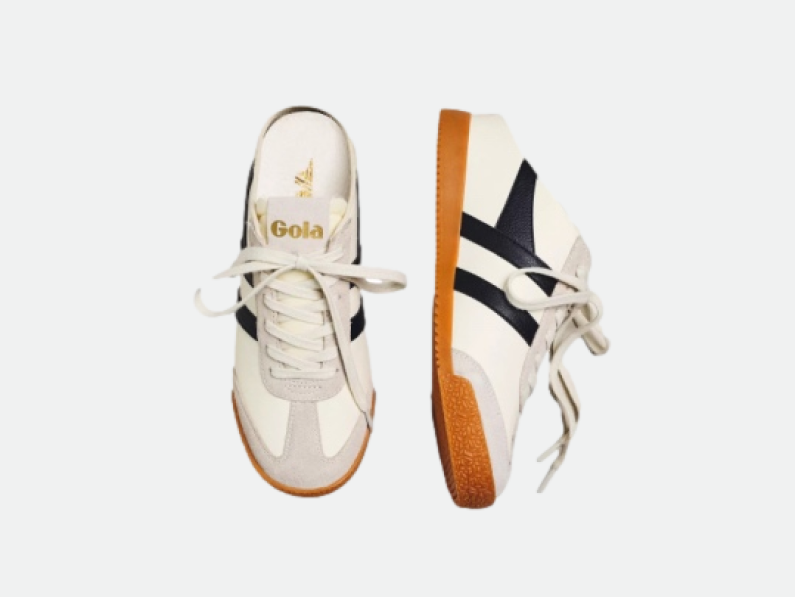
The first shift is entirely about scale. The massive silhouettes that defined the hypebeast era have shrunk to near-microscopic proportions. The new uniform demands a shoe that mimics the natural contour of the human foot, a throwback to the indoor soccer pitches of the 1970s and the martial arts studios of the late 1990s.
When you see someone wearing a pair of ultra-slim, black leather speed-cats or minimalist wrestling-inspired slip-ons, you are looking at a rejection of artificial volume. These shoes offer no illusion of height. They offer no protection from a stray puddle. They force the wearer to walk with a lighter, more conscious gait.
The appeal lies exactly in this vulnerability. By giving up the aggressive stance of a chunky sneaker, women are reclaiming a form of understated grace. It is the footwear equivalent of a no-makeup makeup look—highly intentional, deceptively simple, and entirely focused on the raw anatomy of movement. You cannot slouch in a shoe this flat. You have to own your posture.
The Beautifully Broken Object
Walk a mile in Maya’s world and you realize that pristine things have lost their currency. There was a time when a single smudge on a white leather sneaker was a tragedy. People bought specialized wipes; they stored their shoes in clear plastic boxes like museum artifacts.
That felt pristine. It also felt dead.
The second major movement taking over the streets is the rise of the textured, distressed, and overtly human sneaker. We are seeing materials that tell a story before they even leave the box. Think raw hemp, exposed stitching, frayed canvas, and leather that looks like it has been sitting in the sun on a Mediterranean porch for twenty years.
This is a direct reaction to the sterile perfection of digital life. When your entire day is spent staring at flawless pixels on a glass screen, you begin to hunger for texture. You want to touch something rough. Brands are responding not by making shoes prettier, but by making them more honest. A shoe with visible, uneven embroidery or a sole that looks slightly oxidized feels like it was touched by human hands, not just stamped out by a cold algorithm in a factory. It honors the beauty of wear and tear.
The Chrome Mirage
But we do not live entirely in the past or in nature. We are still tethered to our machines, and that tension creates the third major trend defining the current moment: the liquid-metal metallic.
Step onto any subway car right now and you will likely see a flash of silver or liquid chrome darting past your vision. These are not the tacky, glittery metallics of childhood birthday parties. These are deep, reflective, almost fluid finishes applied to classic, low-profile running silhouettes.
They function as a chameleon element in a wardrobe. A high-shine silver sneaker catches the gray light of a rainy afternoon, reflecting the urban environment back at itself. It is a nod to a retro-futurism that feels both nostalgic and fiercely modern. For someone like Maya, a metallic shoe is the ultimate utility player. It elevates a simple pair of faded jeans and an oversized wool coat into something deliberate. It says, I am living in the present moment, even if the present feels a bit like a sci-fi movie.
The Subverted Performance
There is a strange irony in how we use outdoor gear. For the past few years, city dwellers bought technical trail shoes designed for climbing the Swiss Alps just to walk three blocks to get an iced matcha. The utility was excessive, a performance of readiness for an adventure that was never going to happen.
The fourth trend modifies this obsession with utility by stripping away the bulk but keeping the dark, moody soul of technical gear. We are seeing a surge in tech-gothic trail hybrids. These shoes feature technical lacing systems, waterproof membranes, and high-traction soles, but they are executed in monochromatic, ink-black colorways and ultra-sleek profiles.
It is performance gear for the night. It acknowledges that the city is its own kind of wilderness, requiring stamina and resilience, but rejects the bright, loud neon colors of traditional hiking gear. It is subtle. It is functional. It doesn't scream for attention, but if you look closely, the engineering is flawless.
The Athletic Ballerina
Perhaps the most radical departure from the old ways is the complete blurring of the line between athletic wear and delicate femininity. The fifth and final trend dominating the cultural consciousness is the hybrid slipper-sneaker.
Imagine a traditional Mary Jane flat—delicate, strapped, deeply historical—but constructed with the flexible, vulcanized rubber sole of a classic skate shoe or trainer. It sounds like a contradiction. In practice, it is brilliant.
For decades, women felt forced to choose between the comfort of a sneaker and the aesthetic refinement of a dress shoe. This hybrid erases the compromise. It allows the wearer to move through the world with the speed and comfort of an athlete while maintaining a soft, poetic silhouette. It looks just as natural inside a gallery as it does sprinting across a busy intersection to catch a changing light.
The Ground Beneath Us
Sitting in a cafe, watching the stream of people move past the window, the collective shift becomes undeniable. The era of the loud, heavy, attention-grabbing sneaker was fun while it lasted, but it belonged to a different version of us. It belonged to an era that believed bigger was always better, that status was measured by the volume of your silhouette.
Now, luxury and coolness are measured by discretion. The "cool girl" of 2026 isn't trying to out-stomp the world. She is moving through it with a quiet, devastating efficiency.
Maya finishes her coffee, ties the thin laces of her flat shoes, and steps back out onto the pavement. She doesn’t make a sound as she walks. She doesn't need to.