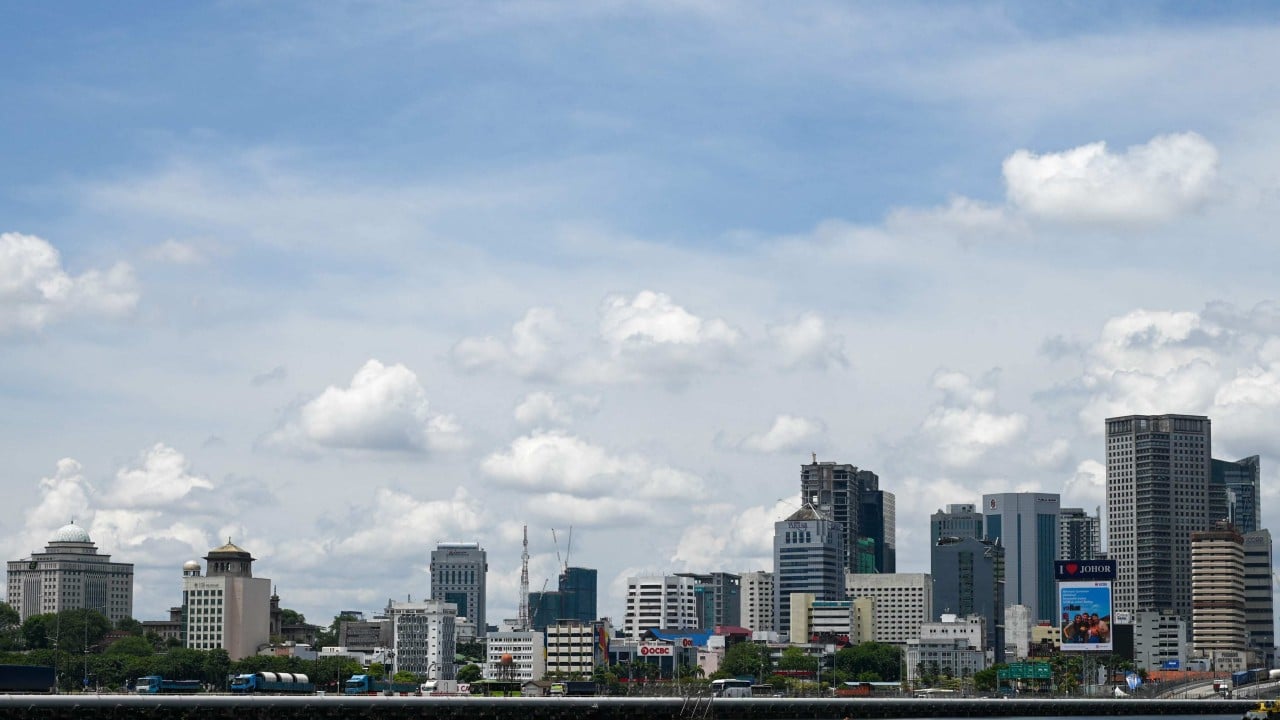
Cross-border economic integration is governed by a fundamental trade-off between economic complementarity and sovereign regulatory control. The delay in the formal launch of the Johor-Singapore Special Economic Zone (JS-SEZ) master plan—deferred from March 2026 to the fourth quarter of the year—highlights this exact friction. While political commentary frames this delay as a symptom of localized tension ahead of the Malaysia state election, a structural analysis reveals that the delay is an operational and political sorting mechanism. The pause allows both jurisdictions to reconcile separate fiscal, legal, and infrastructure frameworks before formalizing a bilateral treaty.
To evaluate the commercial viability of the JS-SEZ during this interim period, one must separate political signaling from underlying macroeconomic performance. The cross-border economic zone operates on a "twinning model" designed to convert geographic proximity into industrial productivity. Understanding its trajectory requires analyzing three specific operational components: the asymmetric federal-state governance model in Malaysia, the conversion rate of capital commitments into physical infrastructure, and the mitigation of border-clearance bottlenecks. If you found value in this post, you should look at: this related article.
The Structural Mechanics of the Twinning Model
The economic foundation of the JS-SEZ rests on a classic factor-endowment model. Singapore acts as a capital-dense, high-cost hub characterized by advanced financial infrastructure, legal predictability, and acute space constraints. Johor provides a land-abundant, cost-competitive manufacturing base spanning over 3,500 square kilometers. The objective is to construct a unified cross-border ecosystem where a single corporate entity can distribute its value chain across both territories based on optimal cost functions.
+------------------------------------------+
|            THE TWINNING MODEL            |
+------------------------------------------+
|  SINGAPORE HUB                           |
|  - High Capital Depth / Advanced R&D     |
|  - Regulatory & Legal Predictability     |
|  - Financial & Global Headquarters       |
+-------------------+----------------------+
                    | Cross-Border Flows:
                    | Capital, Talent, Data
                    v
+-------------------+----------------------+
|  JOHOR CORES                             |
|  - 3,500 km² Industrial Land Base        |
|  - Cost-Competitive Skilled Labor        |
|  - Advanced Data & Semiconductor Cores   |
+------------------------------------------+
The division of industrial capabilities within the JS-SEZ follows distinct operational profiles: For another look on this event, check out the latest update from MarketWatch.
- The Semiconductor Core: Escalating capital allocations toward higher-value front-end semiconductor fabrication require immediate regional supply-chain support. Johor serves as the immediate node for back-end assembly, testing, and packaging, absorbing the physical spillover that Singapore’s physical boundaries cannot accommodate.
- The Digital Infrastructure Layer: Hyperscale data centers and cloud service providers require immense power allocations and physical footprints. Johor offers the necessary land and utilities, while Singapore provides the low-latency network architecture and international financial data routing.
- The Logistics and Advanced Manufacturing Matrix: Integrating Johor’s industrial estates with Singapore’s global shipping and aviation hubs reduces transshipment friction and shortens international supply-chain lead times.
Governance Asymmetry and Federal-State Friction
The primary administrative bottleneck facing the JS-SEZ does not stem from a lack of bilateral consensus between Singapore and Malaysia. Instead, it is driven by a domestic jurisdictional mismatch within Malaysia's federal system. This tension has become visible in public disagreements between Johor’s state administration and the federal Ministry of Economy regarding the launch timeline of the master plan.
The friction is a direct consequence of a structural division of authority:
                  MALAYSIAN GOVERNANCE ASYMMETRY

       FEDERAL GOVERNMENT                 STATE GOVERNMENT
  +--------------------------+       +--------------------------+
  | - Fiscal Incentives      |       | - Land Alienation        |
  | - Immigration & Customs  |  vs.  | - Local Zoning & Utilities|
  | - National Investment     |       | - Regional Transit (ART) |
  +--------------------------+       +--------------------------+
               |                                  |
               +-----------------+----------------+
                                 |
                                 v
                     Operational Disconnection
                 (e.g., Conflicting Tax Advice)
The federal government maintains exclusive control over fiscal policy, tax incentives, corporate compliance, and international border security. Conversely, the state government retains sovereign control over land alienation, local zoning laws, municipal approvals, and regional utility allocations.
Because a special economic zone requires the simultaneous deployment of fiscal incentives and physical land use, any misalignment between these two tiers of government creates an operational bottleneck. For instance, early corporate participants within the zone have reported receiving conflicting directives from federal tax authorities and state municipal bodies regarding localized taxable items and zoning permissions.
The decision by the federal cabinet to defer the official blueprint launch to late 2026—coinciding with the upcoming state election and the subsequent Malaysia-Singapore Leaders' Retreat—is a tactical move to resolve these internal administrative discrepancies. A premature blueprint launch without unified federal-state operational guidelines would risk exposing regulatory gaps, eroding investor trust at a critical stage.
Quantifying Capital Efficiency: Execution vs. Announcement
A common weakness in economic zone assessments is over-indexing on raw investment announcements while ignoring the actual rate of capital deployment. To accurately measure the momentum of the JS-SEZ, analysts must track the conversion rate of approved investments into active, operational physical assets.
Data from the Ministry of Economy reveals a significant divergence from typical emerging-market trends:
| Metric | Performance Data (2025–Q1 2026) |
|---|---|
| 2025 Cumulative Approved Investments | RM76.98 Billion |
| Realized / Implementation Stage Conversion Rate | 57% |
| Q1 2026 Additional Approved Investments | RM5.49 Billion |
| Invest Malaysia Facilitation Centre (IMFC-J) Pipeline | 285 Inquiries (Potential RM74.12 Billion) |
| Target Job Creation Rate | 20,000 skilled jobs (Accelerated from 5 to 3 years) |
A 57% realization rate within the first year indicates that the capital allocation is driven by real enterprise demand rather than speculative land hoarding. This high conversion speed is supported by the Invest Malaysia Facilitation Centre-Johor (IMFC-J), which functions as a centralized administrative hub designed to bypass traditional bureaucratic steps for corporate setup.
However, a structural limitation persists within the current fiscal framework. The Malaysian Investment Development Authority (MIDA) has tied its primary tax incentive packages to a minimum capital investment threshold of RM500 million. While this threshold effectively attracts multinational corporations and heavy industrial anchors, it creates a steep barrier to entry for small and medium-sized enterprises (SMEs). Because a robust industrial ecosystem requires a dense network of local tier-2 and tier-3 component suppliers, the exclusion of mid-tier capital providers could bottleneck long-term supply chain integration within the zone.
Logistical Architecture and Border Bottlenecks
The ultimate limit on economic throughput in a cross-border SEZ is the physical capacity of its border checkpoints. No amount of fiscal optimization can compensate for structural delays at the point of transit. The JS-SEZ addresses this reality by shifting from legacy border infrastructure to paperless, automated data systems.
       LEGACY SYSTEM                        AUTOMATED SYSTEM
+--------------------------+          +--------------------------+
| - Dual-Permit Reqd       |          | - Single Transshipment   |
| - Manual Cargo Checks    |   --->   | - Paperless App Submit   |
| - Passport Control Stalls|          | - Passport-Free QR Scan  |
+--------------------------+          +--------------------------+
     Throughput Ceiling                   ~30% Time Reduction
Two core improvements have altered the logistical cost function of the Johor-Singapore Causeway:
- Administrative Consolidation: The historical requirement for multiple transshipment permits has been replaced by a single, integrated digital permit system managed by Singapore Customs for land intermodal freight. This eliminates redundant administrative checkpoints.
- Digital Border Clearance: The deployment of passport-free QR code immigration systems and digital cargo manifest verification via mobile platforms has reduced freight transit times across the land checkpoints by approximately 30%.
While these digital solutions improve efficiency, the upcoming physical infrastructure projects present a separate execution risk. The Johor Bahru-Singapore Rapid Transit System (RTS) Link is on track to begin operations by January 2027, introducing a mass transit asset capable of moving 10,000 passengers per hour in each direction.
However, this high-capacity terminal will discharge passengers into a localized transport network that lacks equivalent capacity. Johor’s planned Autonomous Rapid Transit (ART) elevated rail system—identified as the primary urban transit link to absorb this passenger surge—is still awaiting fast-tracked federal execution. This infrastructure gap creates a potential bottleneck, where rapid cross-border transit could be bottlenecked by local urban congestion.
Strategic Action Plan
The delay of the master plan blueprint to the fourth quarter of 2026 should not be viewed as an economic pause, but rather as a strategic window for market positioning. Investors and corporate strategists should execute three specific plays to capitalize on the zone's evolving structure:
- Establish Twinning Formations Early: Corporations should structure their legal and operational entities immediately to leverage Singapore for intellectual property, regional headquarters, and treasury functions, while routing capital expenditure into Johor for physical production assets. Do not delay entity formation until the formal treaty signing; early operational footprints gain expedited clearance via the IMFC-J.
- Audit Supply Chain Asset Thresholds: Mid-market manufacturers must evaluate whether their initial capital deployment meets the RM500 million threshold required for MIDA's top-tier tax incentives. If the threshold is out of reach, firms should look to participate via joint ventures or consortium structures to aggregate capital allocations and clear the compliance floor.
- Incorporate Infrastructure Lag Into Risk Models: Logistics and operations teams must build their 2026–2028 supply chain forecasts around the infrastructure gap between the 2027 RTS Link deployment and the lagging local ART integration. Supply routes should prioritize automated digital freight systems over peak human transit hours to minimize exposure to local bottleneck zones.
The operational blueprint for the JS-SEZ has been finalized and approved by the Malaysian Cabinet, and its implementation is actively moving ahead of the joint launch by Prime Minister Anwar Ibrahim and Prime Minister Lawrence Wong. To understand the practical layout and real-world implications of these cross-border connectivity frameworks, watching an analysis of the logistical and transport infrastructure underpinning the zone provides vital context.